Amnon Shashua to Step Down as Mobileye CEO After Nearly Three Decades, Charting New Course Amidst Robotaxi and Humanoid Robotics Expansion

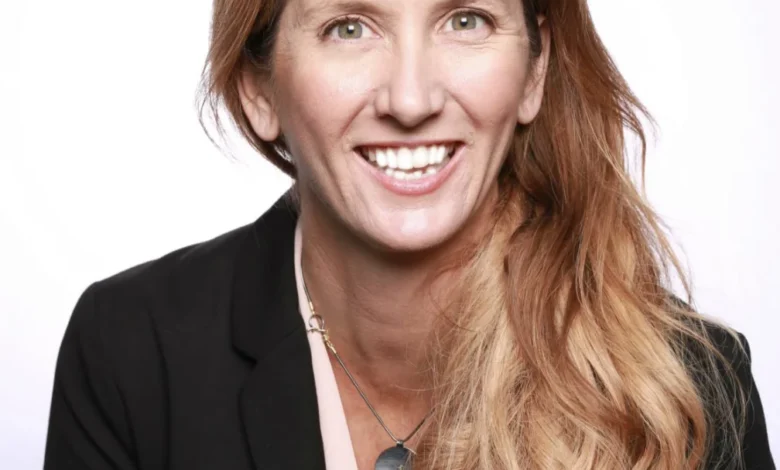
Jerusalem, Israel – Amnon Shashua, the visionary co-founder and long-standing Chief Executive Officer of Mobileye Global Inc., a global leader in advanced driver-assistance systems (ADAS) and autonomous driving technologies, has announced his intention to step down from his leadership role. This pivotal transition comes at a critical juncture for the company, as it aggressively pushes into the nascent but rapidly evolving sectors of robotaxis and humanoid robotics. Shashua, who has helmed Mobileye for almost three decades since its inception, will remain in his position until a suitable replacement is identified and appointed, according to a regulatory filing submitted on Thursday, July 23, 2026, marking a significant leadership change for one of the automotive industry’s most influential technology firms.
Shashua’s departure signals the end of an era for Mobileye, a company he founded based on his groundbreaking academic research at the Hebrew University of Jerusalem. Under his relentless leadership, Mobileye evolved from a pioneering research initiative into a dominant force in computer vision and artificial intelligence for automotive applications. The company’s trajectory has been marked by a series of transformative milestones, including a historic initial public offering (IPO) in Israel, a multi-billion dollar acquisition by Intel Corporation, and a subsequent re-listing as an independent public entity. The announcement now casts a spotlight on Mobileye’s strategic direction as it navigates an increasingly complex and competitive landscape, seeking to expand its influence beyond its traditional role as a chip supplier into a full-stack mobility provider and, more recently, a developer of humanoid robots.
A Legacy of Innovation and Market Leadership
Amnon Shashua’s journey with Mobileye began in 1999, co-founding the company with Ziv Aviram. Their vision was to leverage sophisticated computer vision algorithms and custom-designed chips to prevent road accidents and enhance driving safety. This vision materialized into the EyeQ series of system-on-chips (SoCs), which quickly became the industry standard for ADAS, powering features like lane keeping assist, adaptive cruise control, and automatic emergency braking in millions of vehicles worldwide. Mobileye’s technology is currently integrated into over 150 million vehicles from more than 25 automotive manufacturers globally, solidifying its position as the undisputed market leader in ADAS solutions, with an estimated market share exceeding 70% in certain ADAS segments.
The company’s early success culminated in what was, at the time, the largest IPO in Israel’s history in 2014, listing on the New York Stock Exchange. This public offering validated Mobileye’s technological prowess and its substantial market potential. Just three years later, in March 2017, Intel Corporation acquired Mobileye for a staggering $15.3 billion. This acquisition was Intel’s largest ever at the time, underscoring the semiconductor giant’s strategic pivot into the burgeoning autonomous driving sector. Intel saw Mobileye’s computer vision expertise as a crucial component for its broader ambitions in data-centric computing and the future of mobility, integrating Mobileye’s ADAS and autonomous driving capabilities directly into its automotive solutions group.
The Spin-Out and Re-IPO: A Strategic Reorientation
Despite the deep integration with Intel, a strategic decision was made in March 2022 to spin Mobileye back out as a publicly traded company. While Intel remains Mobileye’s largest shareholder, holding approximately 88% of its Class B shares post-IPO, the move was aimed at unlocking Mobileye’s independent growth potential and providing it with greater operational flexibility to pursue its ambitious autonomous driving roadmap. The re-IPO in October 2022 valued the company at over $17 billion, demonstrating continued investor confidence in its technology and market strategy. This dual structure allowed Mobileye to maintain access to Intel’s vast resources and semiconductor manufacturing capabilities while benefiting from the agility and direct market valuation of a standalone public entity.
Under Shashua’s continued leadership post-Intel acquisition and re-IPO, Mobileye embarked on a significant expansion of its business model. Initially, the company primarily supplied its EyeQ chips and accompanying software to automakers. However, recognizing the evolving landscape of autonomous mobility, Shashua steered Mobileye towards developing complete self-driving systems. This strategic shift involved building proprietary hardware and software stacks capable of handling full autonomous driving functionalities, moving beyond merely enabling driver-assistance features to actual driver replacement systems.
Diversification into Robotaxis and Mobility-as-a-Service
A key component of this strategic evolution was Mobileye’s entry into the burgeoning robotaxi market. In November 2018, Mobileye announced a landmark partnership with Volkswagen and its mobility services subsidiary, MOIA, to launch an autonomous ride-hailing service in Israel. This collaboration served as a crucial proving ground for Mobileye’s end-to-end autonomous driving solution, deploying a fleet of electric vehicles equipped with its self-driving technology in real-world urban environments. This pilot program provided invaluable data and operational experience, paving the way for broader commercialization efforts.
Building on this experience, Mobileye announced in June 2026 its ambitious plan to launch its own commercial robotaxi service in a major U.S. city in 2027. This move signifies a direct entry into the Mobility-as-a-Service (MaaS) sector, positioning Mobileye not just as a technology supplier but also as an operator of autonomous fleets. This dual role places Mobileye in a unique position, allowing it to control the entire value chain from hardware and software development to fleet management and customer service. The U.S. market, with its diverse regulatory landscape and intense competition from established players like Waymo and Cruise, represents a significant challenge and opportunity for Mobileye. The company’s strategy for differentiation often centers on its vision-first approach, which it argues offers a more scalable and cost-effective solution compared to lidar-heavy systems employed by many competitors.

The "Mobileye 3.0" Vision: Humanoid Robotics Integration
Perhaps the most recent and audacious expansion under Shashua’s tenure is Mobileye’s foray into humanoid robotics. In January 2026, Mobileye acquired Mentee Robotics, a humanoid robotics startup co-founded by Shashua himself, for a reported $900 million. This acquisition was presented as a cornerstone of "Mobileye 3.0," Shashua’s vision for the company’s next evolutionary phase. This phase aims to integrate advanced automotive AI and perception technologies with the development of versatile humanoid robots.
Shashua articulated that the underlying AI and computer vision expertise developed for autonomous vehicles, particularly in areas like real-time perception, decision-making, and navigation in complex environments, are highly transferable to humanoid robotics. The goal is to create general-purpose robots capable of operating in various human environments, from logistics and manufacturing to elder care and domestic assistance. The acquisition of Mentee Robotics, therefore, is not merely a diversification play but a strategic effort to leverage Mobileye’s core competencies in a new, high-growth market, potentially opening up vast new revenue streams and applications for its technology. This move highlights Shashua’s long-term thinking and his belief in the convergent future of AI, robotics, and mobility.
Chronology of Key Milestones for Mobileye Under Amnon Shashua
- 1999: Mobileye is co-founded by Amnon Shashua and Ziv Aviram in Israel, based on Shashua’s academic research in computer vision.
- Early 2000s: Development of the first EyeQ system-on-chip for ADAS applications, laying the groundwork for mass adoption of driver assistance features.
- 2007: Mobileye secures its first major design win with a global automaker, beginning its ascent as a primary ADAS supplier.
- 2014: Mobileye successfully completes its Initial Public Offering (IPO) on the New York Stock Exchange, marking the largest IPO for an Israeli company to date.
- March 2017: Intel Corporation acquires Mobileye for approximately $15.3 billion, integrating its technology into Intel’s autonomous driving division.
- November 2018: Mobileye announces a partnership with Volkswagen and MOIA to deploy an autonomous ride-hailing service in Tel Aviv, Israel, marking its entry into Mobility-as-a-Service (MaaS).
- March 2022: Intel announces its intention to spin out Mobileye through a new IPO, while retaining a majority stake, to unlock its independent growth potential.
- October 2022: Mobileye completes its re-IPO on Nasdaq, valuing the company at over $17 billion.
- January 2026: Mobileye acquires Mentee Robotics, a humanoid robotics startup co-founded by Amnon Shashua, for $900 million, signaling a major push into robotics as part of the "Mobileye 3.0" vision.
- June 2026: Mobileye announces plans to launch its own commercial robotaxi service in a U.S. city in 2027, further solidifying its transition into a full-stack autonomous mobility provider.
- July 23, 2026: Amnon Shashua announces his decision to step down as CEO, remaining in the role until a successor is found.
Industry Context and Competitive Landscape
Mobileye operates in a highly dynamic and competitive environment. In the ADAS segment, while it holds a dominant position, it faces competition from in-house solutions developed by automakers and other tier-1 suppliers like Bosch, Continental, and ZF. In the more advanced autonomous driving and robotaxi space, the competition is even fiercer. Players like Waymo (Google’s self-driving unit) and Cruise (majority-owned by GM) have accumulated billions of miles of autonomous driving experience, primarily utilizing lidar and radar alongside cameras. Tesla, on the other hand, relies heavily on a vision-only approach, similar in philosophy to Mobileye’s foundational strategy but with a distinct implementation.
Mobileye’s distinctive "EyeQ" chip architecture and its "vision-first" perception strategy have been central to its success. The company argues that camera-centric systems, complemented by radar and eventually lidar for redundancy, offer a more scalable and cost-effective path to widespread autonomous vehicle deployment compared to systems that rely heavily on expensive lidar sensors from the outset. This technological philosophy, championed by Shashua, has allowed Mobileye to penetrate a vast segment of the automotive market.
Implications and Future Outlook
Amnon Shashua’s departure as CEO undoubtedly marks a pivotal moment for Mobileye. His long-standing leadership has been synonymous with the company’s identity and strategic direction. While he will remain involved until a successor is appointed, the search for a new CEO will be closely watched by investors, industry analysts, and competitors alike. The incoming leader will inherit a company with immense technological capabilities, strong market positions in ADAS, and ambitious expansion plans into robotaxis and humanoid robotics.
For Mobileye, the immediate implication is a period of leadership transition. The board’s priority will be to find a CEO who can not only sustain Mobileye’s innovative culture but also effectively execute its "Mobileye 3.0" vision. This includes successfully launching the U.S. robotaxi service in 2027, integrating Mentee Robotics’ humanoid platform, and continuing to fend off competition in the core ADAS market. A new CEO could bring fresh perspectives on strategy, partnerships, and market penetration, potentially accelerating or subtly adjusting Mobileye’s current trajectory.
For Intel, as the largest shareholder, the transition is also significant. Mobileye remains a key asset in Intel’s broader strategy for automotive and edge computing. Intel will likely seek to ensure that the new leadership aligns with its long-term vision for Mobileye and continues to generate value for its investment.
For the broader autonomous driving and robotics industries, Shashua’s stepping down from such a prominent role could be seen as a signal of evolving dynamics. As a thought leader and innovator, his influence extends beyond Mobileye. While his future endeavors are not explicitly detailed in the filing, his recent involvement with Mentee Robotics suggests a continued passion for groundbreaking AI and robotics research, perhaps in a more focused, entrepreneurial capacity.
In essence, Mobileye is at an inflection point. It is transitioning from a highly successful component supplier to a complex, multi-faceted technology provider engaged in direct mobility services and advanced robotics. The departure of its foundational leader during this crucial expansion phase underscores the challenges and opportunities inherent in this ambitious transformation. The legacy of Amnon Shashua will undeniably continue to shape Mobileye’s path, but the company now looks to new leadership to guide it through its next chapter of innovation and commercialization in the autonomous age.