The BBC has secured the broadcast rights for the gripping new series Kabul, a drama set against the harrowing backdrop of the real-life events that unfolded in Afghanistan in 2021. This significant acquisition marks one of the final projects to feature the late Eric Dane, whose passing earlier this year sent ripples through the entertainment industry. The series, produced by Mediawan for the European Alliance of broadcasters, plunges viewers into the heart of the chaotic withdrawal of American troops from Kabul and the swift ascent of the Taliban.
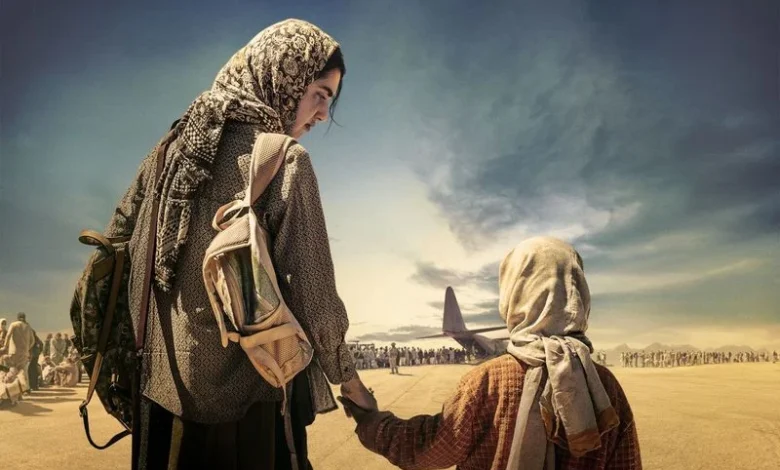
At its core, Kabul tells the story of the Nazany family, a fictional representation of the countless Afghan civilians caught in the maelstrom. As the Taliban seized control of the capital, the family, like many others, found themselves facing the terrifying prospect of retaliation and were compelled to flee their homes. The narrative unfolds amidst an atmosphere of profound desperation and chaos, further exacerbated by the looming threat of attacks from ISIS. Within this volatile environment, the series highlights the complex and often fraught efforts of international forces – including French police officers, Italian diplomats, German military personnel, and American intelligence services – as they grapple with the immense challenge of coordinating a large-scale civilian evacuation.
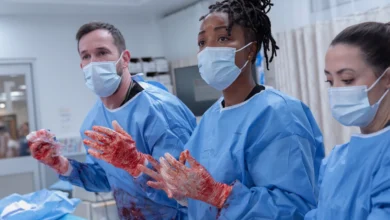
The series boasts an impressive international ensemble cast. Eric Dane, celebrated for his roles in Euphoria and Grey’s Anatomy, portrays Martin, a character whose presence promises to be a poignant reminder of the actor’s considerable talent. His untimely death earlier this year adds a layer of profound significance to his final performance. Joining Dane are a constellation of international actors, including Darina Al Joundi (The New Look), Shervin Alenabi (Tehran), Vassilis Koukalani (Kandahar), Hannah Abdoh, Jonathan Zaccaï (Le bureau des legends), Gianmarco Saurino (L’estate più Calda), and Jeanne Goursaud (Pax Massilia). This diverse cast underscores the global nature of the crisis and the international cooperation required to address it.
Kabul is slated to premiere on the BBC next month, bringing this critically important story to a wider audience. The series is a collaborative effort, produced by Mediawan and distributed by Mediawan Rights. It was originally commissioned for the European Alliance, a consortium of leading European public service broadcasters comprising ZDF (Germany), Rai (Italy), and France Télévisions. While the BBC is not a formal member of this alliance, it has a history of collaborating on ambitious international co-productions, such as its involvement in the adaptation of Around the World in 80 Days. This partnership demonstrates the BBC’s commitment to bringing diverse and impactful global narratives to its viewers.
Nick Lee, Head of BBC Programme Acquisition, articulated the profound significance of the series in a statement: " Kabul is a tragedy of the highest stakes. A warzone story which is propelled by the real ticking clock of the evacuation that was just five years ago this summer. Global politics remain complex, but Kabul dramatises the biggest view of history through the smallest window of a human family." This sentiment underscores the series’ approach: to humanize a monumental geopolitical event through the intimate lens of a single family’s struggle for survival.
The creative team behind Kabul is comprised of seasoned professionals. The series was directed by Kasia Adamik (No Escape) and Olga Chajdas (Imago), whose distinct directorial visions are expected to bring a compelling visual and emotional depth to the narrative. The writing is credited to Olivier Demangel (Class Act), Thomas Finkielkraut (Baron Noir), and Joey Lavy (The Shift), a writing team with a proven track record in crafting sophisticated and engaging dramas. The production itself is a testament to collaborative filmmaking, with Fabienne Servan-Schreiber and Charlotte Ortiz at Ciné t év é, Matthias Weber and Thibault Gast at 24 25 Films, serving as producers. Sandrine Paquot is credited as executive producer. Global sales are managed by Mediawan Rights, ensuring the series’ reach across international markets.
The August 2021 Kabul Evacuation: A Humanitarian Crisis Unfolds
The events depicted in Kabul are rooted in the tumultuous withdrawal of U.S. and allied forces from Afghanistan in August 2021, following two decades of military presence. The speed at which the Taliban regained control of the country, culminating in their capture of Kabul on August 15, 2021, caught many by surprise. This rapid collapse of the Afghan government and security forces triggered a desperate and chaotic scramble for evacuation by foreign nationals, Afghan allies, and civilians fearing for their lives.
The Kabul Hamid Karzai International Airport became the epicenter of this humanitarian crisis. For nearly two weeks, thousands of Afghans and foreign citizens converged on the airport, seeking to escape the country. Scenes of desperation, including people clinging to departing aircraft and overwhelming crowds at the gates, were broadcast globally, highlighting the sheer scale of the human tragedy. The evacuation effort was further complicated by security threats, most notably the deadly bombing by an ISIS-K affiliate at the airport’s Abbey Gate on August 26, 2021, which killed over 170 people, including 13 U.S. service members. This attack underscored the precarious security situation and the dangers faced by those involved in the evacuation, both evacuees and rescuers.
Supporting Data and Contextual Background
The withdrawal of international forces from Afghanistan was a complex and multifaceted decision. The Doha Agreement, signed in February 2020 between the Trump administration and the Taliban, outlined a timeline for the withdrawal of U.S. troops in exchange for certain security assurances from the Taliban, including not harboring al-Qaeda. However, the subsequent rapid collapse of the Afghan National Army and the swift Taliban takeover raised significant questions about the intelligence assessments and the effectiveness of the two-decade-long nation-building effort.
The United Nations High Commissioner for Refugees (UNHCR) has consistently highlighted the precarious situation of civilians in Afghanistan. Prior to the Taliban’s return to power, millions of Afghans were already displaced internally due to ongoing conflict and economic hardship. The subsequent political and security vacuum exacerbated these vulnerabilities, leading to increased food insecurity, a deteriorating humanitarian situation, and a surge in Afghans seeking refuge in neighboring countries and beyond. The International Organization for Migration (IOM) has also reported on the significant number of Afghans attempting to cross borders in search of safety and opportunity, often undertaking perilous journeys.
Timeline of Key Events Leading to the Evacuation
- February 29, 2020: The U.S. and the Taliban sign the Doha Agreement, setting a deadline for U.S. troop withdrawal.
- April 2021: U.S. President Joe Biden announces the withdrawal of all U.S. troops by September 11, 2021.
- May 2021: The Taliban launches a major offensive across Afghanistan as U.S. forces begin their withdrawal.
- August 6, 2021: The Taliban captures their first provincial capital, Zaranj. This marks the beginning of a rapid Taliban advance.
- August 15, 2021: The Taliban enters Kabul, and Afghan President Ashraf Ghani flees the country. The Afghan government collapses.
- August 16-31, 2021: A massive, chaotic evacuation effort takes place at Kabul airport, involving U.S. and allied forces, as well as international organizations.
- August 26, 2021: A suicide bombing outside Abbey Gate at Kabul airport kills over 170 people, including 13 U.S. service members.
- August 30, 2021: The last U.S. troops depart Afghanistan, officially ending the 20-year military mission.
Official Responses and Broader Implications
The international response to the fall of Kabul and the subsequent evacuation was characterized by a mixture of shock, condemnation, and a concerted humanitarian effort. Many governments expressed deep concern for the safety and human rights of the Afghan people, particularly women and girls, whose freedoms were severely curtailed under Taliban rule. International organizations, including the UN and various NGOs, have been on the ground, working to provide essential aid and support to those affected by the crisis.
The series Kabul is poised to offer a powerful dramatization of these events, aiming to foster greater understanding and empathy for the human cost of such geopolitical shifts. By focusing on the intricate interplay of international cooperation and the personal struggles of a family caught in the crossfire, the series seeks to illuminate the complexities of humanitarian crises and the profound impact of political decisions on individual lives. The BBC’s acquisition of this series underscores its commitment to exploring significant global narratives and providing its audience with nuanced perspectives on world events. The series also serves as a poignant posthumous tribute to Eric Dane, whose contribution to this project will undoubtedly resonate with viewers. The narrative’s exploration of inter-agency cooperation and the inherent difficulties in coordinating multinational efforts during a crisis offers valuable insights into the challenges faced by global powers in responding to rapidly unfolding humanitarian emergencies. The series’ success could also influence future productions that tackle similar themes, emphasizing the importance of human stories within the broader geopolitical landscape.
Related posts: