The Pretenders Make Their Definitive Cinematic Debut at the Toronto International Film Festival Under Joss Crowley’s Direction

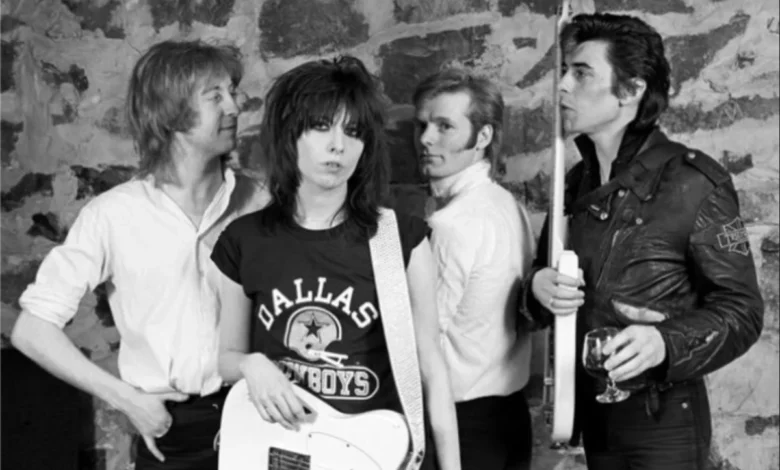
Rock and roll history is frequently written by the victors, yet few foundational bands of the late 20th century have remained as fiercely protective of their legacy as The Pretenders. More than four decades after releasing a self-titled debut album in January 1980 that critics and musicians alike frequently cite as one of the greatest records in rock history, the band is finally receiving a comprehensive, authorized chronicle on film. Directed by Joss Crowley, the documentary simply titled The Pretenders makes its world premiere at the prestigious Toronto International Film Festival (TIFF), shedding new light on a band that changed the landscape of punk, new wave, and straightforward rock and roll.
Crowley’s film focuses primarily on the turbulent, lightning-in-a-bottle era of the original lineup, spanning the late 1970s through the first five tumultuous years of the 1980s. While it touches upon frontwoman Chrissie Hynde’s enduring presence in the modern musical landscape, the core narrative dissects the meteoric rise, tragic losses, and artistic integrity that defined the band’s initial years. The documentary arrives after years of persistence by Crowley, who spent more than a decade trying to convince the notoriously camera-shy Hynde to give her blessing to the project.
Unearthing Lost Archives and Unttold Stories
One of the documentary’s most significant achievements lies in its extensive use of newly recovered archival material. For decades, visual documentation of The Pretenders during their absolute peak was scarce, largely due to the era predating ubiquitous smartphone recording and widespread backstage access. However, Crowley’s production team achieved a major breakthrough when they tracked down Andy Watt, a cameraman from Hereford who had joined the original lineup on a North American tour roughly three months before the tragic departures of guitarist James Honeyman-Scott and bassist Pete Farndon.
The discovery yielded 20 reels of rare, unseen tour footage in deteriorating condition. Through the meticulous work of a retired audio-visual engineer, the tapes were restored, offering modern audiences a visceral, front-row seat to the band’s inner dynamic during their high-stakes 1980–1981 touring cycle.
Compounding the archival richness are the personal diaries of Stan Tippins, the band’s early tour manager and a former singer for Mott the Hoople. Tippins, who acted as a stabilizing, paternal figure for the young and uninitiated musicians, reads aloud from his period-accurate journals in the documentary. His entries provide a deeply intimate, unvarnished perspective on the daily reality of managing a rising rock outfit characterized by intense creativity and underlying vulnerabilities.
A Reluctant Subject and Strict Parameters
Chrissie Hynde’s well-documented aversion to the spotlight and celebrity culture shaped the very framework of Crowley’s documentary. Known for her blunt candor and refusal to play the standard promotional game, Hynde initially resisted all overtures from filmmakers. When she finally relented in late 2023, following a series of informal meetings with Crowley, she established strict boundaries to protect the integrity of the project.
Hynde insisted that the film prioritize visual archival footage over talking-head interviews, focus strictly on the musical narrative of the band rather than her personal life, and completely eschew tired media tropes such as the "women in rock" angle. Her motivation to participate was catalyzed in part by outside actors attempting unauthorized documentaries about the band, prompting her to ensure that if a film was going to be released, it would at least be accurate.

Though Hynde maintained her preference for audio-only interviews throughout most of the production—citing a universal aversion to the sound of one’s own speaking voice—she ultimately acquiesced to a single, final on-camera interview to anchor the conclusion of the film.
Honoring the Forgotten Guitar Hero
Beyond cementing the historical record of the band, Hynde has noted that her primary motivation for supporting the documentary was to honor the legacy of original guitarist James Honeyman-Scott. Honeyman-Scott tragically died of heart failure linked to cocaine intolerance in June 1982, mere days after bassist Pete Farndon was dismissed from the group due to escalating drug addiction. Farndon himself died of a heroin overdose the following year in March 1983.
Hynde has frequently expressed frustration that Honeyman-Scott’s contributions to rock history are routinely overlooked in mainstream guitar retrospectives. By anchoring the documentary’s emotional core in the achievements of the original lineup, the film serves as a belated monument to a musician whose razor-sharp tone and melodic sensibility defined the early Pretenders sound just as much as Hynde’s distinctive vocals and rhythm guitar work.
Navigating Controversy and Maintaining Artistic Independence
True to form, Hynde’s interview segments do not shy away from her famous boundaries. When Crowley questions her about her historical relationship with Ray Davies of The Kinks, Hynde shuts the line of inquiry down with characteristic tartness, citing the potential for legal complications and an unwillingness to infringe upon the privacy of others.
This refusal to sensationalize personal relationships aligns with Hynde’s broader philosophical stance against the commodification of celebrity. Throughout her decades-long career, she has consistently rejected the role of spokesperson, fashion icon, or poster girl, viewing her output strictly through the lens of a working musician. Drawing parallels to peers like Lemmy Kilmister, Neil Young, and Paul McCartney, Hynde remains an adherent of artistic stubbornness—rejecting corporate sponsorships and consumerist tie-ins in an industry increasingly defined by brand partnerships.
Critical Reception and the TIFF Premiere
As The Pretenders prepares for its premiere at the Toronto International Film Festival, industry analysts view the documentary as a masterclass in how to construct a music biography without capitulating to conventional PR narratives. By allowing the principal subjects to dictate terms—favoring audio intimacy over forced on-camera confessions and leveraging long-lost primary sources like the Tippins diaries—Crowley has bypassed the sanitized formatting common to modern streaming-era music documentaries.
For Hynde, the premiere represents a reluctant stepping onto the red carpet alongside original drummer Martin Chambers, maintaining a legacy built entirely on musical output rather than media saturation. As the documentary reaches public audiences, it secures the place of The Pretenders not merely as a relic of late-20th-century punk and new wave, but as a testament to an uncompromising artistic vision that has refused to bend to the pressures of commercialism for over forty years.