Unveiling V445 Puppis: Cosmic Bullets, Rare Helium Nova, and a Potential Type Ia Supernova Progenitor Uncovered by Hubble

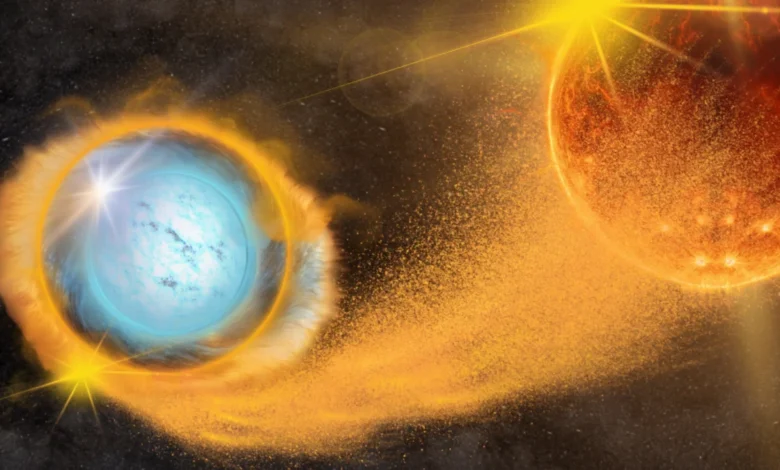
Astronomers leveraging the advanced capabilities of NASA’s venerable Hubble Space Telescope have made groundbreaking discoveries concerning a unique stellar explosion within the Milky Way, identifying it as the galaxy’s sole known "helium nova," V445 Puppis. This remarkable celestial event is not only blasting out enigmatic "cosmic bullets" at an astonishing speed of 20 million miles per hour but also presents a rare opportunity to study a binary star system that could be a precursor to one of the universe’s most powerful cosmic explosions: a Type Ia supernova. For over two decades, much about V445 Puppis remained obscured by a dense cloud of dusty debris, leaving scientists puzzled about its true nature and the mechanics behind its dramatic eruption. The recent clearing of this cosmic veil has allowed researchers to delve into the heart of this extraordinary system, revealing a white dwarf star engaged in a cannibalistic dance with a rare companion, a helium star, and hinting at the possibility of future explosive events.
The Enigmatic Eruption of 2000 and Two Decades of Obscurity
The story of V445 Puppis began with its spectacular eruption in late 2000, an event that caught the attention of astronomers worldwide. Unlike typical novae, which are powered by the accretion of hydrogen-rich material onto a white dwarf, V445 Puppis stood out almost immediately as something different. The initial outburst was characterized by the expulsion of vast, bipolar plumes of debris, resembling cosmic butterfly wings, stretching for more than a trillion miles into space. These outflows were first detected in infrared wavelengths, offering the earliest clues to the nova’s unique energetic signature. However, the very violence of this eruption generated a thick, opaque disk of dust and gas that completely enveloped the central binary system. This persistent shroud of debris, lasting for over two decades, proved to be a significant impediment, preventing astronomers from definitively identifying the types of stars involved in the explosion or fully understanding the processes that fueled it. The obscuration meant that while the expanding debris could be studied to some extent, the core engine of the nova remained a profound mystery, a cosmic secret hidden behind a curtain of its own making.
A Multi-Observatory Revelation: Peering Through the Veil
The long wait for V445 Puppis to reveal its secrets finally ended when the obscuring dust cloud began to dissipate, allowing an international team of researchers to gain unprecedented access to the system. This breakthrough was achieved through a concerted effort utilizing a suite of cutting-edge astronomical instruments, each contributing a unique perspective. The primary tool was the Hubble Space Telescope, renowned for its unparalleled clarity in visible and ultraviolet light, which allowed for detailed imaging of the post-outburst environment. Complementing Hubble’s observations was NASA’s Transiting Exoplanet Survey Satellite (TESS), primarily an exoplanet hunter but also invaluable for its all-sky surveys and monitoring of transient events, providing photometric data crucial for understanding the system’s variability. Ground-based power was provided by the Earth-based Very Large Telescope (VLT) in Chile, operated by the European Southern Observatory. The VLT, with its array of four unit telescopes, offers exceptional spectroscopic capabilities and high-resolution imaging, enabling detailed analysis of the chemical composition and velocities of the ejected material. This multi-wavelength approach, combining the strengths of both space-based and terrestrial observatories, was instrumental in penetrating the lingering haze and piecing together the complex puzzle of V445 Puppis. The synergy between these instruments allowed the team to not only confirm the existence of the "cosmic bullets" but also to unequivocally identify the true nature of the binary system at the heart of this galactic spectacle.
The Anatomy of a Helium Nova: A Rare Stellar Cannibalism
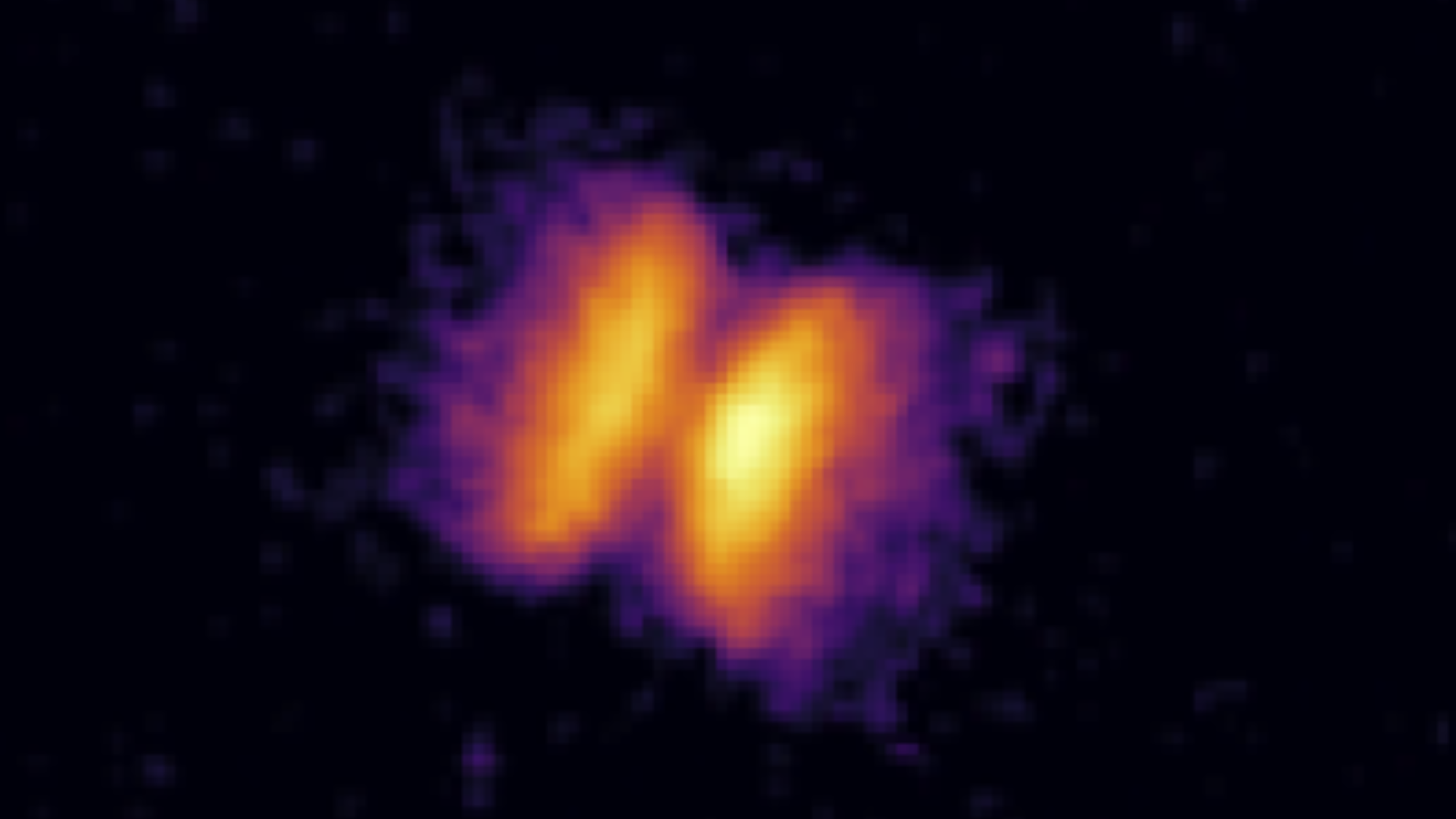
At its core, V445 Puppis represents an exceptionally rare class of stellar explosions known as a helium nova. To understand its distinctiveness, one must first grasp the mechanics of a "classical" nova. A classical nova occurs in a binary system where a white dwarf – the dense, hot remnant of a sun-like star that has exhausted its nuclear fuel – gravitationally siphons hydrogen-rich material from a close companion star. As this stolen stellar matter accumulates on the white dwarf’s surface, it becomes increasingly compressed and heated. Once the temperature and pressure reach a critical threshold, a runaway thermonuclear reaction ignites in the accreted layer, leading to a brilliant explosion that briefly increases the white dwarf’s luminosity by tens of thousands to millions of times. The white dwarf itself survives the blast, allowing the cycle of accretion and eruption to repeat over astronomical timescales.
In stark contrast, a helium nova like V445 Puppis involves a crucial difference in the composition of the accreted material. Here, the white dwarf is not feeding on a typical hydrogen-rich star but rather on a "helium star." A helium star is a rare type of stellar body that has already shed its outer layers of hydrogen, exposing its inner, helium-rich core. This process usually occurs when a star evolves past its main sequence phase or when it is stripped of its outer envelope by a close binary companion. The companion in the V445 Puppis system is indeed one such rare helium star, making the entire binary pairing an exceptional find. When the white dwarf in V445 Puppis cannibalistically strips this helium-rich, but crucially hydrogen-poor, matter from its companion, it creates the conditions for a different kind of thermonuclear runaway. The accumulation of helium on the white dwarf’s surface triggers an explosion distinct from hydrogen-fueled novae, explaining the unique spectral signature and energetic output observed from V445 Puppis. This makes V445 Puppis the only known helium nova in our galaxy, offering an unparalleled laboratory for studying this specific, rare pathway of stellar evolution and explosive phenomena. The existence of only a few thousand helium stars identified across the billions of stars in the Milky Way further underscores the exceptional nature of this binary system.
The Baffling "Cosmic Bullets": A Unique Phenomenon
Among the most astonishing discoveries made by the research team are the "cosmic bullets" being ejected from V445 Puppis. These clumps of potentially oxygen-rich gas are hurtling through space at an incredible velocity of 20 million miles per hour (approximately 32 million kilometers per hour), a speed that represents a significant fraction of the speed of light. The sheer velocity and the unusual composition of these projectiles set them apart from any other observed nova phenomena. John Mills, a researcher at the University of Warwick in the UK and a key member of the discovery team, articulated the profound mystery surrounding these objects: "The origin of these ‘bullets’ is a mystery. We suspect that these originated post-outburst, but ‘bullets’ of this kind have not been observed in any other nova."
This statement highlights a critical aspect of the V445 Puppis findings: its uniqueness. While novae are known to eject material, the discrete, high-velocity, and possibly oxygen-rich nature of these "bullets" is unprecedented. Their formation mechanism, whether they are remnants of the initial explosion accelerated later, or a result of subsequent, more subtle interactions within the expanding debris, remains an open question. The presence of oxygen-rich gas suggests deeper layers of the helium star’s material might have been involved in their formation, or perhaps even material from the white dwarf itself. Understanding the origin of these bullets could provide crucial insights into the extreme physics governing these powerful stellar eruptions and the complex hydrodynamics of rapidly expanding gas clouds in the aftermath of a thermonuclear event. The fact that they have not been observed in any other nova makes V445 Puppis a unique case study for phenomena potentially linked to helium-fueled explosions, offering a new avenue for theoretical modeling and observational follow-up.
V445 Puppis: A Cosmic Time Bomb?
Adding another layer of intrigue to the V445 Puppis system is the finding that it may be poised for another dramatic eruption. John Mills’ research indicates that the white dwarf, having seemingly recovered from its prior stellar indigestion, is once again actively siphoning material from its helium star companion. This renewed accretion process is precisely what led to the initial helium nova observed in 2000. The continuous accumulation of helium-rich matter on the white dwarf’s surface suggests that the conditions for another thermonuclear runaway are steadily building. This could mean that astronomers might witness another episode of this rare type of cosmic explosion in the not-too-distant future, offering an unprecedented opportunity to observe a helium nova from its nascent stages.
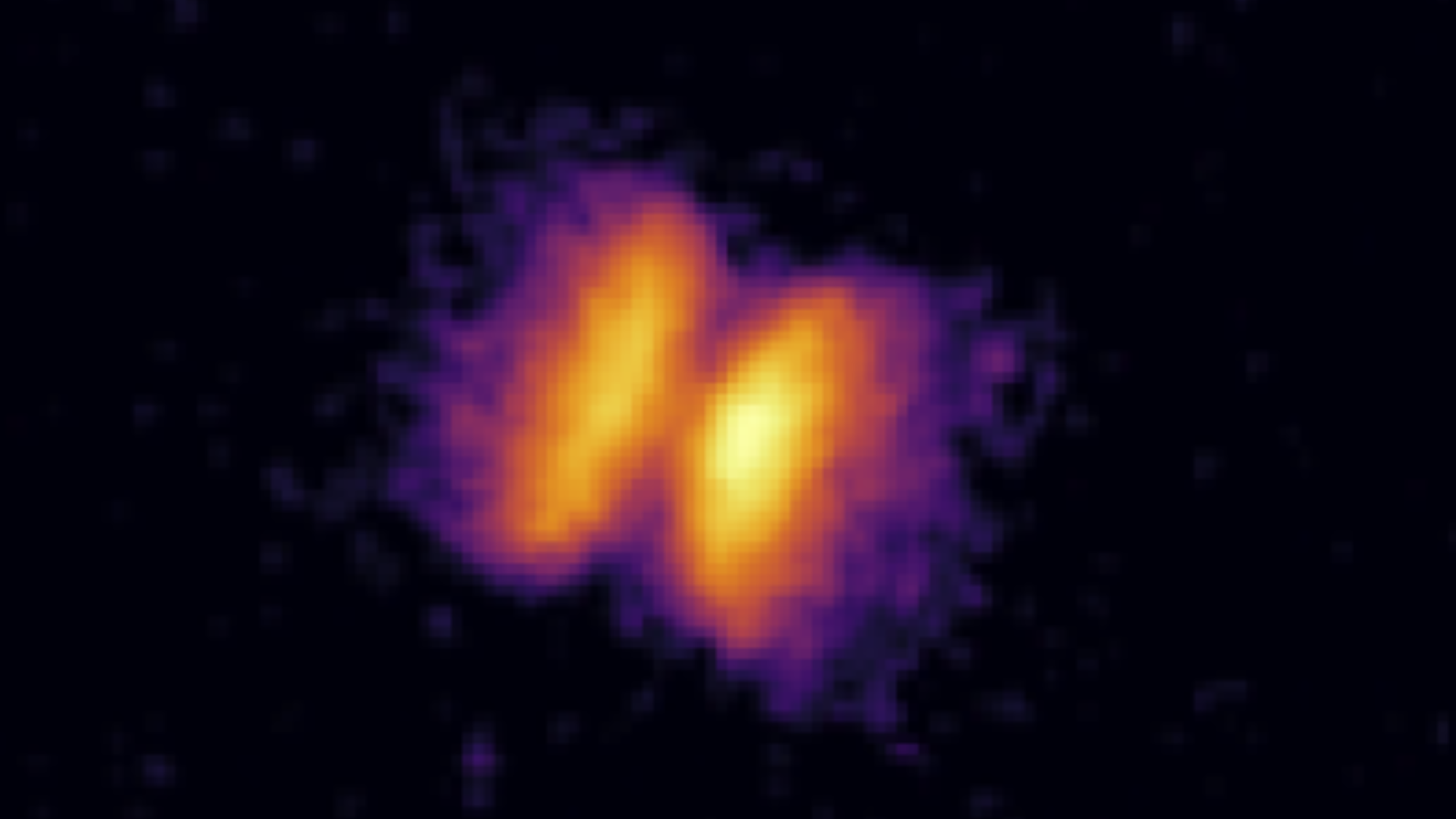
However, the implications extend far beyond just another helium nova. The repeated accretion and eruption cycles in a binary system involving a white dwarf hold profound significance for our understanding of another, far more powerful class of cosmic explosions: Type Ia supernovae. These supernovae occur when a white dwarf accretes so much material from its companion that it eventually exceeds a critical mass limit, known as the Chandrasekhar limit (approximately 1.4 solar masses). Beyond this threshold, the white dwarf can no longer support itself against gravitational collapse, leading to a catastrophic, complete thermonuclear destruction of the star itself. Scientists have long theorized that repeated nova eruptions, especially those involving the accretion of heavier elements like helium which contribute more significantly to the white dwarf’s total mass, could ultimately push a white dwarf over this critical mass limit, triggering a Type Ia supernova. V445 Puppis, with its ongoing accretion of helium, provides a tantalizing, real-time laboratory to study a system that could be on this evolutionary path, offering direct observational evidence for the progenitors of these universe-shaping events.
Type Ia Supernovae: Illuminating the Universe’s Expansion
The potential for V445 Puppis to eventually become a Type Ia supernova elevates its scientific importance to a cosmological scale. Type Ia supernovae are not merely spectacular explosions; they are invaluable tools for astronomers, serving as "standard candles" for measuring vast cosmic distances. The mechanism behind these supernovae, involving a white dwarf reaching a specific mass limit before detonating, results in a remarkably consistent peak luminosity. This means that, when observed, the intrinsic brightness of a Type Ia supernova is largely predictable. By comparing this known intrinsic brightness to its apparent brightness as seen from Earth, astronomers can precisely calculate its distance.
This ability to accurately measure cosmic distances is foundational to modern cosmology. Type Ia supernovae have been instrumental in mapping the large-scale structure of the universe and, crucially, in discovering and characterizing the accelerated expansion of the universe. It was observations of distant Type Ia supernovae in the late 1990s that provided the first compelling evidence for dark energy, a mysterious repulsive force believed to be driving this acceleration. Understanding the precise mechanisms that lead to Type Ia supernovae, including the role of systems like V445 Puppis as potential progenitors, is critical for refining these cosmic distance measurements. Any uncertainties in the progenitor systems or the explosion mechanisms could introduce systematic errors into our cosmological calculations, impacting our understanding of the universe’s age, its expansion rate (the Hubble constant), and the properties of dark energy. Therefore, V445 Puppis offers a unique window into the processes that ultimately fuel these cosmic beacons, allowing scientists to scrutinize the very foundations of our cosmological models.
Expert Perspectives and Future Research
The findings from V445 Puppis, presented at the Royal Astronomical Society’s National Astronomy Meeting in Birmingham, UK, have generated considerable excitement within the astronomical community. John Mills’ concluding remarks underscore the broader implications of this discovery: "I look forward to seeing how this result may help us uncover what powers other similar hydrogen-poor astronomical explosions, such as the famous Type Ia supernovas." This sentiment reflects the scientific community’s eagerness to connect the dots between various explosive stellar phenomena.
The continued monitoring of V445 Puppis will be paramount. Astronomers will be closely watching for signs of another nova eruption, which would provide invaluable data on the recurring nature of helium novas. Furthermore, long-term observations will be crucial to track the white dwarf’s mass accretion rate, which is key to assessing its trajectory towards a potential Type Ia supernova. This research will necessitate further theoretical modeling to simulate the complex interactions within such binary systems, the formation of helium stars, and the unique physics driving the "cosmic bullets." The data gathered from V445 Puppis will undoubtedly contribute to a more comprehensive understanding of stellar evolution in binary systems, the diverse pathways to stellar explosions, and the fundamental constants that govern the expansion of our universe. The Milky Way’s only known helium nova is proving to be a treasure trove of astrophysical insights, promising to illuminate some of the most profound mysteries of the cosmos for years to come.