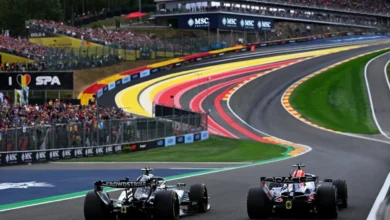
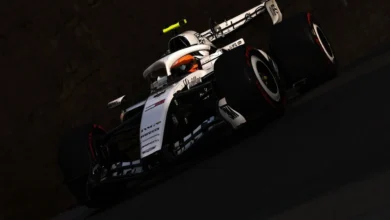
David Coulthard labels potential return to Madrid circuit without layout modifications as an act of sporting stupidity

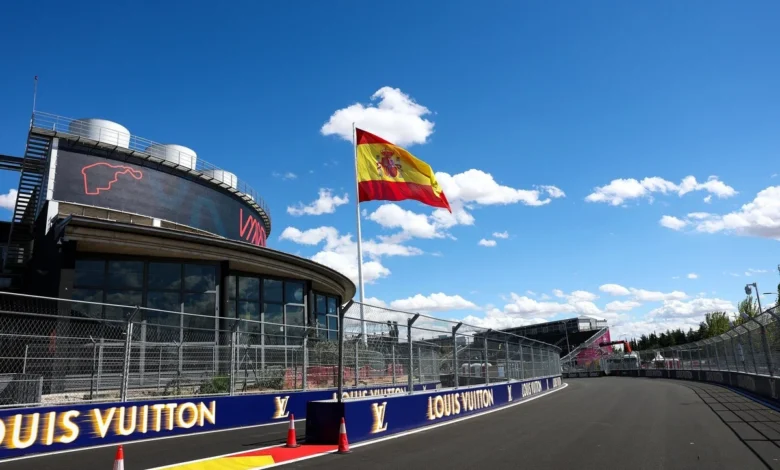
The inaugural Formula 1 Grand Prix at the Madrid semi-permanent circuit has concluded under a cloud of technical scrutiny, with former F1 driver David Coulthard issuing a stern warning to race organizers regarding the track’s future. Following a race weekend defined by a lack of competitive overtaking and a processional tactical battle, Coulthard has publicly urged the FIA and circuit promoters to reconsider the current layout ahead of the 2027 event. The critique highlights a growing tension between the desire for high-speed, modern urban circuits and the fundamental requirements for competitive racing.
A Processional Debut
The Madrid Grand Prix was intended to be a flagship addition to the FIA Formula 1 World Championship calendar, showcasing the sport’s ability to integrate high-speed racing into a dense urban environment. However, the inaugural race failed to deliver the wheel-to-wheel intensity fans have come to expect. Pole-sitter Lando Norris, who showed dominant pace throughout the qualifying sessions, found his race compromised not by a lack of performance, but by the circuit’s restrictive nature and a poorly timed Virtual Safety Car (VSC).
When the VSC was deployed, Norris had already passed the pit lane entry, effectively trapping him on older tires while his rivals behind him capitalized on the "cheap" pit stop opportunity. Kimi Antonelli, driving for Mercedes, executed a flawless strategy, secured fresh rubber, and maintained the lead to clinch his eighth grand prix victory of the season. The inability for other drivers to mount a serious challenge during the remainder of the race served as a microcosm of the circuit’s wider issues: once a track position is established, the lack of heavy braking zones and wide-radius corners makes defending relatively straightforward.
Technical Limitations and Driver Feedback
The dissatisfaction expressed by Coulthard is mirrored by the current crop of drivers. Max Verstappen, the three-time world champion, noted that the circuit’s fast, flowing nature made it nearly impossible to follow closely enough to initiate an overtake. Verstappen remarked that, much like the streets of Monaco, the track layout essentially allowed a lead driver to dictate the pace from the middle of the road, forcing the trailing car to accept the air turbulence and lack of grip rather than attempting a maneuver.
In his appearance on the Up To Speed podcast, Coulthard emphasized that the sport’s governing bodies must treat this feedback with gravity. "I think the fans, we’ve got to listen to them," Coulthard stated. "We can’t say, ‘Oh, you’re wrong.’ If they’re saying they think the race was boring, then hey, that’s what they think. What we do have is the opportunity to make changes because if we don’t make changes and we come back and have a similar processional race… if we take all that information and come back next year with exactly the same, then put the same cake mix into the oven and expect a different outcome, that’s stupidity."
The Chronology of the Madrid Weekend
The weekend began with high expectations, as the Madrid circuit was marketed as a hybrid between a traditional permanent track and a street circuit.
- Friday Practice: Teams struggled to find the optimal balance due to the track’s varying surface temperatures and the unique demands of the high-speed sections. Data indicated that tire degradation was lower than anticipated, which contributed to the one-stop strategy dominance.
- Saturday Qualifying: Lando Norris secured pole position, demonstrating that the car setup was optimized for raw speed. However, the thin air and high-speed chicanes suggested that following other cars would be difficult.
- Sunday Race: The race start saw clean driving but minimal position changes. The VSC incident in the middle of the race became the deciding factor, effectively cementing the finishing order for the top five.
- Post-Race Analysis: By Monday, telemetry data showed that the "dirty air" effect was significantly amplified at this specific circuit compared to others on the 2027 calendar, validating driver complaints.
Proposed Solutions and Circuit Modifications
Coulthard, drawing on his experience as a veteran of 246 Grand Prix starts, offered specific technical advice on how to salvage the track’s viability. He argued that the current high-speed chicanes are counter-productive to racing. "A good old-fashioned, slower chicane like you have at Monza creates overtaking because you have braking distance," he noted.

By introducing a heavier braking zone, the circuit would allow cars to use their DRS (Drag Reduction System) and mechanical grip to dive down the inside. Coulthard suggested that the first and second chicanes be re-profiled to be more aggressive, or that a "hairpin loop" be integrated into a sector of the track to break up the current flow. While acknowledging that the middle section—characterized by fast, sweeping corners—is difficult to modify due to the surrounding infrastructure, he insisted that a "loop" is the only way to introduce a genuine overtaking point.
Broader Implications for F1 Infrastructure
The situation in Madrid raises larger questions about the direction of modern F1 track design. Over the last decade, there has been a trend toward "stadium-style" street circuits, often prioritizing proximity to city centers over the technical requirements of the cars. However, as the 2027 regulations have increased the physical dimensions and weight of the vehicles, the challenge of overtaking on narrow, high-speed tracks has intensified.
The FIA is currently conducting a post-event review of the Madrid track, which is standard procedure for new venues. This review will include an analysis of the "racing quality index"—a metric that combines overtakes, tire degradation, and delta times between the top and bottom of the field. Should the data confirm the spectator and driver sentiment, the pressure to mandate changes before the 2027 return will become immense.
For the organizers, the dilemma is one of cost versus reputation. Significant alterations to a semi-permanent circuit require substantial capital investment, not only in asphalt but in safety infrastructure, barriers, and run-off areas. Yet, the cost of inaction—a second year of uncompetitive racing—could lead to a decline in ticket sales and diminished brand value for the Madrid Grand Prix.
The Verdict on Future Performance
The sport is at a crossroads regarding how it balances the visual spectacle of urban racing with the necessity of on-track action. If Formula 1 is to maintain its recent growth in popularity, it cannot afford to present races that feel like exhibitions rather than contests.
David Coulthard’s warning serves as a reminder that the sport’s success is built on the unpredictability of the race outcome. If a circuit is designed in a way that renders strategy and driver skill secondary to starting position, the integrity of the championship is undermined. The upcoming months will be critical for the Madrid event organizers. With the calendar already locked, any modifications will need to be fast-tracked through planning committees, engineering firms, and FIA safety inspections.
Whether the stakeholders choose to heed the advice of veteran drivers and technical analysts remains to be seen. However, as the global audience for Formula 1 continues to diversify and grow, the tolerance for "processional" racing is at an all-time low. The Madrid circuit serves as a test case for whether the sport can adapt to its own evolution or if it will be held back by the very infrastructure it builds to celebrate its future. The message is clear: if the layout remains unchanged, the sport risks alienating the very fans who have driven its recent commercial success.