The Nexus of Financial Inclusion and Climate Resilience: Empowering Women in Sub-Saharan Africa


Empowering women through enhanced access to formal financial services could significantly strengthen the ability of households to withstand the escalating frequency of climate-induced shocks, according to a comprehensive study published in the journal Climate Risk Management. The research, which focuses on sub-Saharan Africa, underscores a critical link between financial inclusion, gender equality, and environmental adaptation. While the study highlights that formal financial tools such as bank accounts and mobile money are vital for managing immediate crises, it also warns that these tools must be part of a broader strategy to dismantle systemic gender disparities if long-term climate resilience is to be achieved across the continent.
The Critical Intersection of Gender and Climate Vulnerability
Sub-Saharan Africa remains one of the regions most susceptible to the adverse effects of a warming planet. From the devastating floods in Ghana and Nigeria to the prolonged droughts in the Horn of Africa, the region faces a litany of environmental stressors that destabilize communities and undermine economic growth. Within this context, women often find themselves on the front lines of the crisis.
Gender-based disparities in income, land ownership, and social mobility mean that women-headed households are frequently the least equipped to recover from weather-related disasters. According to the United Nations, women are more likely to be displaced by climate events and often have less access to the information and resources necessary for adaptation. The study, led by researchers including Francis Anaisie of the University of Cape Coast, Ghana, sought to quantify how breaking these financial barriers could alter the trajectory of household recovery.
Methodology and the Resilience Index
To reach their conclusions, the research team analyzed data from 25,511 women-headed households across 37 sub-Saharan African countries. The data was sourced from Afrobarometer, a pan-African, non-partisan survey research network. The researchers employed the Organisation for Economic Co-operation and Development (OECD) framework to measure "financial inclusion," which encompasses a range of factors including bank account ownership, mobile phone usage, and internet access.
Central to the study’s analysis was the use of the Resilience Index Measurement and Analysis (RIMA) metric, developed by the UN Food and Agriculture Organization (FAO). This metric quantifies a household’s capacity to cope with shocks and stressors, such as food insecurity or extreme weather, by looking at assets, social safety nets, and access to basic services.
The findings revealed a nuanced picture: while households led by financially included women were remarkably effective at "absorbing" shocks—meaning they could handle the immediate aftermath of a disaster—their "adaptive" capacity remained lower. This suggests that while money in a bank account helps buy food after a flood, it does not necessarily provide the structural security needed to prevent the next flood from being equally devastating.
A Decade of Divergence: The Widening Gender Gap
A significant portion of the study focuses on the historical trends of financial inclusion in the region. Data from the World Bank Group’s Global Findex Database shows that the share of women with bank accounts in sub-Saharan Africa has grown steadily, reaching 52% in 2024. However, this progress is overshadowed by a growing disparity between men and women.
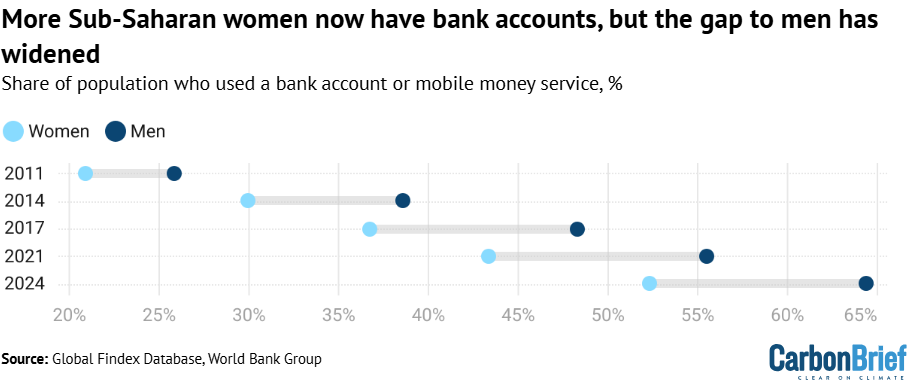
In 2011, the gap in account ownership between men and women in the region was approximately five percentage points. By 2024, that gap had expanded to 12 percentage points. This divergence indicates that while financial systems are expanding, they are doing so at a pace and in a manner that favors men, often leaving women dependent on male relatives for capital or credit.
"Financial inclusion is one of the key policy tools for empowering women," Francis Anaisie told Carbon Brief. "But as to whether this actually translates into better climate outcomes for women is limited; this study seeks to address that gap."
Short-term Absorption vs. Long-term Adaptation
The study differentiates between two types of resilience: absorptive capacity and adaptive capacity. Absorptive capacity refers to the immediate ability to recover from a shock, such as using savings to replant crops after a freak storm. Adaptive capacity involves making proactive changes to livelihoods or infrastructure to reduce future risk.
The research found that financially empowered women were better at the former. With access to credit and savings, women can make autonomous decisions about purchasing drought-resistant seeds or joining community mutual-support networks. In emergencies, these women are less likely to resort to "negative coping strategies," such as pulling children out of school or selling off essential productive assets like livestock.
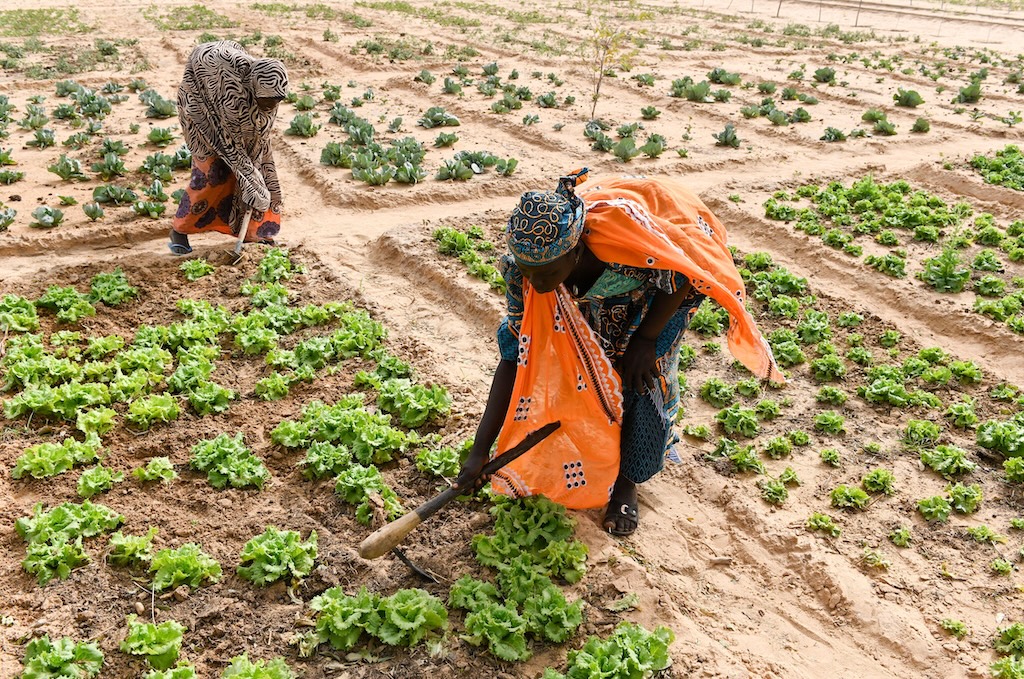
However, the study notes that financial access alone cannot erase the cultural and social barriers that prevent long-term adaptation. In many parts of sub-Saharan Africa, women are excluded from land ownership and leadership roles in local climate-adaptation committees. Without the right to own the land they farm, women have little incentive or ability to invest in long-term soil conservation or irrigation infrastructure.
Expert Insights and Real-World Implications
Tracy Kajumba, director for the Least Developed Countries initiative for Effective Adaptation and Resilience (LIFE-AR) at the International Institute for Environment and Development (IIED), emphasizes that structural inequalities "amplify" vulnerability. Kajumba, who was not involved in the study, noted that women are often the primary laborers in the agricultural sector, yet they have the least control over the financial returns of their labor.
"Women are on the front line doing farming, planting, harvesting," Kajumba explained. "If they don’t have the income to invest in drought-resistant crops or water-saving technologies, it becomes difficult for households to adapt."
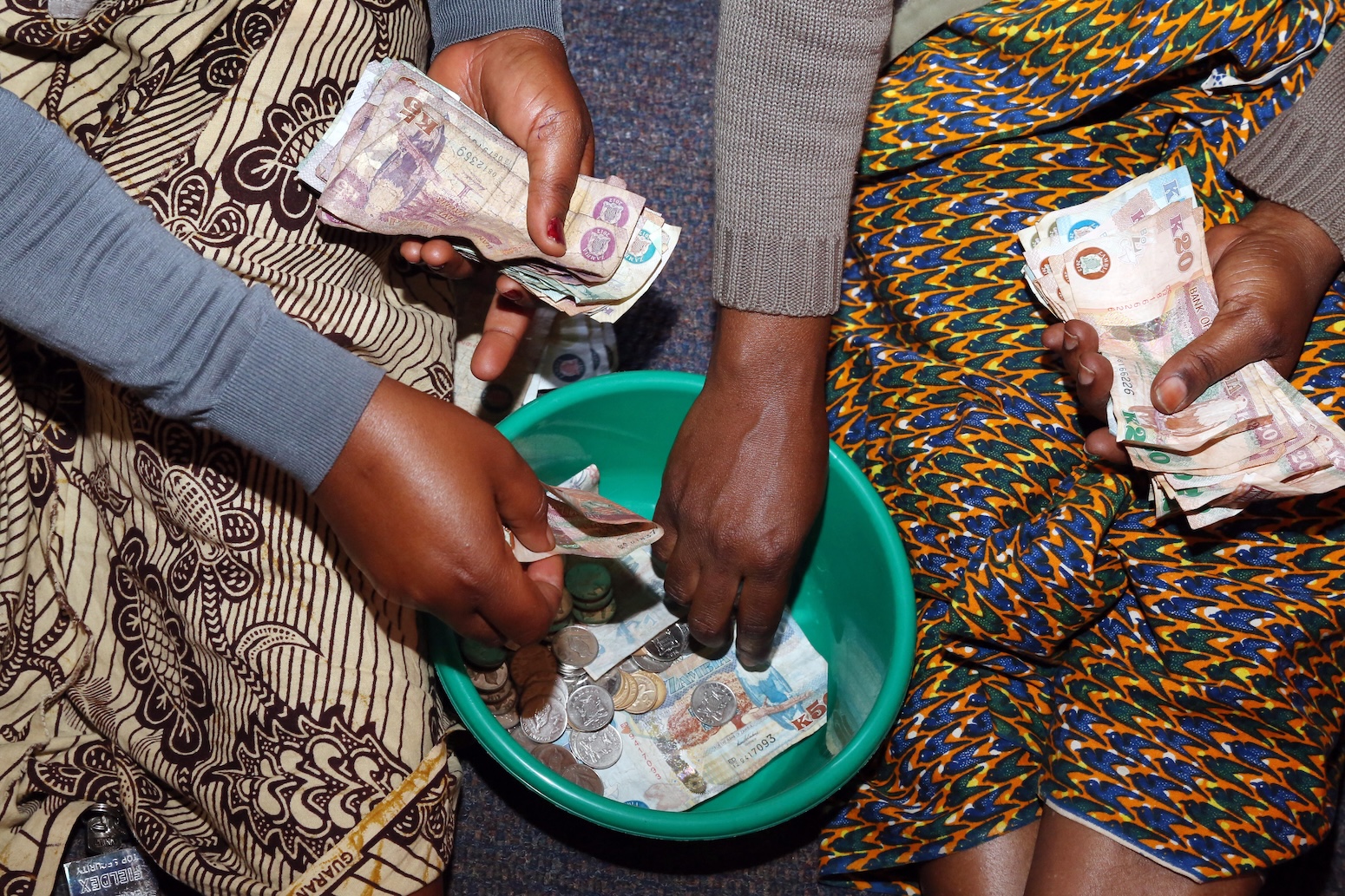
The study highlights recent events in Ghana, where severe flooding destroyed the livelihoods of thousands of informal workers. Many of these women kept their savings in cash or informal "susu" collections, which were lost in the rising waters. Had these women been integrated into a formal digital banking system with access to climate-indexed insurance, the economic blow would have been significantly softened.

Policy Recommendations for a Resilient Future
The researchers argue that for financial inclusion to truly serve as a shield against climate change, it must be paired with targeted gender-sensitive policies. The study suggests several avenues for government intervention:
- Climate-Indexed Insurance: Subsidized insurance schemes specifically for women farmers in drought-prone or flood-prone regions could provide a guaranteed safety net.
- Joint Land-Titling: Legislative changes to ensure women have equal rights to land ownership would encourage long-term investment in climate-resilient farming techniques.
- Gender Quotas in Governance: Implementing quotas for women in local climate-adaptation and disaster-management committees to ensure their specific needs are addressed in regional planning.
- Digital Literacy Programs: Since much of modern financial inclusion is driven by mobile money, training programs to bridge the digital literacy gap are essential.
Broader Impact and Global Alignment
The findings of this study have significant implications for the United Nations’ Sustainable Development Goals (SDGs), particularly SDG 5 (Gender Equality) and SDG 13 (Climate Action). The researchers posit that the two goals are inextricably linked; progress in one is nearly impossible without progress in the other.
As the global community prepares for future climate negotiations, the role of "inclusive growth" has become a central theme. The study argues that climate finance—often discussed at the macro level of international grants and national budgets—must be funneled down to the individual level to be effective.
The evidence from sub-Saharan Africa suggests that when a woman is financially independent, her entire household becomes more stable. This stability creates a ripple effect, improving health outcomes, increasing school enrollment for children, and fostering more robust local economies.

Conclusion: The Path Forward
The research published in Climate Risk Management serves as a clarion call for policymakers to view financial inclusion not just as an economic goal, but as a cornerstone of environmental strategy. While the expansion of banking services to 52% of women in the region is a step in the right direction, the widening gender gap and the lack of long-term adaptive capacity remain significant hurdles.
Ultimately, the study concludes that "absorbing" the shocks of today is only half the battle. To survive the climate realities of tomorrow, women in sub-Saharan Africa must be granted the structural power to change their circumstances, not just the financial means to survive them. Addressing the deep-seated cultural and legal barriers to gender equality is no longer just a matter of social justice—it is a fundamental requirement for climate survival in the 21st century.
Related posts: