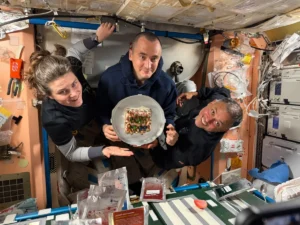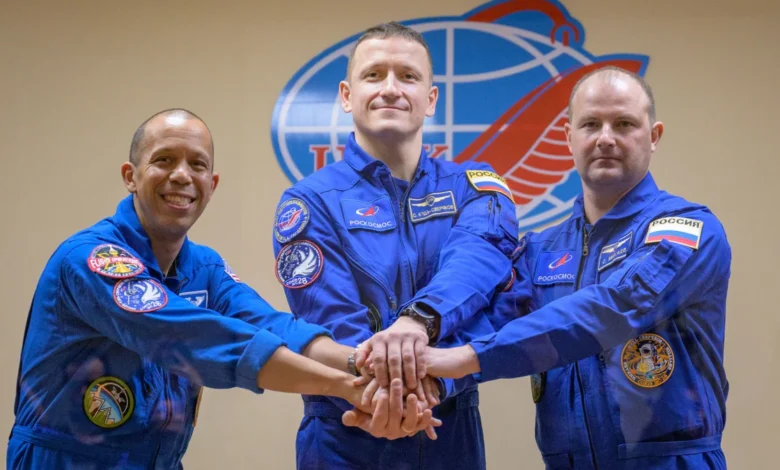
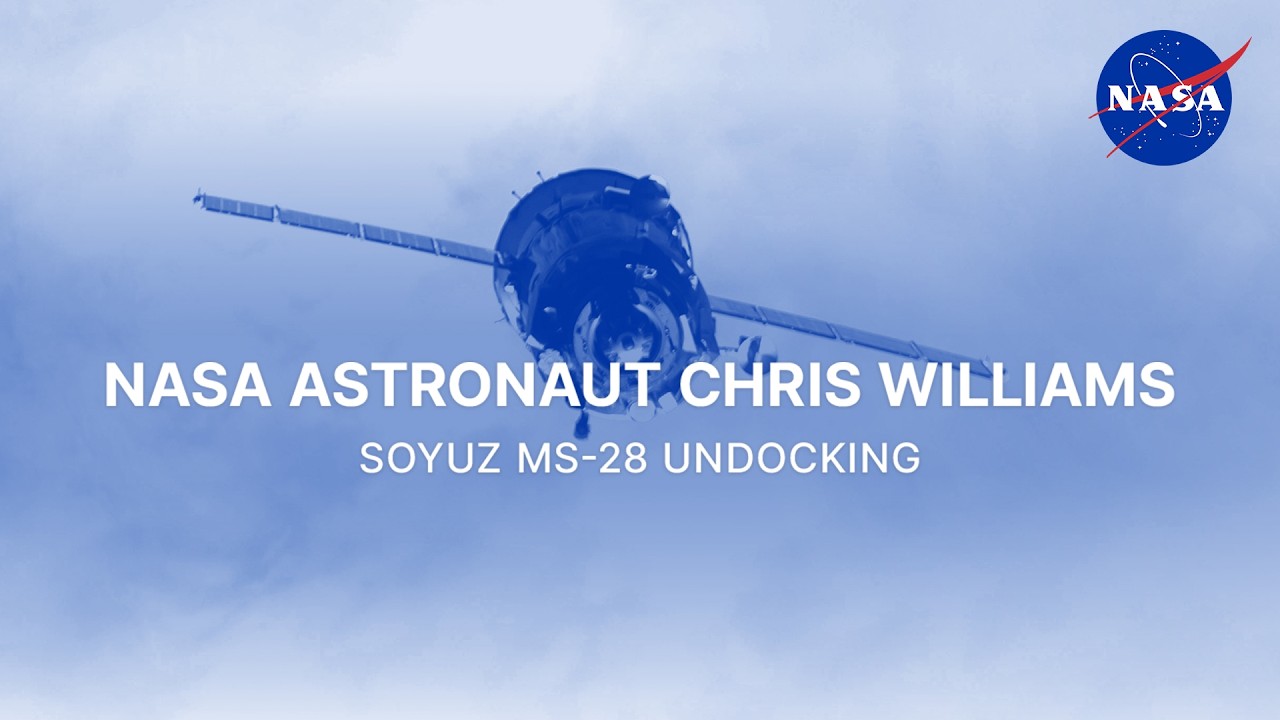
A U.S.-Russian crew is slated to return to Earth from the International Space Station (ISS) early Sunday morning, July 26, culminating an extended mission of over 240 days. The homecoming of NASA astronaut Chris Williams and Roscosmos cosmonauts Sergey Kud-Sverchkov and Sergei Mikaev aboard their Soyuz MS-28 spacecraft will signify a critical juncture in the ongoing human presence in low Earth orbit, transitioning leadership and reinforcing the intricate web of international cooperation that underpins the orbiting laboratory. This highly anticipated event, which includes a meticulously choreographed undocking, deorbit burn, and parachute-assisted landing on the vast steppes of Kazakhstan, will be broadcast live by NASA, allowing a global audience to witness the complex ballet of spaceflight operations.
The Soyuz MS-28 Mission: A Record of Endurance and Collaboration
The journey for the crew of Soyuz MS-28 commenced on November 27, an auspicious Thanksgiving Day launch that propelled the trio into orbit. For Chris Williams and Sergei Mikaev, this mission marked their inaugural voyage into the cosmos, a testament to years of rigorous training and preparation. Sergey Kud-Sverchkov, on the other hand, embarked on his second spaceflight, bringing valuable experience to the crew. Their mission, designated Expedition 74 for much of its duration, has seen them contribute significantly to the station’s scientific objectives, maintenance, and operational continuity.
Over the course of 241 days, these three individuals have circled Earth an astonishing 3,856 times, covering a staggering distance exceeding 102 million miles (approximately 164 million kilometers). This prolonged exposure to the microgravity environment of space is invaluable for understanding the long-term effects of spaceflight on the human body, critical research for future deep-space missions to the Moon and Mars. Their work has encompassed a broad spectrum of scientific disciplines, from fundamental biology and human physiology to materials science, Earth observation, and technology demonstrations, all contributing to humanity’s collective knowledge and technological advancement.
A Chronology of Homecoming: From Orbit to Kazakh Steppe
The intricate process of returning the Soyuz MS-28 crew to Earth is a multi-stage operation, meticulously planned and executed by mission control centers in Houston and Moscow. The events unfold over several hours, beginning with a ceremonial change of command and concluding with the final touchdown.
Friday, July 25 (All times EDT):
- 9:40 a.m. EDT (1340 GMT): The formal change-of-command ceremony takes place aboard the International Space Station. In a time-honored tradition, outgoing Expedition 74 commander Sergey Kud-Sverchkov will officially hand over the reins of the orbiting outpost to NASA astronaut Jessica Meir. This symbolic transfer of authority marks the imminent conclusion of Expedition 74 and the beginning of Expedition 75 once the Soyuz MS-28 undocks. NASA provides live coverage of this significant milestone.
Saturday, July 26 (All times EDT):
- 11:10 p.m. EDT (0310 GMT July 27): NASA’s webcast resumes to cover the crew farewells. The three returning spacefarers will bid goodbye to their remaining crewmates on the ISS, a moment often filled with emotion and camaraderie, reflecting the bonds forged in the unique environment of space.
- 11:30 p.m. EDT (0330 GMT July 27): Hatches between the Soyuz MS-28 spacecraft and the International Space Station are expected to be closed. This critical step physically separates the Soyuz from the station’s interior, initiating the final preparations for undocking. Pressure checks and system activations will follow, ensuring the spacecraft is sealed and ready for its autonomous departure.
Sunday, July 27 (All times EDT):
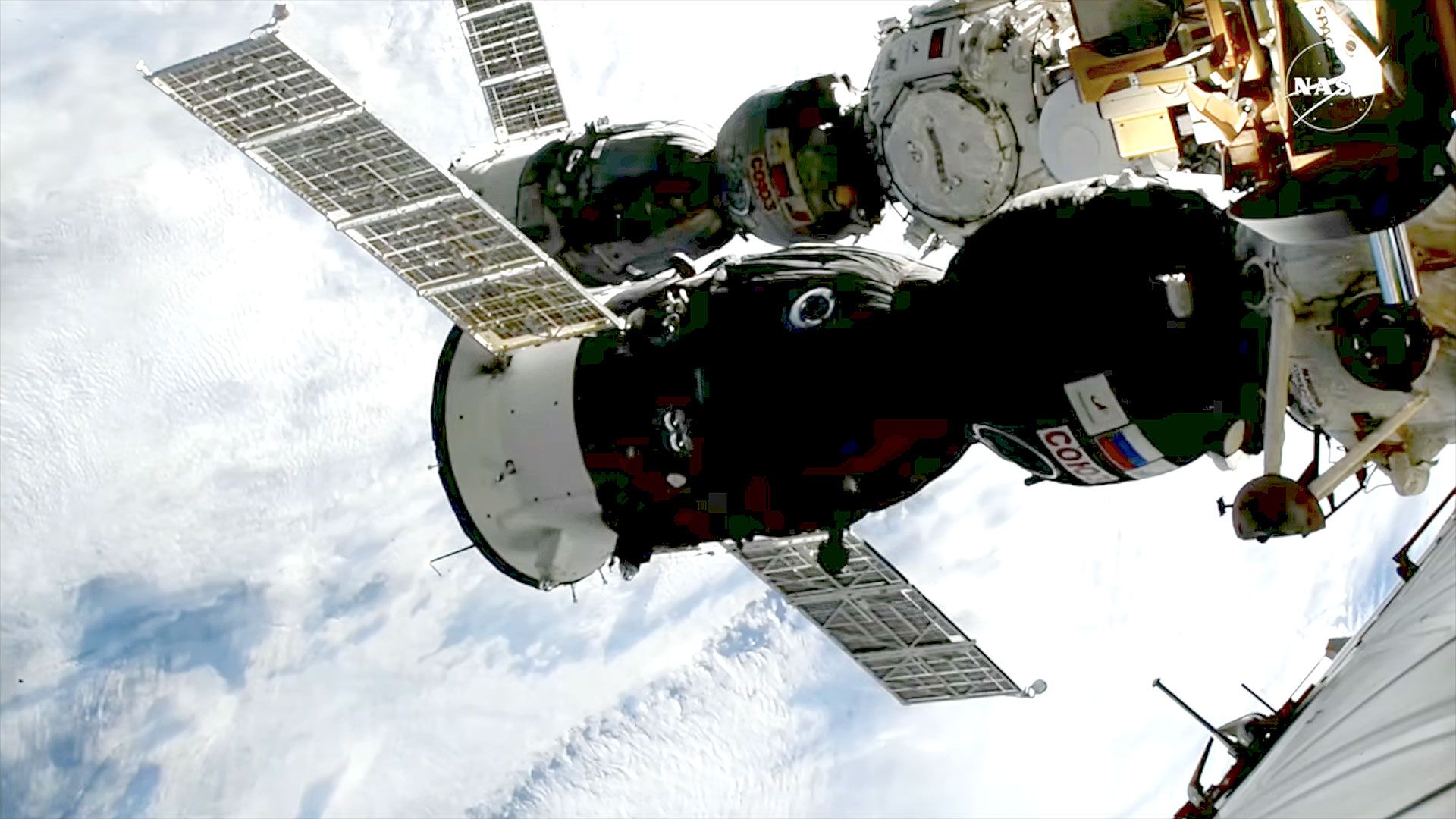
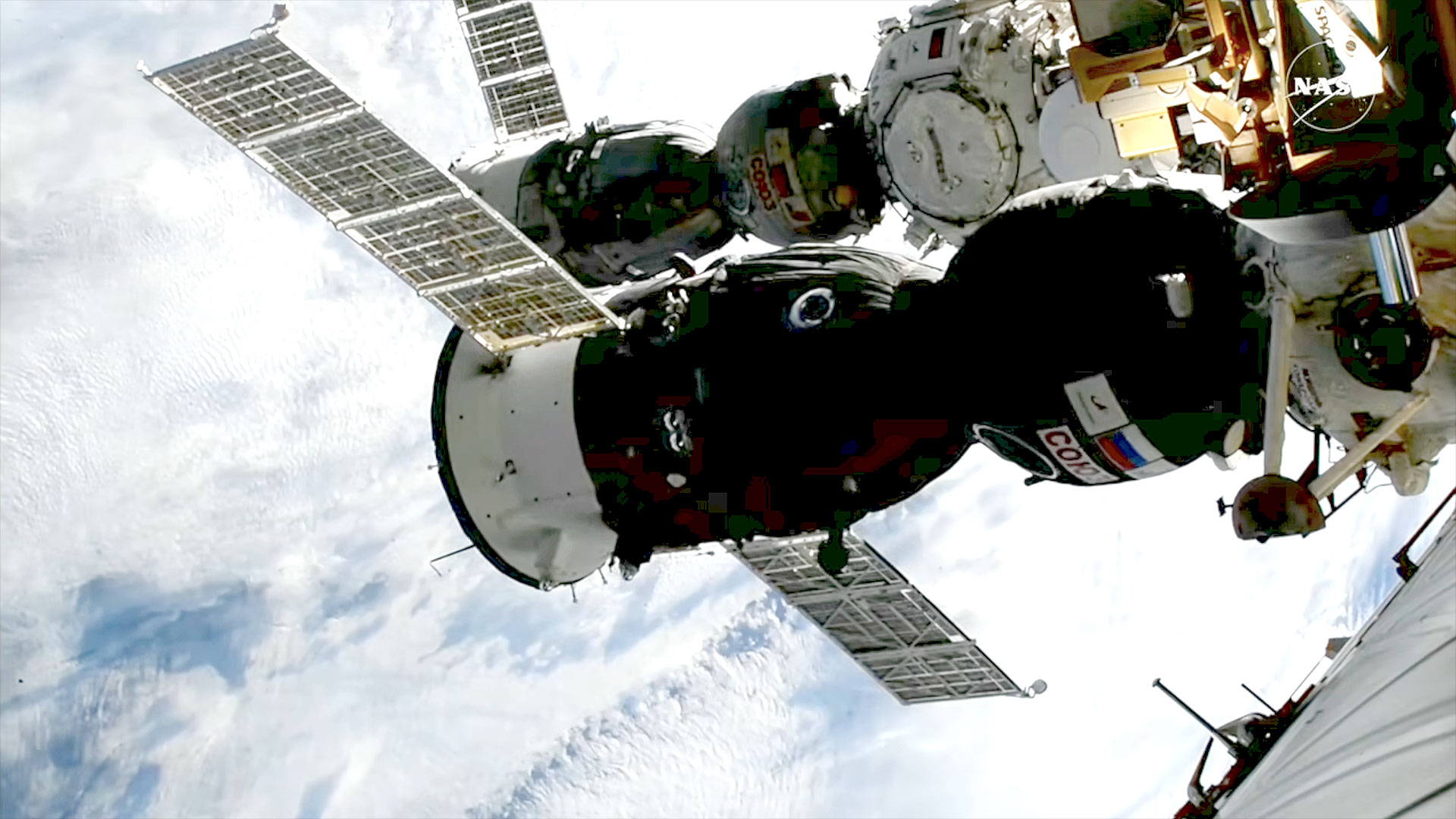
- 2:30 a.m. EDT (0630 GMT): Undocking coverage begins. Mission control will monitor the automated sequence as the Soyuz MS-28 slowly backs away from the Poisk module of the ISS, a delicate maneuver performed by the spacecraft’s thrusters.
- 3:02 a.m. EDT (0702 GMT): Soyuz MS-28 is scheduled to undock from the ISS. This precise moment marks the official end of Expedition 74 and the commencement of Expedition 75. The Soyuz will drift away from the station, taking high-resolution images of the orbital complex as it departs.
- 5:15 a.m. EDT (0915 GMT): The webcast resumes for deorbit and landing activities. At this point, the Soyuz will have executed its deorbit burn, a precisely timed firing of its main engine that slows the spacecraft, initiating its controlled descent into Earth’s atmosphere.
- 6:26 a.m. EDT (1026 GMT): Expected touchdown of the Soyuz MS-28 capsule. The spacecraft will land on the remote steppe of Kazakhstan, specifically southeast of the city of Dzhezkazgan. The landing sequence involves several critical phases: atmospheric re-entry, deployment of a drogue parachute to slow and stabilize the capsule, deployment of the main parachute, and a final burst of retro-rockets just before impact to ensure a soft landing.
The Soyuz Spacecraft: A Workhorse of Human Spaceflight
The Soyuz spacecraft, a design that traces its heritage back to the early days of the Soviet space program, remains an indispensable component of human spaceflight. Its reliability and robust design have made it the primary vehicle for transporting crews to and from the ISS for decades. The three-module design—an orbital module, a descent module, and an instrument/propulsion module—allows for efficient operation. The descent module, heavily shielded and equipped with parachutes and retro-rockets, is the only section that returns to Earth, carrying the crew.
The journey through Earth’s atmosphere is a harrowing experience, with the capsule reaching temperatures of several thousand degrees Celsius as it plunges through the upper atmosphere. The heat shield ablates, protecting the crew inside. Deceleration forces can reach several Gs, a significant physical challenge for the astronauts and cosmonauts. The final moments before touchdown are mitigated by the firing of solid propellant rockets located beneath the descent module, reducing the impact velocity to a mere few miles per hour. This "soft landing" system is crucial for the safety and well-being of the returning crew.
Post-Landing Logistics and Medical Recovery
Upon touchdown, specialized recovery teams, comprising medical personnel, engineers, and support staff, rapidly converge on the landing site. These teams are typically a joint effort between Roscosmos and NASA, highlighting the ongoing operational collaboration. The returning crew members, often appearing disoriented and weakened by the readaptation to gravity after months in microgravity, are extracted from the capsule. They undergo immediate preliminary medical checks to assess their vital signs and overall health.
From the landing site, the crew will be transported by helicopter to Karaganda, Kazakhstan, a major staging point for post-flight operations. There, more extensive medical examinations and debriefings will take place. Following these initial assessments, the crew will separate: NASA astronaut Chris Williams will embark on a transatlantic flight back to NASA’s Johnson Space Center in Houston, Texas, where he will undergo a comprehensive post-flight rehabilitation and research program. Meanwhile, Roscosmos cosmonauts Sergey Kud-Sverchkov and Sergei Mikaev will return to their training base in Star City, Russia, for their own debriefing and recovery protocols. The initial days and weeks back on Earth involve intense physical therapy to regain bone density, muscle mass, and balance, as the body readjusts to the constant pull of gravity.
The Broader Implications: Sustaining the International Space Station and Future Exploration
The return of the Soyuz MS-28 crew is more than just a routine spaceflight operation; it is a vital part of the continuous cycle that sustains the International Space Station, a unique scientific laboratory and a beacon of international cooperation.
Maintaining Continuous Human Presence: Crew rotations are fundamental to the ISS program, ensuring a fresh supply of scientific expertise and operational personnel. Each new expedition brings new perspectives, skills, and research objectives, keeping the station productive and dynamic. The smooth transition from Expedition 74 to Expedition 75 underscores the robustness of ISS operations and the seamless integration of diverse international teams.
Scientific Returns and Health Research: The 241-day mission duration provides invaluable data for long-duration spaceflight research. Scientists monitor the astronauts’ physiological changes, psychological well-being, and adaptation strategies. This research is paramount for planning future human missions beyond low Earth orbit, particularly to destinations like Mars, which would require even longer transit times and stays in deep space. Understanding and mitigating the effects of radiation, bone density loss, muscle atrophy, and cardiovascular changes are critical challenges that ISS research directly addresses.
International Partnership as a Cornerstone: In an era of complex geopolitical dynamics, the ISS stands as a powerful symbol of peaceful international cooperation. The joint efforts of NASA and Roscosmos, alongside other partner agencies (ESA, JAXA, CSA), demonstrate that nations can overcome terrestrial differences to achieve common goals in space. The Soyuz spacecraft itself, developed by Russia, has been a reliable ferry for astronauts of all nationalities for many years, emphasizing this interdependent relationship. The success of each mission reinforces the trust and shared commitment among partner nations to the future of space exploration.
Inspiring the Next Generation: Events like these—the launch, the life in orbit, and the triumphant return—capture the public’s imagination and inspire future generations of scientists, engineers, and explorers. Live broadcasts and detailed coverage by organizations like Space.com, courtesy of NASA, make these extraordinary feats accessible to millions, fostering a global appreciation for scientific endeavor and the boundless possibilities of space.
Looking Ahead: The Future of Space Exploration
As the ISS approaches the potential end of its operational life in the coming years, missions like Soyuz MS-28 continue to provide crucial data and experience. The insights gained from long-duration missions are directly applicable to the development of new lunar habitats, Mars transit vehicles, and next-generation space stations, whether commercially or internationally operated. The lessons learned about human endurance, spacecraft reliability, and international teamwork will form the bedrock of humanity’s ambitious future endeavors in space.
The successful undocking and landing of Soyuz MS-28 will not only mark the safe return of three dedicated space travelers but also reaffirm the enduring spirit of exploration, the power of collaboration, and the continuous quest for knowledge that defines human spaceflight. The world watches as Chris Williams, Sergey Kud-Sverchkov, and Sergei Mikaev transition from an orbital laboratory to the terrestrial embrace, bringing with them invaluable experiences and data that will propel humanity further into the cosmos.