Systemic Financial Aid Failures: How Legislative Rushed Timelines and Administrative Gridlock Left Thousands of Students Stranded


Mikiah Roberson, a graduate student in the University of Maryland Global Campus’s digital forensics and cyber investigation program, expected to receive her federal $6,700 student loan disbursement between May 27 and June 3. For a disabled veteran like Roberson, who relies on these disbursements to cover rent, utilities, and transportation while her tuition is otherwise satisfied, the funds are not a luxury—they are a lifeline. When June 3 arrived without the expected notification of deposit, and the following days stretched into weeks of silence, Roberson found herself spiraling into a crisis of housing and food insecurity. By the time the funds finally arrived in mid-July, she had already faced the looming threat of eviction and the crushing weight of academic distraction. Roberson’s story is not an isolated incident; it is a symptom of a broader, systemic failure in the administration of federal financial aid triggered by the implementation of the One Big Beautiful Bill Act.
The Legislative Catalyst and the Implementation Crisis
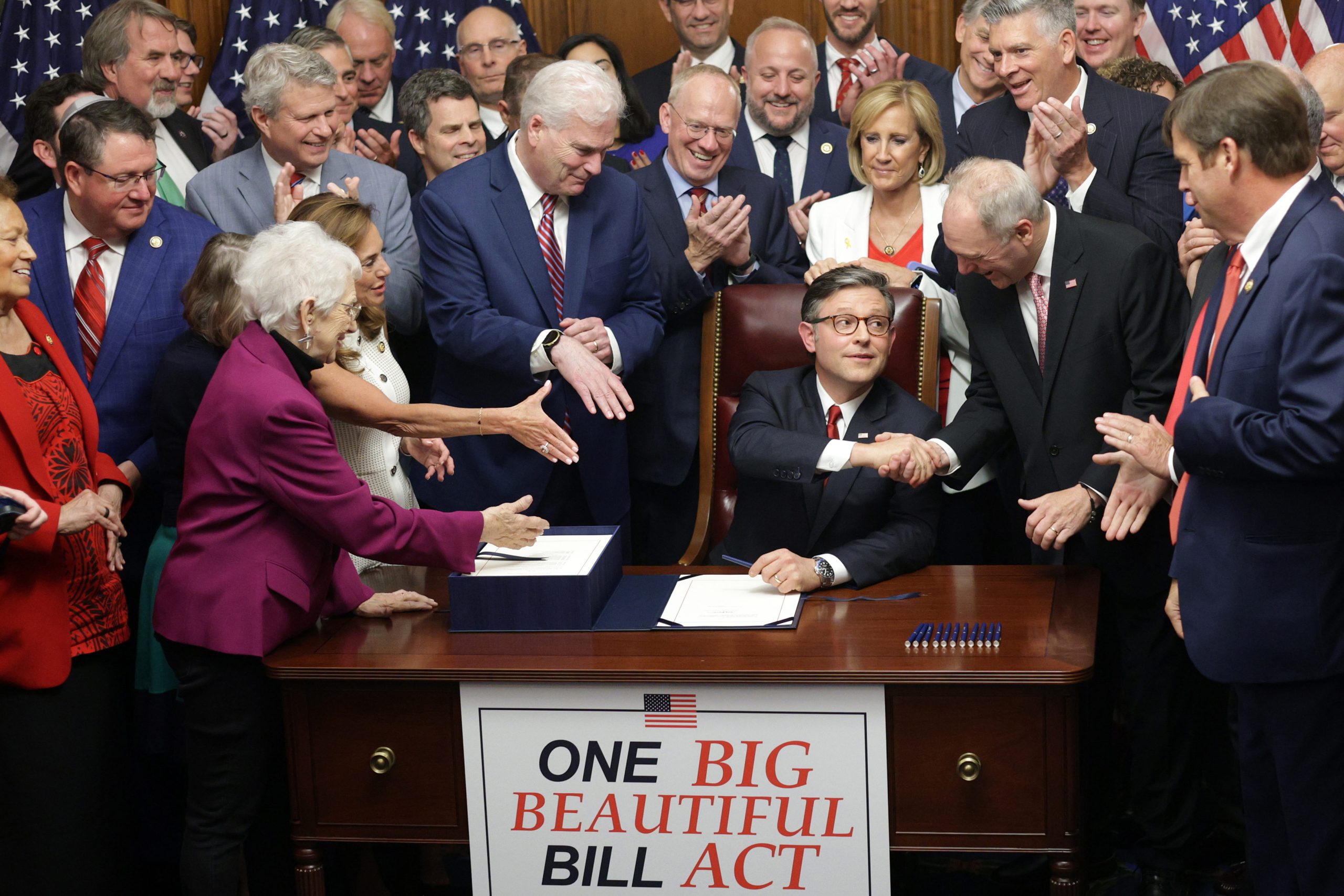
The root of the current disbursement catastrophe lies in the One Big Beautiful Bill Act, signed into law by President Donald Trump on July 4, 2025. The legislation introduced sweeping, structural changes to federal student aid, including the elimination of the Graduate PLUS loan program, new lifetime borrowing caps, and lowered aggregate debt limits. Furthermore, the act mandated that, beginning in the 2026-27 academic year, colleges must prorate loan amounts based on a student’s specific credit load.
While the policy goals of the legislation were to curb rising debt, the implementation timeline created a logistical nightmare. The Department of Education was tasked with rolling out these complex, multifaceted changes by July 1, 2026. Under the Higher Education Act, the federal government is bound by a "master calendar" that mandates a structured rulemaking process, beginning 18 months prior to the start of an academic year. This process requires extensive negotiations, public comment periods, and thorough vetting. By passing the bill in July 2025 with an effective date of July 1, 2026, Congress bypassed this standard safeguard, leaving the Department of Education and higher education institutions with less than 12 months to reconfigure the entire national infrastructure of student aid.
A Chronology of Bureaucratic Delay
The timeline of the disaster highlights the disconnect between legislative ambition and operational reality. Throughout the winter of 2025 and spring of 2026, university financial aid offices across the country sounded the alarm, warning that they lacked the necessary guidance to update their internal software systems.
- July 2025: The One Big Beautiful Bill Act is signed, setting an aggressive July 2026 deadline.
- November 2025: The Department of Education reaches a consensus on proposed rules, but final guidance remains pending.
- April 2026: Over 40 higher education organizations, including the National Association of Student Financial Aid Administrators (NASFAA), formally petition the Department of Education to delay implementation until 2027 to ensure technical readiness.
- May 2026: The Department of Education releases final rules, providing schools with only weeks to adjust internal systems before the summer term.
- June 2026: Thousands of students, including those in graduate programs with summer starts, report delayed disbursements.
- August 2026: A bipartisan group of Congressional Democrats issues a formal request for further guidance, as many institutions remain unable to process aid accurately.
The Impact on Student Stability
The failure of the disbursement system has had a disproportionate impact on the nearly 60 percent of students who already face housing or food insecurity. When aid is delayed, there is no federal "safety net" or recourse for students; they are left to navigate the gap between their financial needs and their school’s administrative capacity.
One graduate student at National University, speaking on the condition of anonymity due to fears of institutional retaliation, described a similar ordeal. Expecting a $5,000 disbursement in early June, she found herself unable to pay rent for two consecutive months. "I had to reach out to family members and get help," she noted, explaining that the uncertainty made it impossible to plan for repayment, creating a "cascade of tough situations." By the time her aid arrived in mid-July, she had incurred $200 in late fees—a significant sum for a student working as a part-time nanny.
For Mikiah Roberson, the experience was equally damaging to her mental health. "You’re telling your landlord, ‘Hey, the money’s coming,’ but weeks are passing and nothing changes," Roberson said. "You have to start to decide between do I pay a bill or do I get groceries? Do I get gas or do I get food?" The stress proved detrimental to her academic performance, as she struggled to focus on cyber investigation coursework while facing the prospect of having her utilities disconnected or her car repossessed.
Official Responses and Administrative Friction
The response from the federal government has been characterized by a lack of accountability. Ellen Keast, a spokesperson for the Department of Education, maintained that the agency worked within the constraints set by Congress. "Congress gave the Department less than a year to implement these changes," Keast stated, arguing that the department provided sufficient resources through webinars and published guidance. She further contended that institutions that waited until the final rule was released in May to prepare were responsible for their own delays.
Conversely, Representative Tim Walberg, chairman of the House Committee on Education and Workforce, defended the legislation as a necessary reform of a "broken system." He argued that delaying the implementation would have caused further harm to taxpayers and that the Department of Education’s efforts were adequate.
Higher education advocates paint a different picture. Sarah Austin, a policy analyst at NASFAA, noted that the lack of clear, consistent guidance forced many colleges to resort to manual, labor-intensive processing methods. In some instances, colleges were waiting on third-party software vendors to finalize updates, a process that was still incomplete as late as August. The conflicting guidance issued by the Department—where written materials occasionally contradicted their own webinars—compounded the confusion for financial aid administrators, who were already under immense pressure to serve their students.
Broader Implications for Higher Education
As the fall semester gains momentum, experts fear the problem will worsen. Nick Prewett, president of the Eastern Association of Financial Aid Administrators, warned that the current crisis is not limited to summer sessions. "I think we’re going to see some delays in aid getting out to students," Prewett said. "You’re going to hear that kind of message across the country that students, particularly graduate students, are waiting."

The reliance on "prorating" loans for part-time students is expected to cause further bottlenecks during the add/drop periods at universities nationwide. When institutions cannot guarantee the amount of aid a student will receive until their final credit load is confirmed, disbursement is inevitably pushed further into the semester, often weeks after the initial costs of rent and books are due.
The implications for student retention are significant. If students cannot rely on their financial aid to cover basic living expenses, they are more likely to withdraw from their programs, further deepening the divide between those who can afford the "cushion" of private savings and those who depend entirely on federal support.
Conclusion: A Lesson in Implementation
The situation facing students like Roberson highlights the danger of rushing legislative reform without considering the technical and administrative realities of implementation. While the One Big Beautiful Bill Act may have been intended to streamline aid, its immediate result has been to increase the precarity of the very population it aims to support.
As of late summer, many students remain in a state of apprehension. Mikiah Roberson has since begun working as a delivery driver to build a financial buffer against future delays, a move that exacerbates her existing physical health issues. "I’m nervous because I don’t know if we’re going to hit this situation again," she said. "It’s very nerve-racking just trying to prepare ahead of time for if an issue arises, which is unfair when you’re trying to focus on class."
Without a more robust, coordinated effort between the Department of Education and higher education institutions to resolve these technical backlogs, the upcoming academic year may be defined by the same administrative failures that have turned the pursuit of higher education into a struggle for basic survival.