Beyond the Bleachers: Harvard Researchers Explore Sports Fandom as the New Social Glue for a Divided America

The state of the American social fabric—enormous, diverse, and increasingly rent by stark partisan divides—is a challenge so daunting that many scholars find it difficult to conceptualize, let alone attempt to mend. However, at the Harvard Kennedy School (HKS), two social scientists are advancing a compelling and perhaps unexpected proposition: that sports fandom, a powerful social phenomenon and a ubiquitous cultural force, may be the key to improving lives and strengthening the foundations of modern society.
This proposition, while potentially controversial to those who view sports as mere entertainment, remains one of the most underexplored frontiers in behavioral science. To address this academic blind spot, Professor Todd Rogers and doctoral student Audrey Feldman have launched the Fandom and Social Connection Initiative. With its first wave of findings set for publication in the coming months, the project aims to transform the way policymakers and sociologists view the "billion-dollar business" of sports, moving beyond the balance sheets to understand its role as a fundamental social fact.
The Landscape of Modern Fandom and Civic Decline
In the United States, nearly three-quarters of the population follow a professional sports team. For the majority of these individuals, being a fan is not just a pastime but a core component of their identity. On a global scale, the numbers are even more staggering; during the week of the World Cup final, it was estimated that 51 percent of the world’s population follows soccer alone. While Americans are statistically less ardent about soccer than the rest of the world—with approximately 27 percent identifying as fans—nearly 40 percent of the U.S. population still planned to watch at least some of the recent tournament games.
Despite this massive cultural footprint, Rogers, the Weatherhead Professor of Public Policy at HKS, and Feldman found that sports receive remarkably little scholarly attention. Their analysis of top journals across the social sciences revealed a startling disparity: only about 1 in 800 articles concerned sports. This lack of academic rigor suggests a "blind spot" in understanding one of the few remaining institutions that can still claim a broad, diverse, and deeply engaged membership.
The Fandom and Social Connection Initiative aims to fill this gap. Backed by a gift from FOX Sports and seeking partnerships among major professional leagues, Rogers and Feldman are treating the world of fandom as a "green field"—an untapped area for social intervention. Their motivation is both professional and personal; Feldman, a Notre Dame graduate, and Rogers, a dedicated Philadelphia Eagles fan, recognize that the "ritual allegiance" of sports provides a unique form of social infrastructure.
The Decline of Traditional Social Infrastructure
The timing of this research is critical. For decades, sociologists have warned of the decline in "social capital"—the networks of relationships among people who live and work in a particular society, enabling that society to function effectively. In his seminal work, Bowling Alone, Robert Putnam tracked the secular decline of social clubs, political parties, and religious institutions. As these traditional pillars of community crumble, sports fandoms have loomed larger, maintaining their power to combine and motivate large groups of people across racial, economic, and political divides.
"It’s social infrastructure in a world where there are few—if any—institutions left that are this wide, and deep, and diverse," Rogers noted. To illustrate the unique diversity of sports, the researchers looked at the political makeup of the American electorate versus sports fanbases. In the current political climate, 19 of the 50 state delegations in Congress are made up entirely of one party. In contrast, even the most politically skewed NFL fanbases remain remarkably diverse. The "reddest" fanbase, the Tennessee Titans, still maintains a ratio of two Republicans for every one Democrat. The "bluest" fanbase, the Los Angeles Chargers, is roughly the inverse.
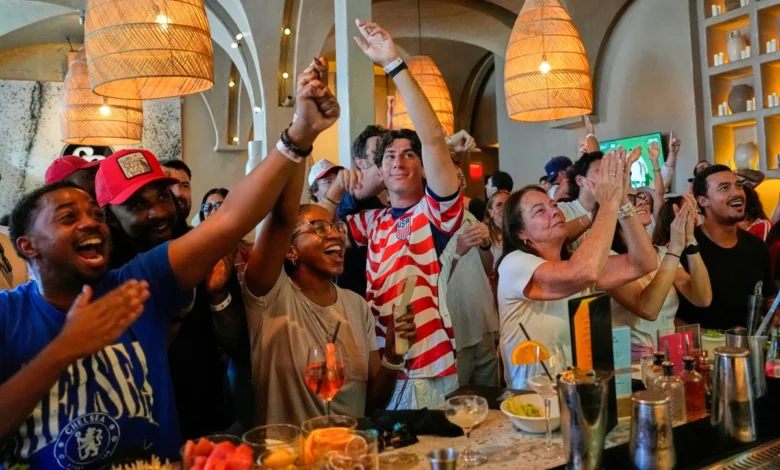
This inherent diversity suggests that a stadium or a sports bar is one of the few places in modern America where individuals of diametrically opposed political views sit side-by-side, united by a shared goal: the success of their team.
Testing the "De-polarizer" Effect: Methodology and Findings
To move beyond anecdotal evidence, Rogers and Feldman applied rigorous game theory to test the effects of shared fandom on social bias. In a computer-based survey, they presented participants with hypothetical "counter-partisans"—individuals who held political and cultural views starkly opposed to their own. Participants were then asked to award a "bonus" to one of these individuals.
The results were telling. If a participant knew that a counter-partisan rooted for their favorite team, that individual received the bonus at rates that significantly outstripped those based on shared race, ethnicity, education level, or home region. In the hierarchy of social connection, only a shared religion came close to matching the influence of shared sports fandom.
This finding suggests that sports can serve as an "instant de-polarizer." While political identity has become increasingly rigid and exclusionary, sports identity remains inclusive of those within the "in-group" of the team, regardless of their external affiliations. Rogers argues that sports fandom, like religion, is both active and elective. It is a seasonal, ritual allegiance that people choose to renew throughout their lives, often inheriting the passion from parents or siblings.
Interestingly, this bond persists even when teams are perennially unsuccessful. "How else would there be Cleveland Browns fans?" Rogers joked, pointing out that the motivation for fandom isn’t necessarily on-field victory, but the social bonds formed with others during the journey.
The Psychology of Synchronized Hearts
The initiative draws on the work of Daniel Wann, a professor at Murray State University and a pioneer in the psychology of fandom. Wann famously described shared fandom as a "shared photo album." To follow the same team as a stranger is to have a shared history and a synchronized future.
Recent psycho-physiological research supports this metaphor. Studies involving electroencephalograms (EEGs) suggest that spectators’ brainwaves actually start to synchronize around the highs and lows of a game. When a last-second goal is scored or a touchdown is made, thousands of people in a stadium experience the same neurochemical surge at the same micro-second. This physiological synchronization creates a profound sense of "oneness" that is rarely achieved in other social settings.
Furthermore, sports provide a "safe" topic for social interaction. Unlike politics or current events, which are fraught with the risk of conflict, sports are engrossing and human without being existential. Even in cases of acrimonious rivalries, there is an underlying mutual respect. Feldman noted that while she may find a rival team "the worst," the shared language of the game allows for a connection that wouldn’t exist otherwise. One draft finding from their research showed that fans of rival English Premier League teams, such as Manchester United and Liverpool, would sooner socialize with each other than with someone who doesn’t watch soccer at all.
Real-World Interventions and Public Policy Implications
The Fandom and Social Connection Initiative is not content with staying within the ivory tower. Rogers and Feldman are already looking for ways to apply their findings to combat the modern "loneliness epidemic." In an op-ed for TIME magazine, they argued that the football-averse should consider embracing a team, describing NFL fandom as a "simple and universally accessible medicine."
This summer, the initiative will partner with the Boston Red Sox’s AAA affiliate to conduct field experiments. The goal is to find subtle "nudges" that encourage spectators to engage in conversation with their neighbors in the bleachers, turning a passive viewing experience into an active social intervention.
Early indications from their experiments are promising. Rogers noted that they have been able to induce 40 percent of participants to watch a game with others, resulting in a measurable increase in social connectedness that persists for weeks.
Conclusion: A New Paradigm for Social Cohesion
As the United States grapples with increasing isolation and political fragmentation, the work of the Fandom and Social Connection Initiative offers a glimmer of hope in an unexpected place. By reframing sports fans not as the "lower-order hominids" that some non-fans perceive them to be—a stigma Rogers confirmed through surveys—but as the custodians of vital social infrastructure, HKS is opening a new door for public policy.
The implications are broad. If sports can bridge the gap between a Republican and a Democrat, or a local and a refugee, then the "stadium effect" could be harnessed to rebuild civic trust. While a sports game cannot solve the complex policy issues facing the nation, it can create the social conditions—the empathy, the shared humanity, and the "synchronized hearts"—necessary to discuss those issues without enmity. As the first wave of their research reaches the public, Rogers and Feldman are proving that in the quest to mend the American social fabric, the roar of the crowd might be just as important as the debates in the halls of government.