McLaren Formula 1 team faces internal scrutiny following the Italian Grand Prix qualifying and race dynamic complexities


The Italian Grand Prix at the historic Autodromo Nazionale Monza serves as a high-speed crucible for Formula 1 teams, where the nuances of aerodynamics and team politics often collide. During the most recent weekend of racing, the McLaren F1 team found itself at the center of a debate regarding internal driver management, slipstream tactics, and the delicate balance between competitive racing and team harmony. The weekend’s events, characterized by a series of high-stakes maneuvers, have reignited discussions across the paddock about how organizations should govern their pilots when both are fighting for personal glory and the Constructors’ Championship.
The Monza Qualifying Conundrum
The tension began during the final minutes of Q3. In the high-speed environment of Monza, the "tow"—the aerodynamic advantage gained by following a car closely on the straights—is critical to achieving a competitive lap time. McLaren’s strategy was designed to provide Lando Norris with this benefit, with Oscar Piastri positioned ahead to act as a lead car.
However, the plan faltered when Piastri, in his attempt to navigate the opening chicane, locked his front wheels. The subsequent excursion over the asphalt run-off forced him to abort the lap immediately. This error, while seemingly innocuous, had significant downstream consequences. Critics and observers were quick to suggest a "cynical" motive, positing that Piastri intentionally compromised his lap to deny Norris the crucial tow.
The data suggests otherwise, but the optics were damaging. Norris, deprived of the planned aerodynamic assistance, struggled to find the necessary speed in clear air, ultimately qualifying eighth. Piastri’s own session was further marred by a penalty for impeding Liam Lawson, which demoted him to sixth on the starting grid. When questioned about the accusations of a deliberate mistake, Piastri was dismissive, emphasizing the split-second nature of high-speed decision-making. "When you lock up and miss the corner, the first thing you think about is how to get out of the way," he noted.
Infrastructure and Strategic Limitations
The logistical reality at Monza often plays a role in these strategic failures. McLaren’s garage is located at the far end of the pitlane. Being the first team in the pit exit means their drivers are often the first to enter the track, leaving them vulnerable to being overtaken by others who can time their exit to catch a better draft.
Andrea Stella, the McLaren Team Principal, addressed these operational challenges with transparency. He acknowledged that the team’s position in the pitlane forces them to be cautious, yet noted that their current approach to timing needs refinement. "Being first with the slipstream effect that we have this year is definitely a position that you don’t want to be," Stella admitted. The team is now tasked with reviewing their internal protocols to ensure that, in future races, the drivers are not "doomed" before the lap even begins.

Racing Philosophy: The "Papaya Rules"
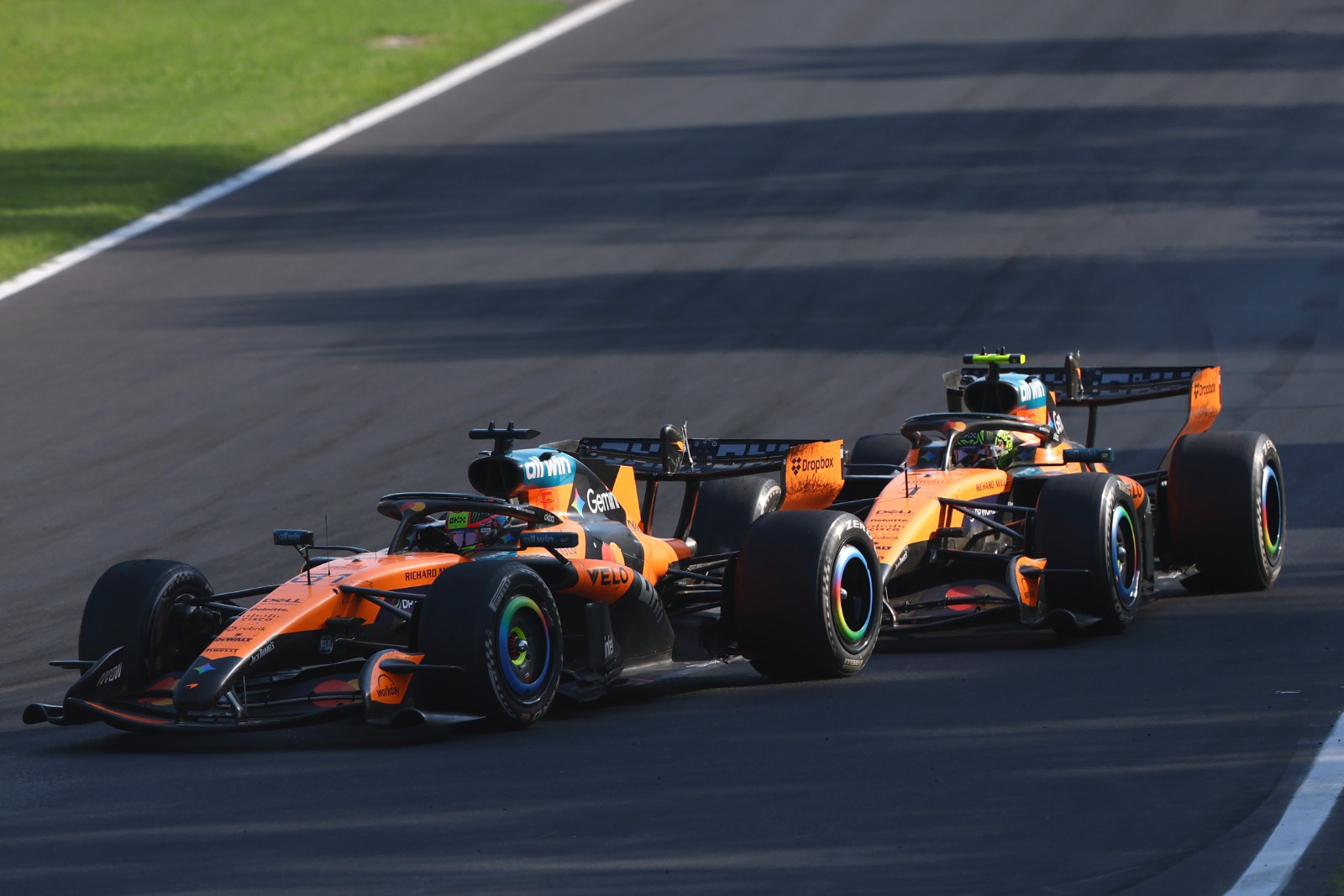
The McLaren philosophy—often referred to as their approach to allowing drivers to race freely—was put to the test during the race itself. The team permits its drivers to engage in wheel-to-wheel combat provided they avoid contact that could compromise the team’s total points haul.
This policy was challenged when Norris attempted a move on Piastri near the second chicane. The maneuver, which saw Norris take to the grass, prompted an immediate, heated reaction over the team radio. While the comment was made in the "heat of the moment," it highlighted the inherent friction that arises when two competitive drivers share the same garage.
Stella’s perspective remains that such moments are a natural by-product of elite-level competition. He noted that upon reviewing the telemetry and video footage, the incident was far less severe than it initially appeared from the cockpit. However, the team has signaled a need for a post-race review to determine if there are scenarios where more restrictive "rules of engagement" would yield a better result against external rivals, such as Red Bull’s Max Verstappen.
Comparative Analysis: Ferrari and Mercedes
The struggles faced by McLaren were not unique in the Monza paddock. The Italian Grand Prix was a microcosm of internal friction throughout the grid. Ferrari, for instance, found itself under intense scrutiny after a race that ended in discord. Lewis Hamilton, a veteran of internal team dynamics, publicly questioned Ferrari’s lack of clear protocols after an incident involving Charles Leclerc.
Similarly, Mercedes was forced to intervene mid-race to manage George Russell and Lewis Hamilton, as their internal squabbling threatened to slow their pace relative to the competition. These incidents underscore a broader trend: as the field tightens, the margin for error in team management becomes razor-thin. The "rules of engagement" are no longer just a technical requirement; they are a vital component of a team’s championship aspirations.
The Human Element: Communication and Transparency
For Oscar Piastri, the key to navigating these complex team dynamics lies in radical transparency. Reflecting on the previous season, where McLaren faced intense pressure during the title fight, Piastri highlighted that the team’s success is built on an open dialogue.
"Things could have turned a lot more nasty than they were last year if we decided to handle things differently," Piastri stated. His approach is to ensure that grievances are aired immediately, preventing the buildup of resentment that has historically destabilized other teams. By prioritizing clear communication, McLaren hopes to mitigate the "surprises" that inevitably occur on track.
Implications for the Remainder of the Season
As the Formula 1 season enters its final stages, the pressure on the pitwall will only intensify. The events at Monza serve as a cautionary tale for any team with two competitive drivers. While the team’s "free to race" policy is celebrated for its fairness, it carries significant risks that could affect the Constructors’ Championship standing.
The technical implications of these incidents are also significant. Every tenth of a second lost in qualifying or through aggressive racing translates to points lost in the final tally. McLaren is currently engaged in a deep-dive analysis of their decision-making process. This involves looking at everything from pitlane exit timing to the specific communication channels between the drivers and their race engineers.
Moving forward, the sport’s observers will be watching to see if McLaren implements more rigid, hierarchy-based strategies. While fans generally prefer to see drivers fight, the cold reality of professional motorsport often dictates that individual ambition must occasionally be subordinate to the collective goal of the organization.
Conclusion
The Monza weekend was a stark reminder that Formula 1 is as much about the management of people as it is about the engineering of machines. McLaren, by choosing to allow their drivers to race, has opted for a path that champions competitive integrity but invites the volatility of human error and ego.
Whether this approach will continue to yield results or if it will be refined into a more structured management system remains to be seen. What is clear, however, is that the lessons learned in the shadow of the Monza grandstands will influence the team’s strategy for the remainder of the calendar. As the season progresses, the ability of both Norris and Piastri to balance their personal ambitions with the broader objectives of the team will be the definitive factor in whether McLaren can sustain its current competitive momentum. The challenge is not merely to build the fastest car, but to foster the most efficient, collaborative, and communicative environment possible in the high-pressure world of elite motorsport.
Related posts: