Beyond the Paddock Glamour: Racing Bulls Drivers Embrace Commercial Travel After Belgian Grand Prix


The stark contrast between Formula 1’s opulent image and the reality for its emerging talents was laid bare following the recent Belgian Grand Prix at Spa-Francorchamps, as Racing Bulls teammates Liam Lawson and Arvid Lindblad were photographed traveling home on an economy flight with easyJet. This unexpected choice, shared by Lawson on his Instagram Story, quickly ignited discussion across social media platforms, offering a refreshing glimpse into the lives of drivers often perceived as living in a world of private jets and exclusive hospitality.
A Down-to-Earth Departure from Spa
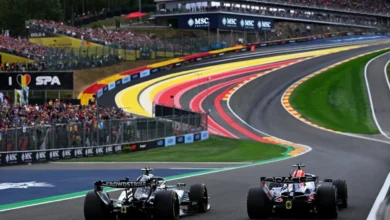
The Belgian Grand Prix, a legendary circuit steeped in motorsport history and known for its challenging Ardennes weather, concluded with a mixed bag of results for the Racing Bulls team. Liam Lawson secured 12th place, while rookie Arvid Lindblad, competing in his relatively nascent F1 journey, managed to clinch two valuable points with a ninth-place finish. It was in the aftermath of this demanding race weekend, as the dust settled and the grandstands emptied, that the two drivers opted for a decidedly less glamorous mode of transport back from the iconic Spa-Francorchamps circuit.
Lawson’s Instagram Story, featuring a selfie with his younger teammate, bore the simple yet impactful caption, "Shoutout easyJet." This seemingly innocuous post resonated deeply with a fanbase accustomed to the often-unseen realities of F1 logistics. The image quickly proliferated across social media, sparking a wave of commentary and admiration.
Fan Reactions: A Breath of Fresh Air
The online reaction was overwhelmingly positive, with many fans expressing delight at the drivers’ relatable decision. On Reddit, a prominent F1 discussion forum, comments reflected a sentiment of appreciation for the drivers’ grounded approach. "Oh man, what are the odds of meeting two F1 drivers on a commercial flight?" one user exclaimed, capturing the surprise and excitement of such a chance encounter. Another commenter added, "I’m all for more of this. Good on both these boys," underscoring a desire for greater authenticity from sports personalities.
The sentiment of embracing normalcy was further echoed: "I love everything about this: that they’re flying together and that they’re flying a cheaper airline. As the season goes on, I’m loving this team more and more," stated another fan. This sentiment suggests that such actions foster a stronger connection between the drivers and their supporters, humanizing figures who can sometimes appear distant due to the high-stakes nature of their profession.
Cost Cap Conundrums and Environmental Considerations
Beyond the immediate novelty, the drivers’ choice also inadvertently touched upon key contemporary themes within Formula 1. The ever-present shadow of the budget cap, a regulation designed to level the playing field and prevent excessive spending, led to playful speculation. "VCARB must be getting dangerously close to a cost cap breach," one user quipped, referencing the team’s official name, Visa Cash App RB Formula 1 Team. Another comment humorously suggested, "Any more cost cap restrictions and they’ll be flying Ryanair," painting a picture of increasingly frugal travel arrangements.
This lighthearted commentary, however, also highlighted a more serious aspect: the environmental impact of motorsport. The stark contrast between private jet usage by some individuals and the drivers’ choice for commercial air travel did not go unnoticed. "And then there are some who use their private jet like a scooter," one user observed, implicitly criticizing the perceived extravagance of certain F1 personalities. This was followed by a more direct statement on sustainability: "Super respectable imo. Private jets are killing our planet." This sentiment aligns with a growing global awareness of environmental issues and a desire for more sustainable practices across all industries, including professional sports.
Arvid Lindblad’s Promising F1 Trajectory
The Belgian Grand Prix marked a significant step in Arvid Lindblad’s Formula 1 development. As a rookie driver, his performance at Spa was particularly noteworthy. Securing two championship points with a ninth-place finish is a tangible reward for his efforts and a testament to his growing capabilities. Lindblad, who is part of the Red Bull Junior Team program, has been steadily integrating into the demanding F1 environment.
Speaking to Sky Sports F1 after the race, Lindblad expressed his increasing confidence and comfort within the car and the team. "I think every weekend, I’m getting more comfortable, more competitive," he stated. "For sure this has been a complete one. I’d probably say the last weekend that was so complete was Canada, where unfortunately I wasn’t able to do the race." His reflection on the Canadian Grand Prix, where he was slated to participate but was unable to due to unforeseen circumstances, underscores his determination to make every opportunity count.
Lindblad further elaborated on his positive experience, highlighting the synergy with his engineering team. "Me and the engineers, we’re getting along really well, understanding each other," he said. "I’m really enjoying my time at the moment. The team are doing a really good job to continue to bring performance to the car and it’s showing on track." This collaborative spirit and the tangible improvements in car performance are crucial elements for any driver aiming to establish themselves at the pinnacle of motorsport.
The Financial Realities of Modern F1
While the romanticized image of Formula 1 often involves private jets and exclusive travel, the economic realities for teams and drivers, particularly those outside the established top contenders, are more nuanced. The implementation of the budget cap in 2021 has forced all teams to operate within stricter financial parameters. This regulation aims to foster closer competition by limiting the financial advantage of the wealthiest teams.
For teams like Racing Bulls, which are often seen as a development ground for talent and a stepping stone for aspiring drivers, cost-effectiveness is a significant consideration. Opting for commercial travel, while perhaps less glamorous, is a pragmatic decision that can contribute to savings that can be reallocated to crucial areas such as car development, simulator time, or even driver training programs.
Furthermore, the career trajectory of young drivers like Lindblad and Lawson often involves a period of significant investment from their respective teams or sponsors. Their personal financial situations may not yet align with the extravagant lifestyles sometimes associated with established F1 superstars. Embracing more budget-friendly travel options can be a personal choice reflecting their current stage in their careers and their long-term aspirations.
Broader Implications: Authenticity and Sustainability in Motorsport
The incident involving Lawson and Lindblad has broader implications for the perception of Formula 1. In an era where authenticity and relatable personalities are highly valued by fans, their decision to fly commercial serves as a powerful reminder that even at the highest echelons of sport, everyday experiences can still be a part of a driver’s life. This can foster a deeper connection with the fanbase, making the sport feel more accessible and human.
Moreover, the commentary regarding environmental responsibility is increasingly relevant. As Formula 1 strives to become more sustainable, with initiatives like the development of sustainable fuels and carbon-neutral ambitions, actions that demonstrate an awareness of environmental impact, even on a personal level, can resonate positively. While the carbon footprint of a single commercial flight is still significant, the contrast drawn with private jet usage highlights a public desire for more conscious choices.
The Belgian Grand Prix, with its rich history and challenging conditions, provided the backdrop for a moment that transcended the usual race-day narratives. The sight of Liam Lawson and Arvid Lindblad navigating the aisles of an easyJet flight offered a compelling counterpoint to the F1 spectacle, reminding audiences that beneath the helmets and the high-speed machines, there are individuals making practical decisions, building their careers, and perhaps, in their own way, contributing to a more grounded and sustainable future for the sport. The conversation sparked by their journey underscores a growing appreciation for transparency, relatability, and environmental consciousness within the world of Formula 1.