John Malkovich cancels Israel performance of The Music Critic following unauthorized and fabricated press release

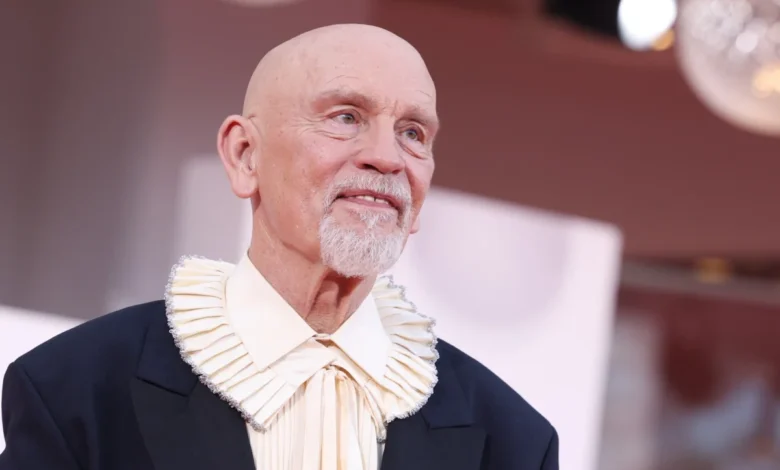
The acclaimed American actor and director John Malkovich has formally cancelled his scheduled 2027 performance of The Music Critic in Tel Aviv, citing a breach of professional ethics following the circulation of a fabricated press release. The incident, which centered on unauthorized statements attributed to the actor, has prompted a significant re-evaluation of how international artists interact with promotional entities in regions currently experiencing high geopolitical sensitivity.
Malkovich, currently garnering critical acclaim for his role in the upcoming black comedy Wild Horse Nine, was slated to headline the theatrical-musical production—a satire composed by violinist Aleksey Igudesman—at the Charles Bronfman Auditorium next April. However, the production was abruptly pulled from the schedule after it emerged that a public relations firm, acting on behalf of an Israeli promoter, had disseminated a press release containing false quotes that suggested the actor possessed a deep-seated personal solidarity with the state of Israel.
The Chronology of the Fabricated Statements
The controversy began on September 5, when an Israeli PR agency distributed a press release to local media outlets, including The Jerusalem Post. The document featured direct quotes attributed to Malkovich, claiming that he was "thrilled to return to Israel" and that he looked "forward to meeting the warm Israeli audience once again, to whom I feel a strong closeness and solidarity."
These quotes were quickly picked up and circulated within the Israeli press. The situation remained unchallenged until the actor’s representatives became aware of the reports via inquiries from The Hollywood Reporter. Upon reviewing the claims, Malkovich confirmed that he had neither authorized the statement nor been consulted on the content prior to its dissemination. The actor characterized the incident as an unacceptable breach of professional trust, leading to his immediate decision to withdraw from the engagement.
In a formal statement issued to the press, Malkovich clarified the nature of the deception: "A PR company hired by the Israeli promoter drafted a quote for the article that was attributed to me, though I never made the statements that were quoted, nor was I consulted before they were printed. I did not utter these phrases, and they most certainly are not approved by me, nor do they reflect my feelings. The fact that they were printed as direct quotes from me is unacceptable and untenable."
Admission of Error and Industry Fallout
Following the actor’s public rebuttal, the unnamed Israeli PR firm responsible for the release issued an admission of error. The firm acknowledged that the quotes were fabricated and apologized for the misrepresentation. "Mr. Malkovich did not make, provide, authorize or approve this statement, nor was it approved by his representatives," the firm stated. "We sincerely apologize to Mr. Malkovich and his representatives for the incorrect attribution and regret that this occurred."
While the firm has attempted to categorize the incident as an internal error, the professional consequences for the production are severe. The cancellation of The Music Critic in Tel Aviv serves as a cautionary tale regarding the risks associated with third-party promotional agencies managing the public image of high-profile international talent. For agents and talent managers, the event underscores the necessity of strict oversight and approval workflows, particularly when dealing with international bookings where media narratives are closely scrutinized.
Contextualizing Malkovich’s Stance on Artistic Neutrality
Beyond the immediate mechanics of the fabricated quote, Malkovich used his response to address a broader, more complex issue: the assumption that a performer’s presence in a country functions as an implicit endorsement of that nation’s domestic or foreign policies. In his statement, the actor articulated a philosophy of "artistic neutrality" that he has maintained throughout his decades-long career.
"Throughout my long career, I’ve been lucky to perform across a quite wide swath of the world—in countries with governments whose values or culture I do not share and in front of audiences of many differing faiths and ideologies," Malkovich noted. He argued that international travel and performance are inherently educational experiences, providing a platform to observe and learn rather than to issue political proclamations.
Malkovich emphasized that his professional engagements should not be construed as political alignment. "My appearance in any country, even my own, does not constitute approval of said country’s policies, nor actions, nor its elected or unelected leaders. My appearances would also not condone nor mean that I am in supposed ‘solidarity’ with any particular political cause, nor with the killing of innocents, nor with any acts of terrorism, nor any other kind of barbarity."
This perspective is particularly relevant given the current geopolitical climate, where artists are increasingly pressured to take public stances on conflicts. By explicitly distancing his artistic output from political validation, Malkovich is reinforcing a traditional boundary between the entertainer and the activist, a boundary that is becoming increasingly porous in the era of social media-driven advocacy.
Background: Malkovich’s History in Israel
The cancellation marks a significant departure from Malkovich’s previous history in Israel. The actor had established a long-standing professional relationship with the country’s arts scene. His last notable visit was in 2013, when he performed in The Infernal Comedy: Confessions of a Serial Killer. Prior to that, in 2008, he served as a guest of honor at the Jerusalem Film Festival, where he was received with significant cultural prestige.
These past appearances were characterized by standard professional arrangements. The 2027 cancellation, therefore, represents a marked shift in the relationship between the actor and the regional promoters, highlighting how even long-standing professional ties can be compromised by ethical breaches in marketing and communications.
Future Projections and The Wild Horse Nine
Despite the disruption regarding his theatrical tour, Malkovich remains at the center of significant industry attention due to his role in the film Wild Horse Nine. The film, which recently premiered at the Venice Film Festival to widespread critical acclaim, marks a return to form for the veteran actor.
Wild Horse Nine is set in the early 1970s, against the turbulent backdrop of the Chilean political landscape just prior to the coup that overthrew Salvador Allende. Starring alongside Sam Rockwell, Malkovich portrays one of two eccentric CIA agents whose meddling in global affairs provides the film’s narrative engine. The film has been described by critics as a "black comedy caustic bromance," with NME awarding it four stars and predicting a strong presence during the upcoming awards season.
The movie is scheduled for a UK debut at the BFI London Film Festival next month, followed by a general theatrical release on November 6. The film’s success is expected to maintain Malkovich’s high profile, even as he seeks to distance himself from the fallout of the Israeli PR incident.
Broader Implications for International Talent Management
The incident involving John Malkovich provides a stark illustration of the vulnerabilities inherent in global entertainment touring. In an era where information—and misinformation—travels instantly, the control of an artist’s public narrative is a vital component of their professional portfolio.
- The Risk of PR Overreach: The fabrication of quotes to appeal to local sentiments is a practice that risks long-term damage to the reputations of both the artist and the promoter. This event will likely lead to more stringent vetting processes for PR firms in foreign markets.
- The Politicization of Performance: As the entertainment industry grapples with global instability, artists are finding it increasingly difficult to remain "apolitical." Malkovich’s firm stance suggests a pushback against the expectation that visiting an artist must align themselves with the host country’s political ideology.
- Legal and Ethical Standards: The apology issued by the Israeli PR firm acknowledges the breach of ethical standards. In the future, contracts between international talent and local promoters may include more explicit clauses regarding the authorization of public statements and the legal consequences of unauthorized attribution.
In conclusion, the cancellation of The Music Critic in Tel Aviv is a definitive act by John Malkovich to protect his professional integrity. By rejecting the use of his name in a fabricated political narrative, the actor has underscored the importance of autonomy in the relationship between the artist, the audience, and the entities that facilitate their interaction. As the industry moves forward, this case will likely be referenced as a benchmark for the expectations of transparency and professional conduct in global talent relations.
Related posts: