
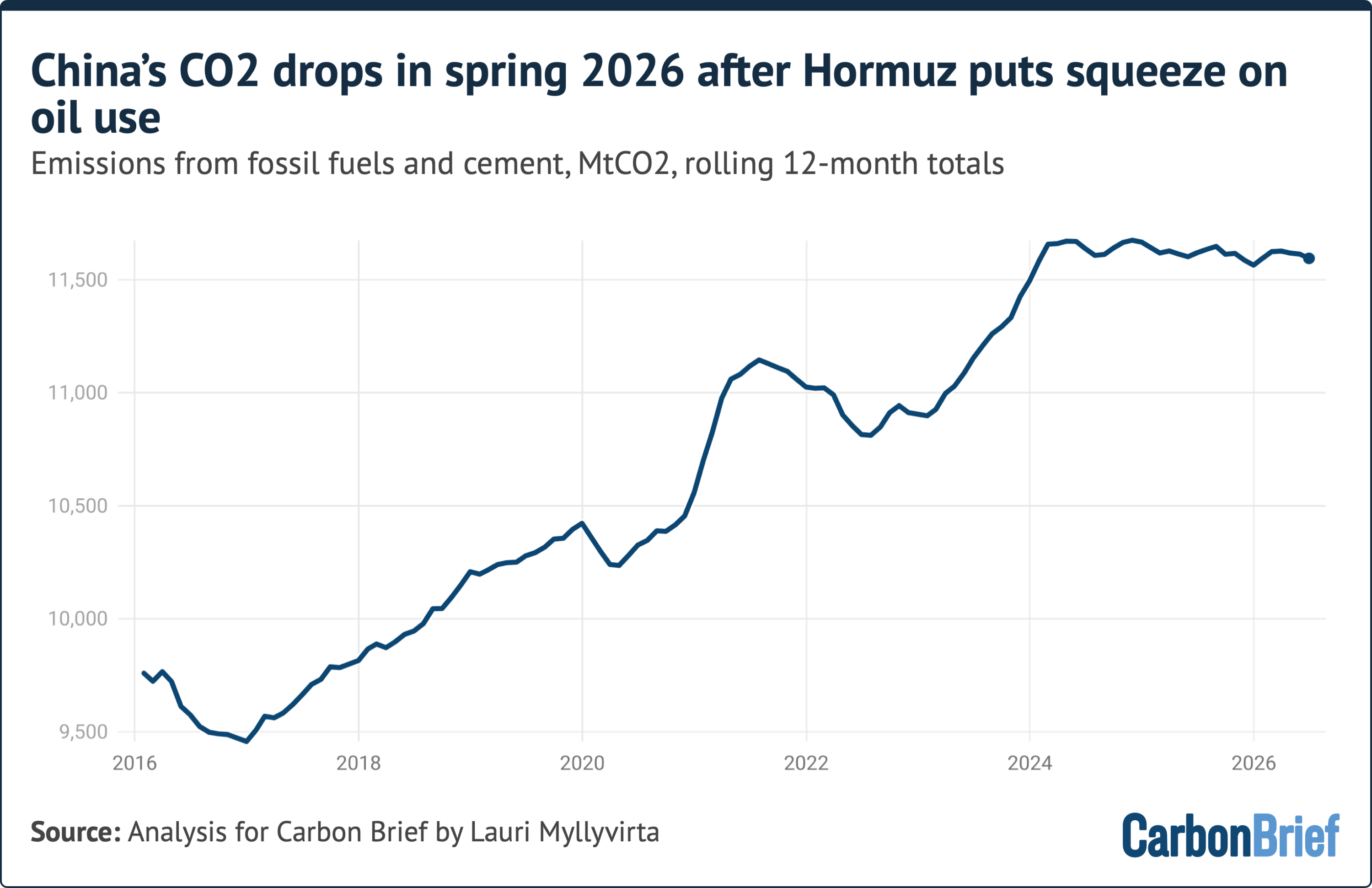
The decline, analyzed by Lauri Myllyvirta of the Centre for Research on Energy and Clean Air, provides a unique lens through which to view the intersection of geopolitical volatility and national energy transition strategies. While China’s emissions have plateaued or fluctuated narrowly since their peak in March 2024, the second quarter of 2026 stands out due to the sheer scale of the disruption in global energy supply chains triggered by the ongoing conflict in the Persian Gulf.
Chronology of the Crisis and Economic Impact
The instability in the Strait of Hormuz, a critical maritime chokepoint for global oil transit, created an immediate shock to China’s energy imports during the spring of 2026. By the second quarter, the impact was fully realized in national statistics: oil consumption fell by 9% overall, with a staggering 16% reduction in the transportation sector.
Following the onset of the crisis, Beijing’s response was characterized by a rapid drawdown of domestic oil stockpiles and an aggressive pivot toward existing clean-energy alternatives. Crude oil processing volumes fell by 11% during this period, while total oil imports dropped by 32%. This decline was not merely a reaction to supply shortages but also reflected a strategic move to manage inventory levels while accelerating the adoption of electric mobility.
Data-Driven Analysis of the Emissions Shift
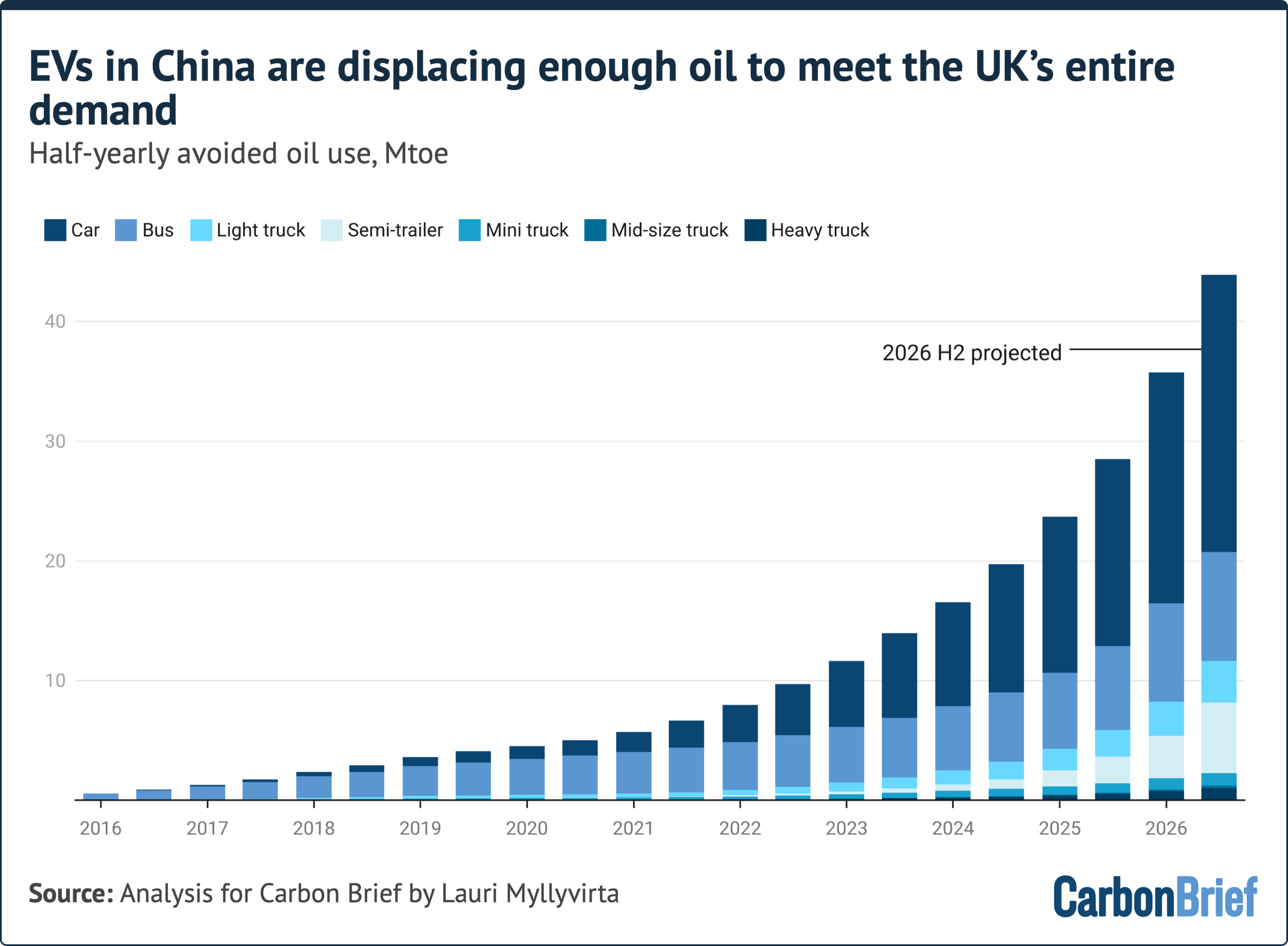
The 1% decline in emissions occurred despite a persistent, albeit moderate, rebound in coal-fired power generation. In previous years, any fall in emissions in China was almost exclusively tethered to the fluctuations in the coal-intensive industrial and power sectors. The 2026 trend breaks this pattern.
The transportation sector led the way in emissions reduction. Sales of petrol, diesel, and jet fuel saw significant contractions. Specifically, heavy-duty transport, a notoriously difficult sector to decarbonize, showed signs of rapid transition; sales of electric heavy-duty trucks surged by approximately 77% year-on-year in the second quarter. By the end of June 2026, electric trucks accounted for over 45% of all new commercial vehicle sales in the country.
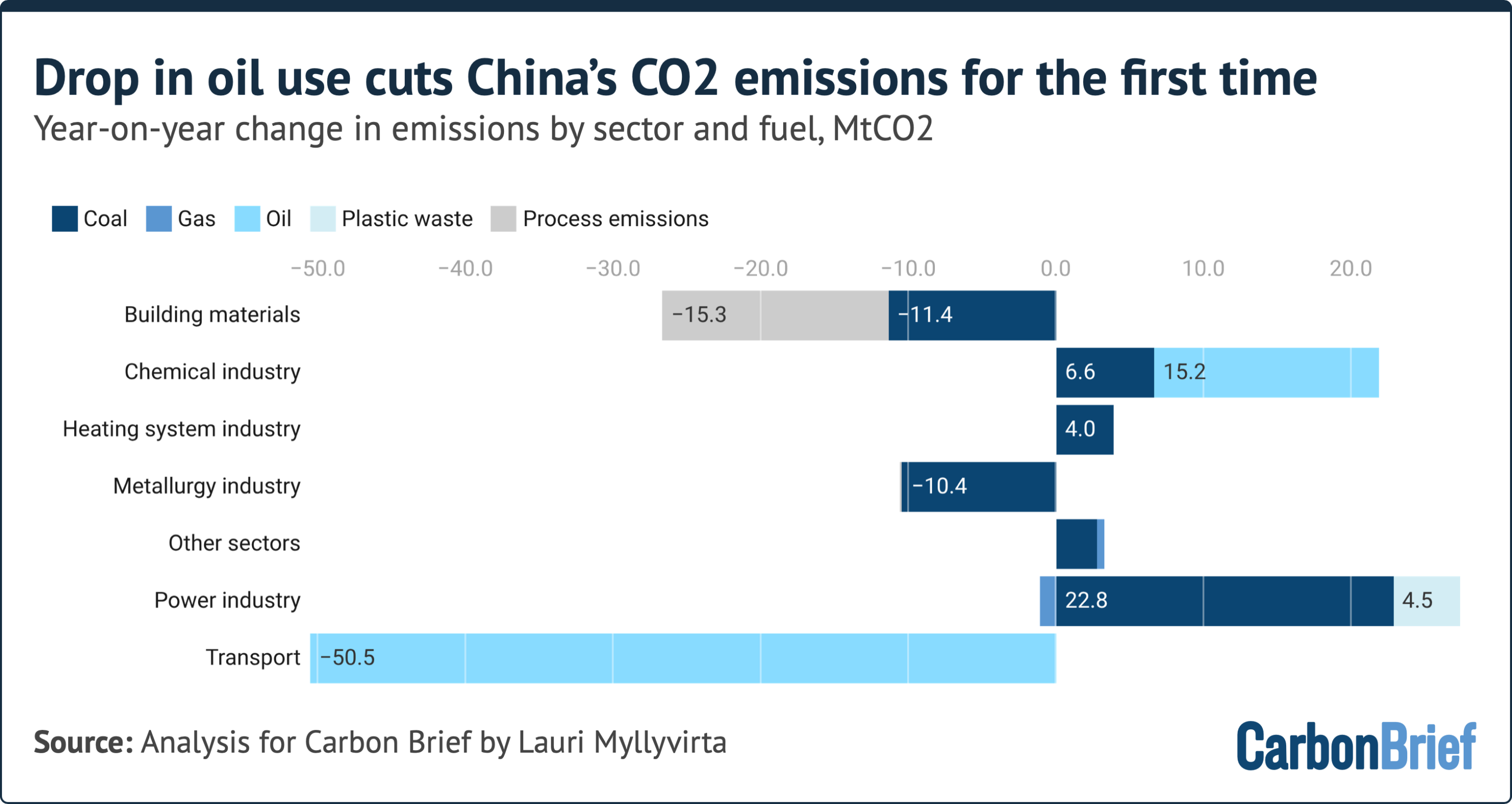
Charging infrastructure utilization increased by 60% during the quarter, indicating that existing electric vehicles (EVs) were being prioritized over internal combustion engine vehicles, likely spurred by rising fuel prices at the pump. Estimates suggest that EVs displaced approximately 19 million tonnes of oil consumption (Mtoe) in the second quarter alone—a volume equivalent to the entire six-month oil demand of the United Kingdom.
The Role of Power Sector Inefficiencies
While transportation oil demand fell, the power sector told a more complex story. Coal-fired power generation grew by 2.4% during the same period. This rise in coal usage, despite the record-breaking installation of wind and solar capacity over the preceding 12 months, highlights a persistent structural inefficiency in China’s grid management.
Analysis shows that a substantial portion of renewable energy potential was "wasted" or curtailed. The grid’s operating model and current market structure have struggled to integrate the variable nature of wind and solar. Because coal-fired plants are often locked into fixed-volume contracts and receive capacity payments that do not incentivize flexible operation, they continue to crowd out renewable energy even when clean power is readily available.
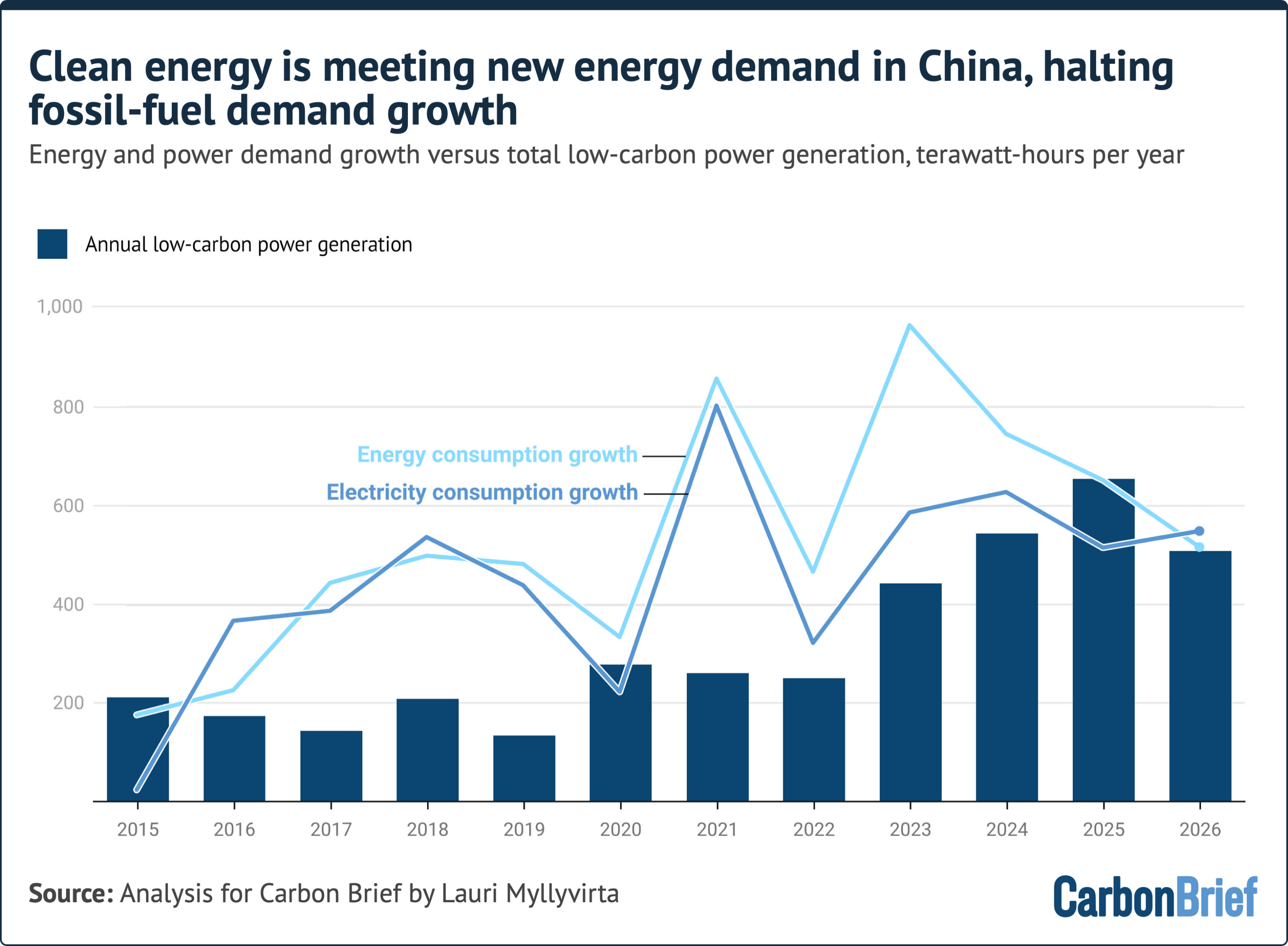
Hydropower generation, however, provided a bright spot, increasing by 9% in the second quarter, while nuclear power output saw a modest 2% rise. Together with wind and solar additions, the country remains on track to add sufficient non-fossil capacity to meet total electricity demand growth, provided that the grid can be optimized to utilize that energy.
Policy Responses and the 15th Five-Year Plan
The Chinese government used the second quarter of 2026 to release a series of sectoral five-year plans that aim to address these integration challenges. The new documents signal a higher bar for the approval of new coal-fired power plants, though they stopped short of setting absolute, immediate quantitative targets for total coal consumption.
Key policy shifts include:
- Grid Modernization: New initiatives to promote direct purchases of clean electricity, the development of smart microgrids, and the integration of renewable energy with AI computing infrastructure.
- Curtailment Thresholds: The government has introduced nuanced regulations regarding curtailment. While some provinces are allowed higher flexibility, the overall strategy aims to move toward a more "system-reliable" model that relies on energy storage, virtual power plants, and demand-side response rather than coal-fired backup.
- Electrification Targets: Policymakers have set an ambitious goal for electricity to account for 35% of energy end-use by 2030, a significant increase from the 30% level recorded in 2025.
Broader Implications for Global Climate Targets
The events of the second quarter illustrate that China’s emissions trajectory is currently a high-stakes race between the growth of energy demand and the growth of clean-energy infrastructure. While the growth rate of total energy demand has slowed significantly compared to the post-pandemic surge, the persistent reliance on coal for base-load power remains a bottleneck for achieving a sustained, long-term decline in emissions.
The geopolitical pressure caused by the Hormuz crisis has unintentionally validated China’s long-term strategy for energy security through electrification. By shifting the transport sector toward electric power, Beijing has effectively reduced its vulnerability to global oil price shocks. If the current trends in EV adoption and the utilization of charging infrastructure persist, the "avoided" oil consumption by year-end could reach 80 million tonnes, comparable to the total annual consumption of Mexico.
Conclusion and Future Outlook
The 1% decline in emissions in the second quarter of 2026 is a significant data point, yet it is not necessarily indicative of a permanent downward trend. The power sector’s continued reliance on coal, driven by institutional rigidities in the grid, means that as long as wind and solar are curtailed, emissions from thermal generation will continue to act as a counterweight to the progress made in transport.
For China to move from a "plateau" in emissions to a consistent, structural decline, the government must succeed in its stated goal of reforming the power market to prioritize renewable utilization. The transition is no longer just a climate imperative; it has become an essential pillar of the country’s national security strategy in an era of volatile global fuel markets. With the government’s focus now shifting toward "new-type energy systems" and the integration of storage and AI-driven grid management, the next 18 months will be critical in determining whether 2026 represents a fleeting dip or the beginning of a genuine departure from fossil fuel dependence.
Related posts: