WHO and Switzerland Cement Strategic Partnership with Renewed Cooperation Agreement Through 2028

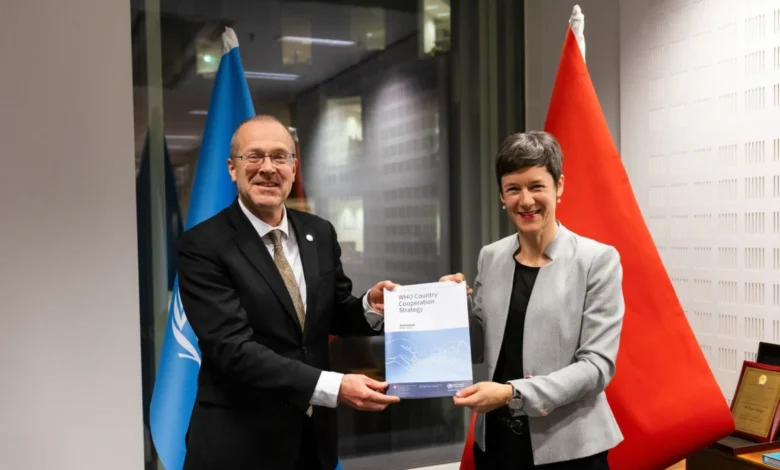
The World Health Organization (WHO) and the Swiss Confederation have officially formalized the extension of their bilateral partnership, signing a newly updated Country Cooperation Strategy that will govern their joint public health initiatives through 2028. The formal signing ceremony took place on March 4, 2025, at the WHO Regional Office for Europe in Copenhagen, Denmark. The agreement marks a significant milestone in international health diplomacy, underscoring a shared commitment to addressing complex European and global health challenges, reinforcing health security, and strengthening multilateral institutional frameworks.
The renewed framework builds upon more than a decade of structured cooperation. Switzerland initially broke new ground in 2013 by becoming the first high-income nation within the WHO European Region to pilot a formal, dedicated country cooperation strategy. Following a joint decision in 2022 to evaluate, update, and modernize the framework to reflect post-pandemic realities and shifting geopolitical landscapes, the finalized 2024–2028 strategy was formally adopted.
The signing event brought together key figures from both entities. Dr. Hans Henri P. Kluge, WHO Regional Director for Europe, and Barbara Schedler, Ambassador for Global Health at the Swiss Federal Office of Public Health, met in Copenhagen to finalize the document and map out strategic priorities for the coming years. This latest agreement reinforces Switzerland’s unique position as both a host nation for numerous international health organizations and a proactive, high-contributing partner in shaping global health governance.
Historical Evolution of the WHO-Switzerland Partnership
The relationship between Switzerland and the World Health Organization is deeply rooted in geography, diplomacy, and shared humanitarian values. Geneva, Switzerland, serves as the global headquarters for the WHO, making the Swiss Confederation more than just a member state; it is the host government responsible for facilitating the diplomatic, operational, and legal environment in which the global health body functions.
However, the operational relationship within the WHO European Region took a distinctive turn in 2013. Traditionally, country cooperation strategies were designed primarily for low- and middle-income nations requiring technical assistance, capacity building, and resource mobilization support. Switzerland’s decision to pilot a cooperation strategy as a high-income nation challenged traditional paradigms. It demonstrated that even advanced economies with robust domestic healthcare systems benefit from a structured, collaborative framework with the WHO to address cross-border health threats, align national policies with international standards, and contribute meaningfully to regional health security.
Over the subsequent decade, this partnership evolved from a novel administrative experiment into a vital operational conduit. Joint initiatives focused on strengthening health systems, improving data collection, tackling antimicrobial resistance (AMR), and promoting universal health coverage. The success of the initial frameworks paved the way for the 2022 decision to renew the strategy, ensuring that the lessons learned from the COVID-19 pandemic—particularly regarding supply chain vulnerabilities, vaccine equity, and health emergency preparedness—were directly integrated into the 2024–2028 roadmap.
Key Pillars of the 2024–2028 Cooperation Strategy
The newly cemented WHO-Switzerland Cooperation Strategy is structured around several critical public health priorities tailored to address contemporary challenges in Europe and globally. While the strategy aligns with the broader goals of the WHO European Programme of Work, it places special emphasis on areas where Swiss expertise and global health leadership intersect.
First, the strategy prioritizes health emergency preparedness and response. The COVID-19 pandemic exposed systemic weaknesses in global surveillance and early warning systems. The renewed agreement emphasizes bolstering national and regional capacities to detect, assess, and respond to public health threats swiftly. This includes integrating digital health tools, enhancing genomic sequencing capabilities, and ensuring seamless communication between Swiss health authorities and WHO regional networks.
Second, the framework focuses on advancing universal health coverage (UHC) through resilient and sustainable health systems. Despite having one of the most advanced healthcare systems in the world, Switzerland faces contemporary challenges common to high-income European nations, including an aging population, rising chronic disease burdens, and escalating healthcare expenditures. The cooperation strategy facilitates the exchange of best practices in health economics, long-term care models, and patient-centered service delivery.
Third, the partnership highlights the importance of innovation and digital transformation in healthcare. Switzerland is a global hub for pharmaceutical research, biotechnology, and medical technology development. The strategy seeks to leverage this innovative ecosystem to benefit public health outcomes across the wider European region, promoting equitable access to life-saving innovations and supporting regulatory harmonization.

The Global BioHub System and Technological Synergy
A critical dimension of the broader WHO-Switzerland partnership—and a key point of emphasis surrounding the 2024–2028 strategy—is the ongoing collaboration within the Global BioHub System. Established by the WHO to facilitate the rapid, safe, and transparent sharing of biological materials with epidemic and pandemic potential, the BioHub system relies heavily on state-of-the-art laboratory infrastructure and stringent biosecurity protocols.
Switzerland has played a foundational role in supporting the Global BioHub system through its advanced scientific infrastructure and commitment to global health security. By connecting national repositories with international networks, the partnership ensures that global scientists and researchers can rapidly access pathogen samples to develop diagnostics, therapeutics, and vaccines. This technological and logistical synergy is a cornerstone of the modern WHO-Switzerland relationship, moving beyond traditional policy dialogue into tangible, operational risk mitigation.
Official Statements and Stakeholder Reactions
During the signing ceremony in Copenhagen, leaders from both organizations emphasized the strategic importance of the renewed accord.
Dr. Hans Henri P. Kluge, WHO Regional Director for Europe, commended Switzerland’s enduring leadership in international health. "Switzerland has consistently demonstrated that true global health solidarity begins at home through robust national commitment and international engagement," Dr. Kluge stated. "By renewing our cooperation strategy through 2028, we are not only honoring a decade of fruitful collaboration but also proactively arming ourselves against the complex health challenges of the future. The challenges of the 21st century—from climate-related health risks to emerging pathogens—respect no borders. Our partnership with Switzerland exemplifies how high-income member states can leverage WHO frameworks to drive both domestic excellence and global health security."
Echoing these sentiments, Ambassador Barbara Schedler, Ambassador for Global Health at the Swiss Federal Office of Public Health, highlighted the mutual benefits of the agreement. "As a nation deeply committed to multilateralism and humanitarian principles, Switzerland views its partnership with the World Health Organization as an indispensable pillar of our foreign and domestic health policy," Ambassador Schedler remarked. "The 2024–2028 cooperation strategy provides a clear, actionable roadmap that aligns our national health priorities with regional and global objectives. We look forward to deepening our collaboration, sharing our expertise in innovation and research, and working hand-in-hand with WHO/Europe to build a healthier, more resilient future for all populations."
Fact-Based Analysis of Implications for European and Global Health
The formalization of the WHO-Switzerland Cooperation Strategy carries several noteworthy implications for the broader European public health landscape.
From a governance perspective, the strategy serves as a blueprint for other high-income countries within the WHO European Region. As health systems across Europe grapple with intersecting crises—including workforce shortages, the mental health aftermath of the pandemic, and the health impacts of climate change—the structured framework demonstrates the value of institutionalized partnership. It moves the relationship between a wealthy member state and a multilateral agency away from transactional funding dynamics toward a collaborative, peer-led problem-solving model.
Operationally, the focus on data harmonization and emergency preparedness directly contributes to the implementation of the European Health Security Framework. By aligning Swiss domestic health strategies with WHO standards, the country minimizes regulatory friction during cross-border health crises, ensuring that epidemiological data flows efficiently and response measures remain coordinated.
Furthermore, Switzerland’s active role in global health diplomacy, reinforced by this strategy, provides a stable diplomatic anchor for WHO initiatives in Geneva and across Europe. In an era marked by geopolitical polarization and increasing pressure on multilateral institutions, the enduring, pragmatic partnership between the WHO and Switzerland sends a strong signal regarding the enduring value of international cooperation in safeguarding human health.
Conclusion and Future Outlook
With the ink dry on the 2024–2028 agreement, the WHO and Switzerland have set a clear trajectory for their joint endeavors over the next four years. Implementation of the strategy has already begun, with joint technical working groups focusing on priority areas such as digital health integration, non-communicable disease prevention, and health security preparedness.
As the international community continues to absorb the lessons of recent global health disruptions, the renewed WHO-Switzerland Country Cooperation Strategy stands out as a mature, forward-looking model of bilateral cooperation within a multilateral framework. By combining Swiss technical innovation, institutional stability, and financial commitment with the global reach, normative guidance, and convening power of the World Health Organization, the partnership is well-positioned to navigate the uncertainties of the health landscape through 2028 and beyond.