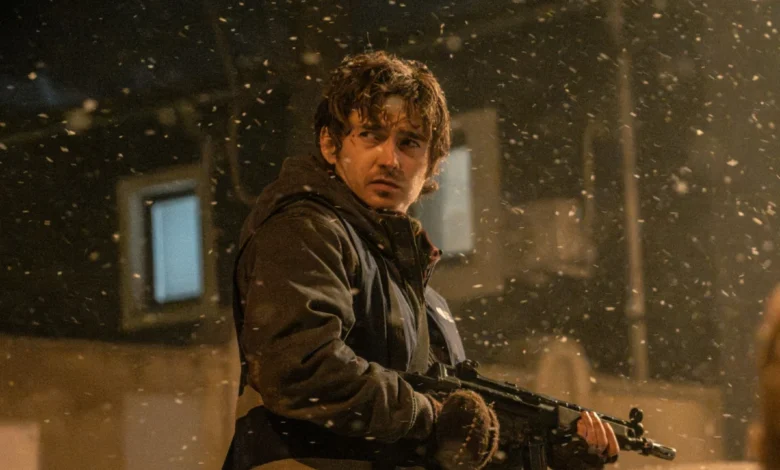
Zach Cregger, the visionary filmmaker behind the critically acclaimed horror hit Barbarian and the recent production Weapons, has officially stepped into the world of survival horror with his third solo feature film, a bold reboot of the legendary Resident Evil franchise. Based on the long-running video game series developed by Capcom, the film shifts the focus from the typical ensemble military teams seen in previous iterations to a more grounded, visceral experience. The narrative follows Bryan, a medical courier whose mundane job turns into a desperate struggle for survival when he is forced to navigate a massive viral outbreak while making a routine delivery to the Raccoon City hospital.
The project, which arrived in cinemas worldwide on September 18, 2026, marks the eighth live-action film adaptation of the Capcom intellectual property. It serves as the second reboot of the franchise, attempting to distance itself from both the stylized action-heavy Paul W.S. Anderson series that spanned from 2002 to 2016 and the 2021 prequel-style attempt, Resident Evil: Welcome To Raccoon City. By handing the reins to Cregger, production studios have signaled a pivot toward the psychological tension and claustrophobic horror that initially defined the source material in the late 1990s.
The Cast and Creative Vision
The production features a carefully curated cast led by Austin Abrams, who portrays the beleaguered courier Bryan. He is joined by an eclectic ensemble including Zach Cherry, Kali Reis, Paul Walter Hauser, and Johnno Wilson. Industry analysts have noted that the selection of these actors suggests a focus on character-driven performance rather than the star-power-driven action sequences that characterized the franchise’s earlier cinematic outings.
Director Zach Cregger’s involvement was a significant industry talking point throughout the film’s development cycle. Following the sleeper-hit success of Barbarian, which grossed over $45 million globally on a modest budget, Cregger became a highly sought-after name in the horror genre. His ability to blend dark comedy with genuine, high-stakes suspense is considered the primary engine behind the creative direction of this reboot. By focusing on a "medical courier" trapped in a hospital, Cregger taps into the original game’s "locked-room" mystery roots, contrasting sharply with the global, apocalyptic scale that the film series had expanded into over the last two decades.
A Chronology of the Resident Evil Cinematic Universe
The Resident Evil film franchise has seen a complex evolution since its inception. To understand the significance of this 2026 reboot, one must look at the timeline of the property’s journey to the big screen:
- 2002: The original Resident Evil, directed by Paul W.S. Anderson, is released, establishing Milla Jovovich’s Alice as the primary protagonist.
- 2004–2016: A series of five sequels follows, increasingly leaning into high-octane action and sci-fi tropes, culminating in Resident Evil: The Final Chapter.
- 2021: Resident Evil: Welcome To Raccoon City is released, serving as a more faithful adaptation of the first two games but receiving mixed reviews from critics and fans alike.
- 2026: Zach Cregger’s Resident Evil hits theaters, marking a total creative reset for the franchise.
The transition from the Anderson-led era to the current iteration reflects a broader industry trend of "prestige horror," where studios are increasingly tasking auteur directors with revitalizing dormant or stagnant intellectual properties to draw in both legacy fans and modern audiences.
Musical Atmosphere: The Soundtrack Composition
One of the most critical aspects of the horror experience is the sonic landscape. For this reboot, Cregger reunited with composers Hays and Ryan Holladay, the musical duo who collaborated with him on his previous project, Weapons. The score for this film has been praised for its minimalist, industrial tone, which serves to amplify the tension of the hospital setting.
Unlike the bombastic, electronic-heavy soundtracks of the early 2000s, the Holladay brothers opted for a soundscape characterized by low-frequency synthesis and discordant organic textures. This choice aligns with the film’s grounded, high-tension narrative. While the film remains "light on needledrops"—the industry term for licensed music inserted into a film—there is one notable inclusion that has caught the attention of viewers: The Kinks’ 1968 classic "Animal Farm."
The use of "Animal Farm" within the context of the film serves as a jarring juxtaposition to the on-screen violence. Such creative choices are a hallmark of Cregger’s directorial style, often utilizing anachronistic or upbeat music to underscore the grim reality of a horror scenario. The full soundtrack is currently available on major streaming platforms, with critics noting that the album stands on its own as a work of atmospheric suspense.
Industry Implications and Market Reception
The release of the 2026 film provides a valuable case study in how studios handle long-running franchises. After the 2021 attempt failed to resonate with a broad enough audience to spawn a new series, the decision to hire a director with a distinct creative voice rather than a traditional blockbuster filmmaker indicates a shift in strategy.
Financially, the film’s performance is being monitored closely by stakeholders at Capcom and the associated production houses. Because the survival horror genre remains a staple of the gaming industry, the failure or success of these film adaptations carries weight regarding the brand’s overall value. The 2026 reboot is viewed as a "soft reset" that aims to repair the reputation of the franchise following the critical fatigue that set in toward the end of the previous decade.
Fact-based analysis of the film’s box office performance in its opening weeks suggests a healthy interest from the core fan base, bolstered by positive word-of-mouth regarding the film’s pacing and character development. By eschewing the "zombie action" label in favor of "survival horror," the marketing campaign successfully recalibrated audience expectations, leading to a more favorable reception from horror aficionados who felt the previous films had strayed too far from the source material’s roots.
Conclusion
The 2026 Resident Evil reboot stands as a testament to the enduring appeal of Capcom’s flagship horror series. By placing the narrative in the capable hands of Zach Cregger, the production has successfully pivoted toward a more intimate and terrifying experience. Through a combination of atmospheric scoring by Hays and Ryan Holladay, a strong cast led by Austin Abrams, and a narrative that prioritizes suspense over spectacle, the film represents a new chapter for the franchise. Whether this entry serves as the start of a new, long-term film series remains to be seen, but the initial response suggests that the Raccoon City legend has been effectively revitalized for a new generation of cinema-goers. The film continues to be a point of discussion for its technical execution and its willingness to depart from the conventions that defined the property for over twenty years.