Harvard Dental Students Democratize Massive Medicaid Dataset to Uncover Oral Health Disparities Across the United States

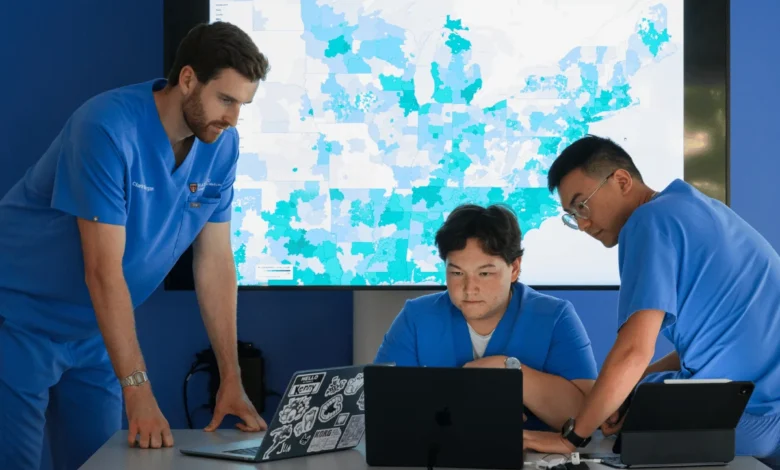
In February 2026, the United States Department of Health and Human Services (HHS) executed a significant release of public health data, making millions of anonymized Medicaid claims spanning the years 2018 through 2024 available for public scrutiny. While the federal agency’s primary objective in releasing this massive repository was to provide oversight tools to combat fraud, waste, and abuse within the Medicaid program, a trio of third-year students at the Harvard School of Dental Medicine (HSDM) identified a far more profound utility for the information. Clark Morgan, Kenny Liu, and Samat Borbiev, all members of the Class of 2028, recognized that the 227 million rows of raw data contained a blueprint of American oral health access that had previously been locked behind prohibitive costs and technical complexity.
The Genesis of CHOMP: From Raw Data to Actionable Insight
The journey toward what would become the Claims History of Oral Healthcare Medicaid Procedures (CHOMP) began as a student-led initiative to address a glaring void in dental public health research. Historically, researchers attempting to analyze national dental trends faced a daunting financial and logistical barrier; obtaining high-quality claims data often required thousands of dollars in access fees and years of administrative navigation. When the federal government opened the floodgates in early 2026, the sheer volume of information was overwhelming, yet the students saw an opportunity to democratize the data.
“We realized there was a great deal of dental information in the data that could be used to highlight true needs and dental care,” said Clark Morgan, D.M.D. ’28. “We could take this massive dataset that usually would cost thousands and thousands of dollars and create a public tool for researchers and policymakers.”
The technical challenge was immediate. The raw federal files, while comprehensive, lacked the user-friendly interface necessary for policy analysis. To transform these 227 million records into something intelligible, the students had to navigate months of iterative data cleaning, coding, and structural design.
Chronology of Development
The development of CHOMP followed a rigorous, multi-stage timeline that moved from raw data ingestion to policy-oriented visualization:
- February 2026: The Department of Health and Human Services releases the comprehensive 2018–2024 Medicaid claims dataset.
- March 2026: The HSDM student team begins preliminary analysis, discovering that the dataset contains unexpectedly granular dental procedure codes.
- April 2026: Recognizing the limitations of the raw federal data, the team initiates a data-merging strategy, integrating the National Plan and Provider Enumeration System (NPPES) to map claims to specific geographic regions.
- May 2026: The team recruits peers with computer science expertise to translate their findings into a geographic information system (GIS)-based visualization.
- June 2026: The students formally partner with Dr. Hawazin Elani, an associate professor in oral health policy and epidemiology at Harvard, to refine the project for academic and policy-level utility.
- Late 2026: CHOMP is launched as an open-source, interactive portal, allowing users to filter by geography, procedure type, specialty, and reimbursement status.
Technical Integration and Data Synthesis
A critical factor in the success of the project was the team’s decision to merge the federal claims data with the National Plan and Provider Enumeration System. By leveraging the first three digits of provider ZIP codes, the team successfully tethered disparate claims to specific geographic coordinates. This step was pivotal, as it allowed the researchers to move beyond abstract numbers and into the realm of spatial health equity.
"Our completed dataset is a merger of many different datasets," Kenny Liu explained. "We input both geographic information and information from the providers themselves by merging a national provider identity registry. Without that merged step, it would be a huge barrier to people using the initially released federal data."
By incorporating Dr. Hawazin Elani’s expertise in large-scale data analytics, the students were able to add county-level measures and provide the necessary context to make the data meaningful for public health officials. Dr. Elani’s involvement transformed the project from a student exercise into a legitimate research tool capable of identifying trends that were previously buried in the noise of the federal dataset.
Analysis of Implications: The State-Line Lottery
The visual nature of CHOMP has already begun to reveal stark disparities in how states administer Medicaid dental coverage. When the students visualized the data, the discrepancies in reimbursement and access became instantly apparent. In some regions, access to specialized care, such as orthodontics, was nonexistent, while neighboring states—despite similar demographic profiles—showed significantly higher utilization rates.
This "state-line lottery" effect is a primary concern for public health advocates. Morgan, reflecting on the findings, noted the moral implications of these disparities: "I think of the person who lives right on the other side of the state line who can’t access that care. They’re just as deserving, but they can’t get care because of differing criteria in their state."
These findings suggest that oral health access in the United States is currently governed more by geography and administrative policy than by clinical need. CHOMP provides the evidence base necessary for policymakers to challenge these inequities, offering a clear visual narrative that is often more persuasive than spreadsheet-based reporting.
Official Responses and Academic Reception
The academic community has met the launch of CHOMP with significant enthusiasm. Dr. Elani, who oversaw the project’s refinement, noted that the students’ work is highly original in its approach to "hidden" data. By turning millions of lines of code into a navigable map, the team has enabled a new class of "data-driven advocacy."
"What makes CHOMP so useful for researchers is that it turns those data into something that can be explored geographically and connected with other national data," Elani said. "Researchers can compare communities and states and identify policy-relevant questions that would have been much harder to recognize from the raw claims alone."
While the Department of Health and Human Services has not issued a formal statement on the specific use of the data by the HSDM team, the project aligns with the federal government’s broader "Open Data" initiatives, which encourage third-party developers to build tools that increase government transparency and efficacy.
Future Directions and Patient Advocacy
Despite their future career goals in oral surgery, Morgan, Liu, and Borbiev view the creation of CHOMP as a fundamental aspect of their professional duty. The project serves as an entry point for clinicians to engage with the structural, systemic, and political factors that dictate patient outcomes before a patient ever sits in a dental chair.
"Beyond your professional expertise, you have all these external factors that impact the treatment you can provide," Liu said. "I believe very strongly that you should advocate for your patients. And to me, this is a form of patient advocacy."
The team envisions CHOMP as a living, breathing tool. By keeping the platform open-source, they hope that other researchers will contribute additional layers of data, such as socio-economic variables or localized health outcomes, to further refine the tool’s predictive capabilities. The ultimate goal is to transition from simple visualization to a diagnostic tool for policy, where health departments can use the data to identify "dental deserts" and allocate resources more effectively.
Conclusion
The development of CHOMP serves as a testament to the power of open-access federal data when paired with innovative, mission-driven leadership. By bridging the gap between raw, inaccessible federal claims and actionable geographic insights, these Harvard students have provided a roadmap for future health policy reform. As the project continues to evolve, it stands as a significant contribution to the broader effort to address the systemic inequalities that define the American healthcare landscape. For policymakers, the message is clear: the data is now available, the disparities are visible, and the mandate for reform has never been more evident.