Belgium and the World Health Organization Forge Deeper Strategic Partnership to Advance Global Health Security and Universal Coverage

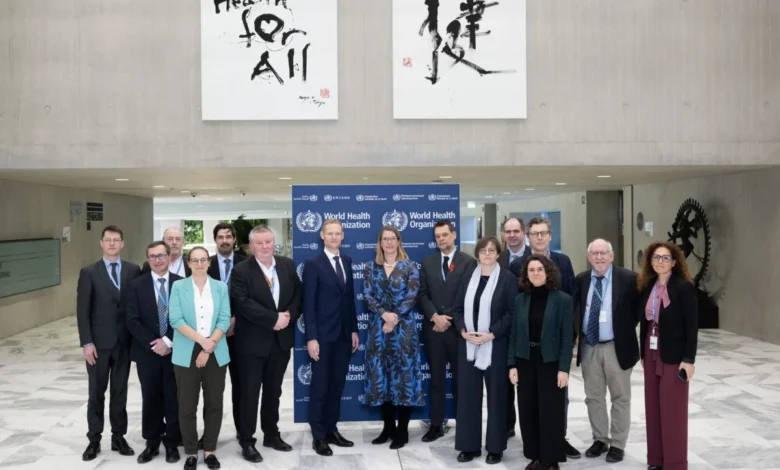
The intricate architecture of international public health received a significant reinforcement this week following the conclusion of a comprehensive three-day strategic dialogue between the Kingdom of Belgium and the World Health Organization (WHO). Convened in Geneva, Switzerland, the high-level consultations brought together senior policymakers, federal and regional government representatives from Belgium, and top-tier global health experts from WHO headquarters alongside its African and European regional offices. The summit served as a critical platform to evaluate the tangible outcomes of an enduring bilateral partnership while charting a forward-looking roadmap designed to navigate an increasingly volatile and complex global health landscape.
At the core of the discussions was a reaffirmed mutual commitment to advancing universal health coverage (UHC), fortifying fragile health systems, and ensuring equitable, unobstructed access to essential vaccines, therapeutics, and cutting-edge health technologies. The Belgian delegation, operating under a unified national banner that reflected the collaborative engagement of the Belgian Federal Government alongside the regional governments of Flanders and Wallonia, was led by H.E. Christophe Payot, Ambassador and Permanent Representative of Belgium to the United Nations and other international organizations in Geneva. The multi-agency presence underscored Belgium’s whole-of-government approach to multilateral diplomacy and international development cooperation.
This milestone dialogue arrives at a pivotal juncture in global health governance. As the international community continues to grapple with the compounding ramifications of post-pandemic recovery, geopolitical friction, climate-induced health emergencies, and widening health inequities, traditional aid models are undergoing intense scrutiny. In this context, the strategic alignment between Belgium and the WHO offers a functional blueprint for effective multilateralism, blending predictable multi-year financing with technical rigor, field-level operational feedback, and policy harmonization.
Chronology and Background of the Strategic Engagement
The formal partnership between Belgium and the WHO is rooted in decades of collaborative development assistance, humanitarian intervention, and technical cooperation. However, the architecture of the current strategic dialogue has evolved considerably over the past several years, gaining distinct momentum from Belgium’s active foreign policy priorities and its pivotal leadership roles within the European Union.
The immediate backdrop of the March 2025 dialogue was heavily influenced by the strategic outcomes and advocacy milestones achieved during Belgium’s presidency of the Council of the European Union in 2024. Throughout its Council presidency, Belgium leveraged its political capital to elevate critical global health themes onto the broader European and international agendas, particularly focusing on supply chain resilience, pharmaceutical independence, equitable access to medical countermeasures, and the structural strengthening of health systems in low- and middle-income countries.
Ahead of the formal Geneva sessions, preparatory technical exchanges had mapped out the evolution of joint initiatives spanning the 2021–2024 funding windows. Over the course of the three intensive days of meetings, delegates systematically audited past performance, analyzed bottlenecks in country-level implementation, and negotiated the foundational parameters of a renewed WHO-Belgium Country Cooperation Strategy. This upcoming framework is explicitly designed to harmonize with the strategic imperatives of the WHO’s ambitious 14th General Programme of Work (GPW14), ensuring that bilateral contributions yield maximum catalytic impact where health needs are most acute.
Accelerating Equitable Access to Vaccines, Medicines, and Health Technologies
One of the most intensely deliberated pillars of the strategic dialogue centered on the ongoing achievements and operational hurdles of the Access to Medicines programme, a flagship initiative generously funded by the Belgian government. Designed to dismantle market barriers and foster sustainable domestic pharmaceutical capacities in developing nations, the initiative has become a cornerstone of Belgium’s multilateral health investments.
To ground the high-level policy debate in empirical reality, the WHO presented a detailed operational case study examining the deployment and localized challenges of the Access to Medicines portfolio within Senegal. The Senegalese implementation served as a microcosm of broader systemic hurdles, illustrating the delicate interplay between regulatory harmonization, supply chain integrity, intellectual property landscapes, and the imperative for local manufacturing ecosystems.
Experts from both delegations engaged in rigorous technical appraisals concerning market-shaping strategies. It was mutually acknowledged that short-term commodity donations, while vital during acute crises, must be systematically superseded by sustainable market-shaping interventions that incentivize local production, guarantee long-term affordability, and insulate vulnerable populations from global supply chain shocks. The dialogue also revisited Belgium’s targeted support for specialized global health domains, including long-standing interventions targeting Neglected Tropical Diseases (NTDs) and the safeguarding of Sexual and Reproductive Health and Rights (SRHR). Both parties underscored that policy formulation and resource allocation in these sensitive domains must remain strictly anchored in robust, empirical, evidence-based frameworks.
Health Emergencies, Pandemic Preparedness, and the One Health Imperative
In light of escalating biological threats, climate change, and the persistent specter of zoonotic spillover, health emergency prevention, preparedness, and response (PPR) occupied a prominent position on the agenda. The deliberations critically evaluated the WHO’s evolving normative and operational role in strengthening the global health security architecture.
Particular attention was dedicated to the ongoing, highly complex negotiations surrounding the global pandemic agreement, alongside the operationalization of the One Health approach—an integrated, unifying framework designed to sustainably balance and optimize the health of people, animals, and ecosystems. To demonstrate the operational realities of the WHO’s front-line capabilities under extreme duress, technical experts presented harrowing yet illuminating operational data concerning emergency health responses in active conflict zones, specifically highlighting the ongoing medical relief and coordination efforts in Gaza.

Furthermore, the strategic dialogue expanded to encompass the contemporary risk landscape defined by the rapid acceleration of biological risks and the expanding interface between human populations and animal reservoirs. Delegates examined sophisticated risk-mitigation strategies designed to enhance early warning systems, bridge the gap between animal health surveillance and human public health responses, and preemptively disrupt potential zoonotic transmission chains before they escalate into international health emergencies of global concern.
Universal Health Coverage and Decentralized Country-Level Impact
The pursuit of Universal Health Coverage (UHC) remained the structural anchor of the entire bilateral consultation. Reviewing the multifaceted progress achieved through the UHC-Partnership framework between 2021 and 2024, participants scrutinized data and project evaluations originating directly from Belgium’s designated partner nations.
A focal point of this programmatic review was the Democratic Republic of Congo (DRC), where WHO country offices and Belgian bilateral cooperation agencies operate in close proximity. Officials analyzed the logistical, financial, and socio-political challenges of delivering primary health care in expansive and often insecure operational environments. The discussions generated actionable insights regarding the necessity of aligning WHO country office operational plans directly with Belgium’s bilateral development cooperation strategies, thereby eliminating programmatic redundancies and maximizing administrative efficiency.
In tandem with physical infrastructure and health workforce strengthening, the delegations addressed the integration of mental health services into primary health care delivery models. Recognizing that mental health has historically been chronically underfunded and neglected within global development frameworks, both partners committed to embedding psychosocial support mechanisms into the core of primary care revitalization efforts.
Official Statements and Diplomatic Reactions
The depth of the strategic alignment and the high degree of mutual trust were vividly reflected in the official statements issued by representatives from both delegations at the conclusion of the summit. The inclusive nature of the Belgian delegation—encompassing federal diplomats alongside regional ministers and technical officers—drew high praise from the WHO leadership.
Dr. Catharina Boehme, WHO Assistant Director-General for External Relations and Governing Bodies, commended the Belgian authorities for their unwavering political steadfastness, financial transparency, and genuine technical partnership. "We thank you for your support, honesty, and strong engagement for global health," Dr. Boehme stated during the closing plenary. "Your efforts in supporting our work in Mozambique and Senegal are clear examples of the crucial work we accomplish together."
Voicing the perspective of the Belgian diplomatic mission, Mr. Koen Van Acoleyen, Minister Counselor at the Permanent Representation of Belgium to the UN in Geneva, emphasized the value of institutional transparency and shared strategic vision. "After listening to the leaders and experts of WHO, we now better understand how they are navigating these challenging times," Mr. Van Acoleyen remarked. "We are honoured that we can walk this road together."
Echoing these sentiments from the perspective of development finance and multilateral strategy, Mr. Dirk Brems, Director of Thematic and Multilateral Cooperation within the Directorate-General for Development Cooperation and Humanitarian Aid, underscored the tangible validation the dialogue provided to Belgian taxpayers and policymakers. "We recognize WHO as a trustworthy partner in global health. We felt proud hearing how crucial our support is to the Organization and how it is having a positive impact at country, regional, and global levels," Mr. Brems noted. "It’s important we continue these discussions as we tread uncharted territories, and we look forward to working together for strong and sustained multilateralism."
Broader Implications and Fact-Based Analysis
The successful conclusion of the 2025 strategic dialogue carries profound implications for the trajectory of international health cooperation. By deliberately aligning their bilateral development priorities with the newly minted WHO 14th General Programme of Work (GPW14), Belgium and the WHO are signaling a departure from fragmented project-based funding toward holistic, systems-level investments.
The core analytical takeaway from the Geneva consultations is that sustainable global health security cannot be achieved through reactive emergency funding alone; rather, it requires the patient, methodical construction of resilient, decentralized health systems capable of withstanding systemic shocks—whether those shocks are economic, epidemiological, or environmental in origin. By anchoring UHC and health systems strengthening at the heart of the GPW14 framework, the partners are actively addressing the root vulnerabilities that allowed past pathogens to overwhelm national health structures.
As the international community navigates an era marked by shifting geopolitical alignments and constrained public budgets, the enduring partnership between Belgium and the WHO stands out as a model of constructive multilateralism. The concrete outcomes of this three-day dialogue—ranging from refined access-to-medicines protocols in Senegal to integrated mental health strategies in the DRC—demonstrate that principled diplomacy, backed by predictable funding and rigorous technical execution, continues to generate measurable, life-saving impacts for populations most in need across the globe.