Best Buy Black Friday in July Sale Sparks Major Discounts Across Laptops Monitors and PC Accessories

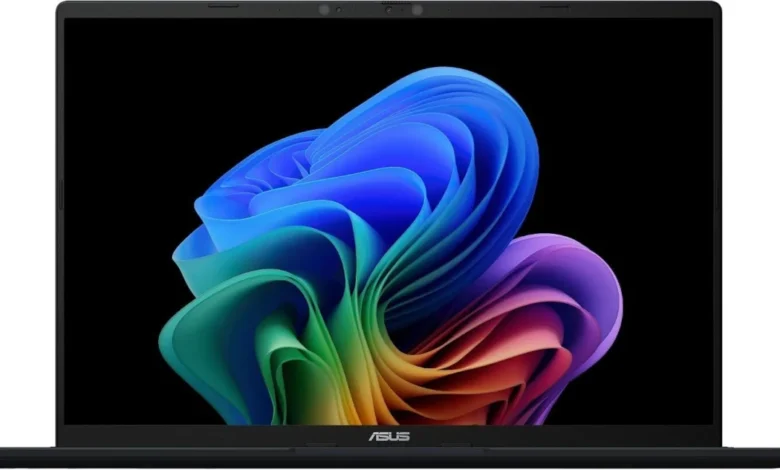
The mid-summer retail landscape has reached a fever pitch as Best Buy’s annual Black Friday in July event triggers a cascade of price cuts across the consumer electronics sector, prompting aggressive price-matching from competitors like Amazon and direct-to-consumer outlets such as Dell and HP. This seasonal sales phenomenon, which has evolved from a simple promotional weekend into a multi-week strategic offensive, is currently offering some of the most significant hardware discounts observed since the previous holiday season. Analysts suggest that the 2026 iteration of these sales is particularly aggressive due to a surplus of early-year inventory and the rapid introduction of "AI PCs" equipped with next-generation processors, which has pushed retailers to clear out existing high-end stock at unprecedented rates.

At the forefront of the current promotional cycle is a staggering discount on the Dell 14 Plus, a flagship ultra-portable workstation that has seen its price slashed by more than 50%. Originally retailing for $2,049.99, the device is currently positioned at $999.99, representing a total savings of $1,050. This specific configuration features the Intel Core Ultra 9 processor, 32GB of RAM, and a 1TB Solid State Drive (SSD), making it one of the most powerful price-to-performance offerings in the current market. The inclusion of the Ultra 9 chip is significant, as it represents Intel’s pivot toward integrated neural processing units (NPUs) designed to handle artificial intelligence tasks locally rather than relying solely on cloud-based computing.
The Evolution of the Mid-Summer Sales War
The concept of a "Black Friday in July" began as a reactive strategy by traditional big-box retailers to counter the dominance of Amazon’s Prime Day. However, by 2026, the event has matured into a standalone fixture of the fiscal calendar. The chronology of this year’s sale indicates a strategic shift; while Amazon’s Prime-specific deals often focus on high-volume, lower-margin consumer goods, Best Buy and specialized tech retailers like Dell have utilized this window to target professional-grade hardware.

The 2026 timeline shows that promotional activity began in early July with "early access" windows for loyalty program members, such as My Best Buy Plus and Total subscribers. By July 23, the sale reached its zenith, with price matching becoming nearly instantaneous across major platforms. This competitive environment has benefited the consumer, particularly in the laptop segment where the transition to new silicon architectures—specifically the Snapdragon X series and Intel’s latest iterations—has created a unique buying window for high-spec machines that were considered cutting-edge only six months prior.
Detailed Analysis of Laptop and Computing Hardware Deals
The current market data reveals that the $500 to $1,000 price bracket is the most contested territory in the July 2026 sales. Beyond the flagship Dell 14 Plus deal, several other manufacturers have adjusted their pricing to remain competitive.

Samsung has made a notable impact with the Galaxy Book4 Edge, a "Copilot+ PC" featuring a 15.6-inch LED display and the Snapdragon X processor. Currently priced at $499.99—down from its $999.99 MSRP—this device represents the entry point for many consumers into the world of ARM-based Windows computing. The 50% discount is viewed by industry experts as an attempt to gain market share for the Snapdragon platform, which promises superior battery life and efficiency compared to traditional x86 architectures.
Microsoft’s own hardware line is also seeing movement, with the Surface Snapdragon X Plus (13.8-inch Touch Laptop) discounted to $1,099.99 from its original $1,499.99. This $400 reduction targets the premium ultra-book market, competing directly with Apple’s MacBook Air. Meanwhile, HP has entered the fray with the OmniBook X Flip 2-in-1. Two variants of this machine are currently on sale at Best Buy: an Intel Core Ultra 7 version with a 1TB SSD for $749.99 (a $450 discount) and an AMD Ryzen AI 5 version with a 2K OLED touchscreen for the same $749.99 price point (representing a larger $580 saving off its $1,329.99 original price).

For users requiring larger screen real estate without a four-figure price tag, the ASUS Vivobook 17 and the Dell 15 Laptop provide high-value alternatives. The Vivobook 17, equipped with an Intel 7 processor and a 1TB SSD, is currently $869.99 at Amazon, down from $1,099.99. The Dell 15, a more budget-conscious workhorse featuring AMD Ryzen processors and an ergonomic keyboard, is available for $599.99, a $400 reduction from its standard $999.99 price.
The Shift in Display Technology: OLED Becomes Accessible
The monitor segment of the Black Friday in July sale highlights a broader industry trend: the rapid commoditization of OLED technology. For years, OLED (Organic Light Emitting Diode) displays were reserved for the highest tier of creative professionals and enthusiast gamers due to high manufacturing costs. The current deals suggest that production yields have stabilized, allowing retailers to offer these premium panels at prices previously reserved for high-end LCDs.

The most prominent example is the 49-inch Samsung Odyssey OLED G93SC. This curved ultrawide gaming monitor, which launched at $1,299.99, is currently retailing for $899.99. Featuring a 240Hz refresh rate and a near-instantaneous 1ms response time, the G93SC provides a level of color accuracy and contrast—characterized by "true blacks"—that traditional liquid crystal displays cannot replicate.
Market analysts point out that the $400 discount on the Odyssey OLED G9 is a strategic move to clear the way for newer "G95" series models that feature integrated smart hubs and improved anti-reflective coatings. For the consumer, however, the G93SC at under $900 represents a high-water mark for immersion in both productivity and gaming environments. The ultrawide format, equivalent to two 27-inch 1440p monitors side-by-side, has become increasingly popular for hybrid workers who require extensive multitasking capabilities without the cable clutter of a dual-monitor setup.

Essential Accessories and the Remote Work Infrastructure
While laptops and monitors garner the most headlines, the July sales have also applied significant pressure to the PC accessory market. This sector is often overlooked but remains critical for the "digital nomad" demographic and the growing number of employees in permanent hybrid work roles.
A standout deal in this category is the TP-Link Roam 6 Travel Router, currently priced at $49.99. While a $10 discount from its $59.99 MSRP may seem modest compared to laptop price cuts, the Roam 6 has reached its lowest price point to date. Travel routers have transitioned from niche networking tools to essential hardware for security-conscious professionals. By creating a private, encrypted Wi-Fi bubble from a hotel’s public network, these devices bypass device limits and provide a layer of hardware-level security that software VPNs alone cannot match.

The inclusion of such specialized hardware in major sales events like Best Buy’s Black Friday in July underscores the maturity of the work-from-home market. Retailers are no longer just selling computers; they are selling entire ecosystems that facilitate mobility and security.
Retailer Strategy and Economic Implications
The ferocity of the 2026 July sales can be attributed to several macroeconomic factors. First, the "back-to-school" shopping season has moved earlier every year. By launching major discounts in late July, Best Buy and Amazon capture the budget of students and educators before the traditional August rush.

Second, the hardware industry is currently in the midst of a "refresh cycle." Following the massive surge in tech purchases during the early 2020s, many of those devices are reaching the end of their four-to-five-year functional lifespan. Retailers are using these mid-summer sales to entice users into upgrading to AI-integrated hardware.
Official statements from retail spokespeople often emphasize "value" and "accessibility," but the underlying data suggests a defensive posture against cooling consumer spending in other sectors. By offering deep discounts on "big-ticket" items like the Dell 14 Plus or Samsung OLED monitors, retailers drive foot traffic and digital engagement, often leading to "basket attachment"—the purchase of high-margin items like cables, software subscriptions, and extended warranties.

Furthermore, the role of "membership" cannot be ignored. Many of the deepest discounts at Best Buy are tethered to their paid subscription tiers. This shift toward a "Costco-style" electronics retail model ensures recurring revenue for the retailer while providing the consumer with early access to inventory that might otherwise sell out during open-market periods.
Conclusion: A Strategic Window for Consumers
As the July 2026 sales events draw to a close, the data confirms that this period has become a legitimate rival to the November Black Friday window. For consumers, the implications are clear: the summer months now provide a viable opportunity to secure professional-grade hardware at clearance-level pricing without the logistical chaos of the winter holiday rush.

The move toward $1,000 discounts on premium laptops and the sub-$900 pricing of flagship OLED monitors suggests that the tech industry is prioritizing volume and ecosystem adoption over high margins in the current fiscal quarter. Whether driven by the need to clear "pre-AI" inventory or the desire to dominate the back-to-school market, the result is a rare alignment of high supply and low pricing that significantly favors the informed buyer. As the market transitions into the second half of the year, these July deals will likely set the baseline for what consumers can expect from the next major round of discounting in late autumn.