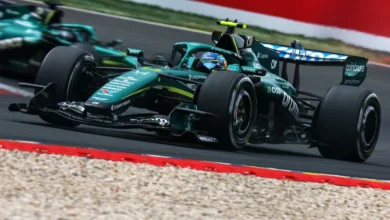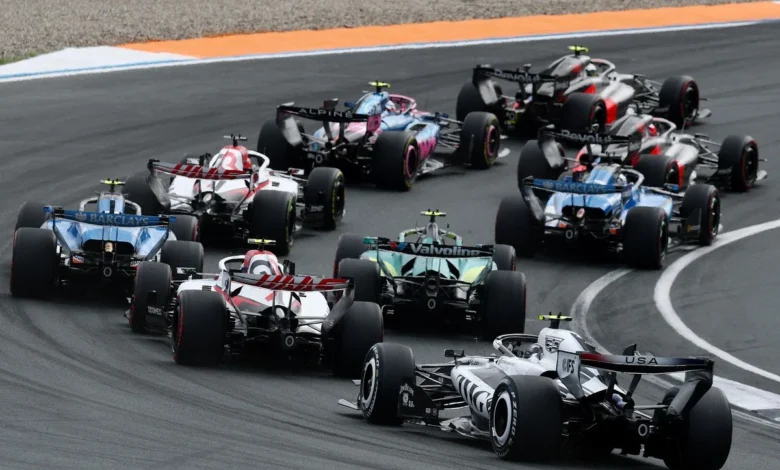
The Formula 1 Commission has officially rubber-stamped a significant restructuring of the sport’s technical and sporting regulations, most notably a reduction in Grand Prix race distances beginning in 2027. Following a pivotal meeting in London this week, stakeholders agreed to shorten the standard race length from 305 kilometers to 290 kilometers. This strategic adjustment, which remains subject to final ratification by the FIA’s World Motor Sport Council (WMSC), serves as a proactive measure to accommodate the sport’s upcoming power unit transition while simultaneously curbing the financial burden of extensive chassis redesigns.
The Logic Behind the 2027 Power Unit Shift
The decision to shorten races is intrinsically linked to the major powertrain overhaul slated for 2027. The sport is moving toward a re-balanced power delivery model, designed to decrease reliance on energy harvesting and mitigate the performance phenomenon known as "superclipping." Under the new framework, the Internal Combustion Engine (ICE) will see its output upscaled to 420kW. Conversely, the power delivered by the MGU-K will be capped at 300kW, with a notable exception: a temporary "overtake mode" boost reaching 350kW.
To facilitate this increased thermal efficiency and power output, the FIA has sanctioned a five percent increase in fuel flow rates. Rather than mandating that teams manufacture entirely new fuel tanks—which would impose significant research and development costs on the ten competing constructors—the governing body has opted to reduce the total race distance. At the majority of venues on the calendar, this equates to a reduction of approximately three laps per race. By shortening the distance, the FIA ensures that teams can maintain the required fuel flow for the increased ICE output without the risk of running dry before the checkered flag.
A Look Ahead to 2028 and Beyond
While the 2027 season acts as a bridge, the long-term roadmap for Formula 1’s powertrain remains in a state of flux. The ruleset for 2028 is already being drafted, with plans to further increase ICE power to 450kW. This evolution is expected to culminate in a 60/40 split between combustion and electrical power delivery. Such a significant shift will necessitate a 13% increase in total fuel flow compared to current standards, a change that will almost certainly require teams to design larger fuel cells. Whether the shortened race distance of 290km will remain in effect for 2028 or if the sport will revert to the traditional 305km format remains a topic of intense discussion within the technical working groups.
Overhauling Race Stoppage Protocols
Beyond the technical powertrain regulations, the F1 Commission has addressed the logistical complexities surrounding race stoppages. Currently, Grand Prix events operate under a two-hour racing limit, but can span up to three hours when factoring in red flag periods. This "three-hour window" has been a point of contention among fans and broadcasters, as it often creates uncertainty regarding the completion of the race.
The proposed amendment seeks to eliminate the three-hour ceiling in favor of a hard "stop time." This change is intended to provide greater clarity for both spectators and event organizers, ensuring that races can be concluded safely while accounting for the constraints of daylight and local curfew regulations. As the FIA communique succinctly noted, the shift is designed to ensure that fans have the highest possible probability of witnessing a full, uninterrupted race distance, even in the event of unforeseen track incidents or weather-related delays.
Furthermore, race directors have been granted expanded authority to extend free practice sessions. This development follows recent high-profile incidents, such as those at the Spanish Grand Prix, where Lewis Hamilton’s collision at Turn 22 and Ollie Bearman’s late-session crash resulted in significant track closures. Under the new guidelines, officials can compensate for lost track time, ensuring that teams—and, by extension, the spectators—are not penalized by administrative rigidity when track repairs become necessary.
Gearbox Homologation and Financial Implications
In a move that has been welcomed by team principals and technical directors, the FIA has decided to rescind the strict gearbox homologation requirements for 2027. For several seasons, gearbox development has been frozen or strictly limited to control spiraling costs. By allowing manufacturers to resume development of their transmissions, the FIA is acknowledging the need for engineering flexibility as the new power units arrive. This change will allow teams to better integrate their gearboxes with the new ICE and MGU-K configurations, preventing potential reliability issues that could stem from forced compatibility with outdated transmission designs.
This regulatory flexibility is part of a broader, ongoing effort by the FIA and Formula One Management (FOM) to keep the sport financially sustainable. With the 2027 changes looming, teams are balancing the need to remain competitive with the stringent cost-cap regulations. The Commission has teased that further, yet-to-be-disclosed technical, sporting, and financial regulations will be revealed later this year, suggesting that the sport is in the midst of its most significant transformation since the introduction of the current ground-effect aerodynamic era.
Historical Context of Race Distances
The 305km standard, which has been the hallmark of Formula 1 for decades, was originally designed to ensure that a Grand Prix lasted approximately 90 minutes. However, as car performance evolved and safety protocols became more robust, race durations have fluctuated based on track characteristics, weather conditions, and safety car interventions.
Historically, the shortest race in modern F1 history remains the 2021 Belgian Grand Prix, which was effectively curtailed to just two laps behind a safety car due to torrential rain. Conversely, races like the 2011 Canadian Grand Prix stretched the limits of the time-based regulations due to multiple stoppages. By formalizing a shorter distance, the FIA is effectively institutionalizing a change that reflects the modern reality of F1: a sport that is faster, more power-intensive, and increasingly focused on balancing high-octane performance with environmental and fiscal responsibility.
Analyzing the Impact on Competition
The decision to reduce race distance has immediate implications for tire management and strategy. Currently, a 305km race is often a one-stop affair, dictated by the durability of Pirelli’s compounds. A 15km reduction in race distance may appear marginal—equating to a few minutes of total running time—but it alters the thermal degradation profile of the tires. Teams will have to recalibrate their simulations to determine if a "flat-out" sprint becomes more viable than the current "management-heavy" style of racing.
If the shift successfully reduces the frequency of energy-harvesting cycles, the racing could become more aggressive. Drivers who currently spend significant portions of a stint in "save mode" may find themselves able to challenge for position more frequently. This, combined with the new power unit regulations, represents a deliberate push by the FIA to prioritize wheel-to-wheel combat over the tactical maneuvering that has defined the hybrid era since 2014.
Conclusion and Next Steps
As the F1 Commission awaits the final stamp of approval from the World Motor Sport Council, the paddock is already beginning to pivot toward the 2027 requirements. The rescinding of gearbox homologation is a clear signal that the FIA recognizes the technical challenges ahead. While critics might argue that shortening race distances diminishes the historical prestige of the Grand Prix, the governing body maintains that these changes are essential to preserve the sport’s competitive integrity in an era of rapid technological advancement.
The coming months will be critical as teams finalize their development budgets and begin testing the new power unit configurations. Whether this reduction to 290km provides the desired balance between raw power and reliability remains to be seen, but the intent—to deliver a leaner, faster, and more efficient spectacle for the global audience—is clear. With the regulatory landscape set to shift once more in 2028, the sport is entering a period of rapid iteration, where the ability to adapt to changing technical demands will be as important as the speed of the cars themselves. The sport now looks to the WMSC to formalize these measures, setting the stage for a new chapter in the history of Formula 1.