Japan Achieves Landmark Success with RV-X Reusable Rocket Prototype’s Inaugural Hop Test, Signaling Major Leap in Domestic Space Capabilities

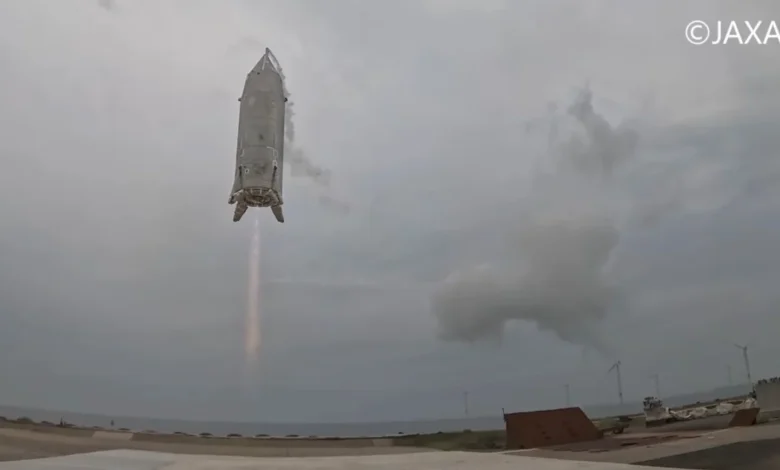
Japan’s ambitious pursuit of cost-effective, reusable space launch technology marked a significant milestone on July 11, 2026, with the successful maiden flight test of the RV-X experimental reusable rocket prototype. Conducted at the Japan Aerospace Exploration Agency’s (JAXA) Noshiro test facility, this initial "hop" demonstrates Japan’s resolute commitment to joining the select ranks of nations and private entities mastering vertical takeoff and landing (VTVL) capabilities, a critical enabler for the future of space exploration and commercial access. The achievement positions JAXA and its industrial partners firmly on a developmental trajectory towards establishing indigenous, competitive reusable launch services, vital for national strategic autonomy in an increasingly dynamic global space economy.
Details of the Groundbreaking Test Flight
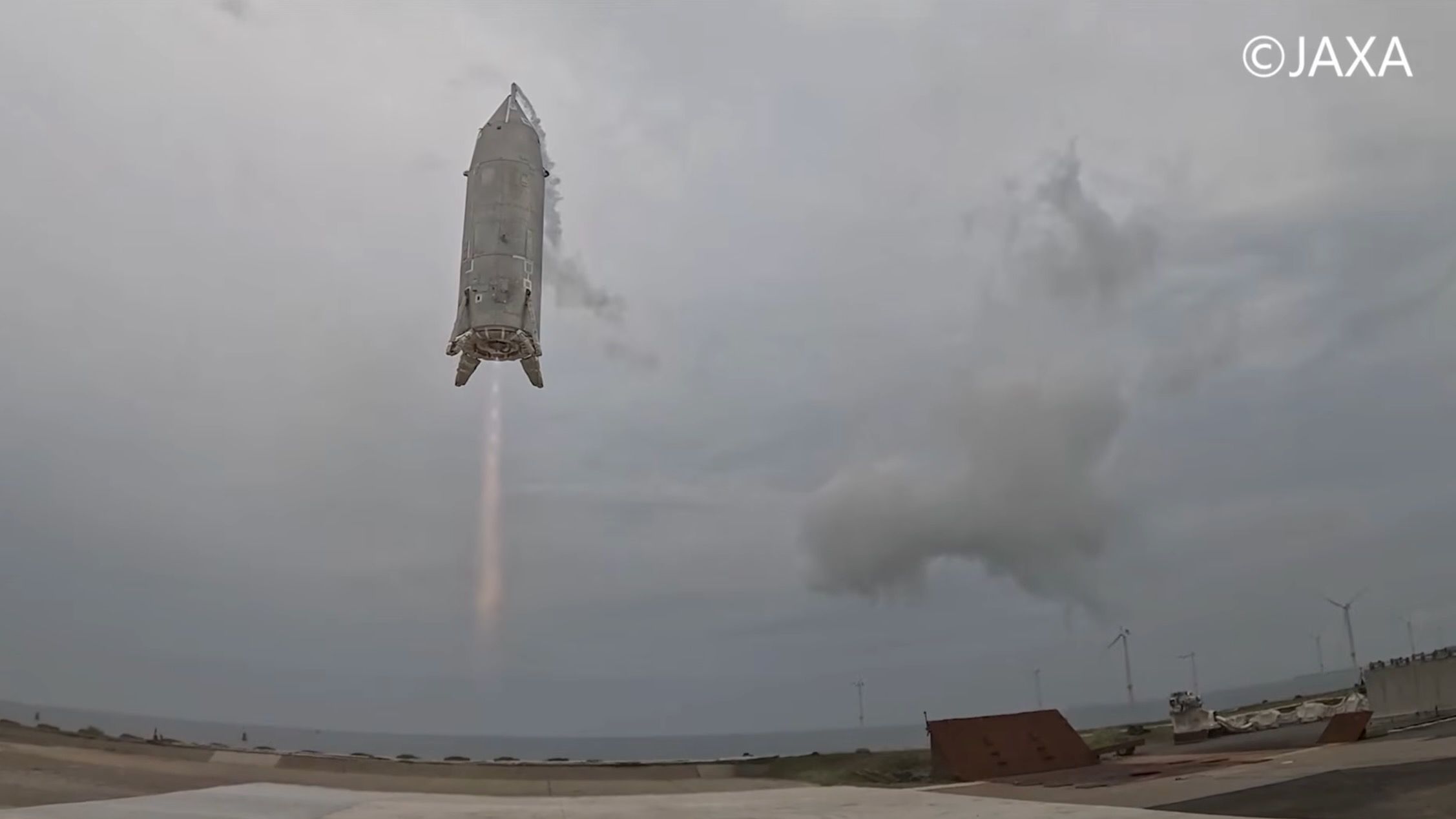
The RV-X prototype, a 24-foot-tall (7.3 meters) vehicle, executed its brief but successful flight over a meticulously prepared concrete pad. Powered by a single engine, the experimental rocket ascended to an altitude just exceeding 33 feet (10 meters) before traversing a horizontal distance of approximately 50 feet (15 meters). The entire maneuver, lasting approximately 40 seconds from liftoff to a controlled, soft touchdown, was executed precisely as planned. This controlled "hop" represents the fundamental proof-of-concept for the intricate guidance, navigation, and control systems required for precise vertical landing, a capability that has revolutionized spaceflight economics. The Noshiro test facility, historically a hub for rocket engine development and static fire tests, provided the ideal controlled environment for this inaugural dynamic flight. The success of this short-duration, low-altitude test confirms the foundational design principles and engineering acumen of the Japanese teams involved, laying crucial groundwork for subsequent, more complex flight envelopes.
The Global Imperative for Reusability: A New Space Race Paradigm
The drive towards reusable rocket technology is fundamentally reshaping the global space industry, primarily driven by the promise of drastically reduced launch costs and accelerated mission turnaround times. Historically, rockets have been expendable, discarding expensive stages after a single use. This model, while effective for initial space access, is inherently inefficient and costly, often pricing out smaller players and limiting the cadence of missions.
The paradigm shift began with private enterprises like SpaceX, which, through its Falcon 9 and Falcon Heavy rockets, demonstrated the commercial viability of reususability, achieving routine vertical landings of first stages. SpaceX’s Starship, still under development, aims for full reusability of both its booster and upper stage, promising even greater cost reductions. Other significant players include Blue Origin with its New Glenn rocket, designed from inception for reusability, and more recently, China, which made history with the first-ever orbital launch featuring a reusable rocket landing by its Long March 10B. These successes have established a new benchmark for competitive space access, compelling established space agencies and traditional aerospace manufacturers worldwide to invest heavily in similar capabilities. For nations like Japan, with aspirations for sustained leadership in space science, exploration, and commercial services, developing indigenous reusable launch technology is no longer an option but a strategic imperative to remain competitive and independent.
JAXA’s Strategic Vision: Paving the Way for CALLISTO
The RV-X prototype is not an end in itself but a crucial precursor to a more ambitious collaborative project known as CALLISTO (Cooperative Autonomous Landing and LOX/LH2 Integrated Stage for Transportation Optimization). This international joint venture brings together JAXA, France’s national space agency CNES, and the German Aerospace Center (DLR). CALLISTO aims to design, build, and demonstrate a single-stage reusable rocket capable of vertical launch, precision landing, rapid refurbishment, and subsequent reuse. The focus on liquid oxygen (LOX) and liquid hydrogen (LH2) as propellants for CALLISTO highlights a commitment to high-performance, environmentally cleaner propulsion systems.
The RV-X’s successful hop is a direct foundational step for CALLISTO, allowing for the validation of essential technologies and operational procedures at a smaller scale before integration into the larger, more complex international demonstrator. This phased approach minimizes risk and optimizes learning. The overarching goal of the CALLISTO program, and by extension JAXA’s long-term strategy, is to position Japan as a provider of advanced, cost-effective reusable launch services, thereby enhancing its competitive standing in the global commercial launch market and ensuring reliable access to space for its national needs. This international collaboration also serves to pool expertise and resources, accelerating development in a highly capital-intensive field.
Japan’s Current Launch Landscape and the Evolutionary Push
Japan’s current flagship launch vehicle, the H3 rocket, was introduced in 2023 as a more efficient and cost-effective successor to the H-2A, which was retired last year. The H3 was designed to be more versatile and offer lower launch costs compared to its predecessor, primarily through simplified design and manufacturing processes. However, despite its advancements, the H3 was not conceived with reusability in mind. While it represented a step forward in Japanese launch capabilities, its development and operational history have presented challenges, with two of its initial eight launches experiencing partial failures.
More critically, in the context of the rapidly evolving global space industry, the H3’s expendable nature means it cannot compete on cost-effectiveness with the most advanced reusable rocket stages now routinely deployed by international rivals. This economic disparity creates a compelling impetus for JAXA and its primary industrial partner, Mitsubishi Heavy Industries (MHI), to aggressively pursue reusable technologies. MHI, a long-standing titan in Japanese heavy industry and a key player in Japan’s space program, is deeply involved in the development and operation of the RV-X and future reusable vehicles, leveraging its extensive engineering and manufacturing expertise. The RV-X and CALLISTO projects are thus central to JAXA’s strategy to develop a future replacement for the H3 that can offer superior economics and operational flexibility, ensuring Japan’s sustained relevance in the commercial launch market and its ability to undertake ambitious national space endeavors.
Technical and Operational Feasibility: The JAXA Approach
JAXA’s official statements underscore the profound importance of "operational feasibility" in the development of reusable rockets. This extends beyond merely achieving a successful vertical landing. It encompasses the entire lifecycle of a reusable vehicle:
- Maintenance and Refurbishment: The ability to inspect, repair, and prepare a rocket for its next flight quickly and affordably. This requires robust materials, modular designs, and efficient ground operations.
- Operational Procedures: Establishing streamlined, safe, and repeatable processes for pre-flight checks, fueling, launch, landing, and post-flight recovery.
- Vehicle Movement and Launch Pad Setup: Efficiently moving the vehicle to and from the launch pad, integrating payloads, and configuring ground support equipment for rapid turnaround.
The RV-X program is designed precisely to address these multifaceted challenges. By conducting repeated verification of these elements using an actual experimental vehicle, JAXA aims to "establish operational procedures that will contribute to the repeated operation of future rockets." This systematic approach to engineering and operations is critical for transforming a successful prototype into a reliable, cost-effective launch system. The data gathered from the RV-X’s initial hop and subsequent planned flights will be invaluable in refining these procedures and informing the design of future, larger-scale reusable vehicles, including the CALLISTO demonstrator.
Echoes of Starhopper: A Global Development Blueprint
The developmental trajectory of JAXA’s RV-X bears a striking resemblance to SpaceX’s early Starship development efforts, particularly the "Starhopper" prototype. In 2019, Starhopper, famously dubbed a "flying water tower" due to its stubby, steel, three-legged design, executed its first untethered hop at SpaceX’s Starbase facility in South Texas. That initial flight saw Starhopper ascend approximately 65 feet (20 meters) straight up before descending back to its landing pad.
This incremental testing approach, starting with low-altitude hops to validate fundamental VTVL technologies, is a proven methodology for complex rocket development. Just as Starhopper’s success paved the way for higher, longer-duration flights and the subsequent evolution of Starship’s design, the RV-X is expected to follow a similar path. Following its initial 33-foot (10-meter) hop, JAXA has already announced plans for the RV-X’s next launch, which is anticipated to reach an altitude of 330 feet (100 meters), incorporating additional lateral crossover maneuvers and a hover phase before a controlled landing. This planned progression underscores the systematic and cautious approach JAXA is taking to mature its reusable rocket technology.
Economic and Geopolitical Implications
The successful development of reusable launch technology holds profound economic and geopolitical implications for Japan. Economically, it promises to drastically reduce the per-kilogram cost of placing payloads into orbit. SpaceX, for instance, has demonstrated that reusability can cut launch costs by an order of magnitude, making space more accessible for a wider array of commercial, scientific, and governmental users. For Japan, a nation heavily reliant on international trade and technological innovation, securing competitive access to space is paramount. It enables the deployment of advanced communications satellites, Earth observation platforms, navigation systems, and scientific research missions at a lower cost, thereby fostering economic growth and technological advancement.
Geopolitically, an indigenous reusable launch capability strengthens Japan’s strategic autonomy in space. It reduces reliance on foreign launch providers, ensuring unfettered access to orbit for national security assets and critical infrastructure. In an era of increasing geopolitical competition in space, maintaining a robust and independent launch capability is a significant national security asset. Furthermore, the international collaboration on CALLISTO, involving France and Germany, highlights Japan’s commitment to multilateral partnerships in advancing complex space technologies, fostering scientific cooperation and potentially opening avenues for future joint missions.
The Future of Japanese Space Exploration
The RV-X test is a foundational step in JAXA’s long-term vision for Japanese space exploration. Beyond cost-effective satellite deployment, reusable launch vehicles are essential for enabling a more ambitious and sustainable future in space. Potential applications include:
- Space Tourism: Lower launch costs could eventually make suborbital and orbital space tourism more accessible.
- Lunar and Martian Missions: Reusable rockets can reduce the logistical burden and cost of future lunar landers, orbital stations, and potential human missions to the Moon and Mars, for which Japan has expressed significant interest.
- Orbital Infrastructure: Building and maintaining extensive orbital infrastructure, such as large space stations, manufacturing facilities, or solar power satellites, becomes more feasible with frequent and affordable launches.
- Scientific Discovery: More frequent and less expensive access to space allows for a greater diversity of scientific payloads and experiments, accelerating discovery in astrophysics, Earth science, and fundamental research.
Japan has a proud history of innovation in space, from its Hayabusa asteroid sample return missions to its contributions to the International Space Station and its planned lunar landers. The RV-X program is a clear signal that Japan intends to remain at the forefront of space technology, adapting to and shaping the evolving landscape of space exploration.
Challenges and the Road Ahead
Despite the celebratory success of the RV-X’s first hop, the path to fully operational, reusable launch services is fraught with technical and financial challenges. Scaling up from a small prototype to an orbital-class reusable rocket involves overcoming significant hurdles, including:
- Engine Development: Designing and perfecting engines capable of multiple restarts, deep throttling, and reliable performance across varying flight regimes.
- Advanced Materials: Developing materials that can withstand the extreme thermal and structural stresses of re-entry and repeated use.
- Guidance and Control: Refining highly precise guidance, navigation, and control systems for autonomous landings under various environmental conditions.
- Rapid Refurbishment: Mastering the techniques for quick and cost-effective inspection, repair, and turnaround of complex rocket stages.
- Financial Investment: Reusable rocket development is immensely capital-intensive, requiring sustained governmental and private sector investment.
- Regulatory Environment: Navigating complex international and domestic regulatory frameworks for launch and landing operations.
The RV-X program’s next steps, including the planned 330-foot hop, will continue to provide critical data and operational experience. Each subsequent test, each success, and even each setback will contribute to the collective knowledge base, incrementally building towards JAXA’s ultimate goal. This journey is not just about building a better rocket; it is about building a more sustainable, accessible, and strategically robust future for Japan in space. The initial hop of the RV-X prototype serves as a potent symbol of Japan’s unwavering ambition and its methodical approach to conquering the frontiers of space.