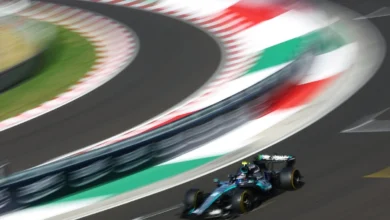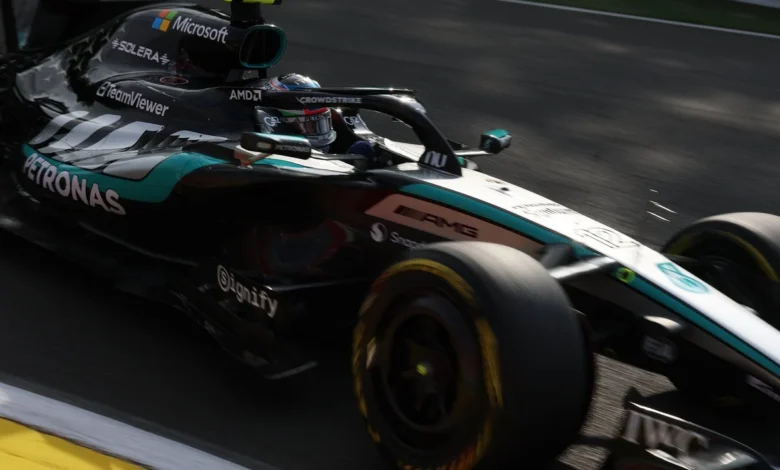
Six wins, six pole positions, and the Formula 1 championship lead. A year after facing one of his most challenging weekends at Spa-Francorchamps, Kimi Antonelli has achieved a significant victory, securing a position that will see him head into the summer break as the championship leader. However, the significance of this Spa success extends far beyond the points standings. It serves as a compelling demonstration of Antonelli’s remarkable evolution over the past twelve months and highlights why his driving style, honed by natural talent and astute adaptation, is proving exceptionally effective with the current generation of Formula 1 cars, particularly in anticipation of the 2026 regulations.
The Belgian circuit, where Antonelli struggled last season with a rear suspension setup that hampered his confidence, provided the perfect backdrop for this redemption. His dominant performance offered a stark contrast to his previous difficulties, underscoring the depth of his development and the strategic advantage he now holds. This victory is not merely a statistical achievement; it is a testament to his ability to learn, adapt, and overcome challenges on one of motorsport’s most demanding stages.

A Year of Transformation: From Struggle to Dominance at Spa
Last season, Spa-Francorchamps presented a formidable hurdle for Antonelli. A lack of confidence stemming from a poorly performing rear suspension setup meant he was unable to extract the maximum from his car. This year, however, the narrative has dramatically shifted. Antonelli’s six victories and six pole positions are indicative of a driver who has not only matured but has also mastered the intricacies of the current F1 machinery. His commanding lead in the championship is a direct result of this sustained high performance.
The underlying reasons for this transformation are rooted in the evolving nature of Formula 1 cars and the specific demands they place on drivers. The shift from the previous ground effect regulations, characterized by inherent stability but also unpredictable snap oversteers, to the current iteration, has necessitated a fundamental recalibration of driving techniques. Antonelli’s success suggests he has embraced these changes more effectively than many of his peers.
The Shifting Sands of Ground Effect and Tyre Dynamics
To fully appreciate Antonelli’s current prowess, it’s crucial to understand the technical landscape of Formula 1 over the past few seasons. The previous generation of ground effect cars, while offering significant aerodynamic grip, were notoriously difficult to manage at the limit. Their stability was often a double-edged sword; when that balance was lost, the cars could snap away suddenly and without warning. Drivers frequently reported the challenge of saving a car once it had exceeded its grip threshold.

A key characteristic of these cars was the difficulty in managing "combined loading" – the simultaneous application of braking and steering, particularly on corner entry. The introduction of larger, 18-inch tyres with reduced sidewall height further altered the dynamics. This change resulted in a smaller contact patch, which some drivers found more challenging than others, especially those whose driving style relied heavily on their ability to attack corner entry. The reduced sidewall meant less compliance, making the transition between grip and loss of grip more abrupt.
Dario Marrafuschi, Pirelli’s head of motorsport, explained this phenomenon to Motorsport.com: "If you imagine the rolling of the tyre in the longitudinal direction, the length of the contact patch is shorter, and with a shorter contact patch, the transition in driving feel between having grip and losing it is more sudden. This is why we understand the drivers’ comments; it was expected that these difficulties would arise during corner entry in managing adhesion, exactly because the snap gives you less warning."
The 2026 Car: A New Paradigm of Complexity
The challenges associated with corner entry and tyre management have been amplified with the advent of the current technical regulations, and are expected to remain a significant factor as teams prepare for the 2026 regulations. The narrower tires introduced to reduce aerodynamic drag have further complicated the combined loading phase. While increased front load can help mitigate lock-ups during corner entry, managing overall adhesion remains a delicate balancing act.

Andrea Stella, Team Principal of McLaren, elaborated on this in Monaco: "We do observe that the phase of entering the corner when you brake and combine is very delicate. It’s very difficult to avoid the tires to lock. When you don’t have front locking, you may have instability like the tires don’t seem to have much capacity of transitioning from the pure longitudinal to the pure lateral in the corner."
However, there’s another critical element: the behavior of the rear end of the car. While the current cars can exhibit a more unstable rear compared to their predecessors, they are also perceived by many drivers as more predictable and "easier" to handle overall. This paradoxical characteristic allows drivers more freedom to manipulate the car’s balance. Indeed, from the outset of this new technical era, drivers noted that despite potentially less outright downforce, the cars were aerodynamically more forgiving and enjoyable to drive.
Antonelli’s Aggressive Style: A Strategic Advantage for 2026
This dynamic creates a highly sensitive scenario during corner entry and the initial phase of apex pursuit. Marrafuschi further explained the resulting driving styles: "To react precisely to that difficulty in reading the car on corner entry, some drivers tend to saturate the front tyres entering the turn. Saturating the front means they might enter the corner by giving a very sharp, quick steering input, so that the front end experiences a step-input towards a high steering angle, which causes the car to tend to go straight. What does going straight actually mean? It means it stabilises the rear more, and the front gains grip progressively. This driving style of over-saturating the front inevitably reflects on tyre wear and temperatures as well. I can confirm that when we analyse the tyres for each team, we measure and we do see differences."

This is precisely where Kimi Antonelli’s driving style has emerged as a significant asset. His approach is characterized by an aggressive, almost "shortening" of the corner radius. Instead of a smooth rotation, Antonelli often employs a sharp, rapid steering input at the last possible moment. This technique, requiring exceptional car control at low and medium speeds, allows him to rotate the car quickly and settle it, effectively "folding the corner like a handkerchief," as he himself described it.
"It is mostly my style. I try to shorten the radius of the corner, as well as the time I spend between braking and the dead zone. I try to fold the corner up like a handkerchief. I turn at the last moment, very aggressively. Let’s say I make the car work a bit more. My style is a bit more aggressive," Antonelli told Motorsport.com. He acknowledges that this style can be demanding, particularly in high-temperature conditions or on tracks with long, sweeping corners, where it can lead to increased tyre degradation. "Obviously the way you drive changes between qualifying and the race, but I have to say that in Barcelona I struggled a bit more in qualifying because I was asking too much of the car, also due to the very high temperatures. The tyre dropped off quickly, to the point that in qualifying the rear was already gone after Turn 7. Let’s say it is a style that helps on certain tracks, while on others you may need to adapt it due to the conditions. But in the end every track is different. For example, at Silverstone I had to readjust it a bit because all the corners are long and fast, and this style didn’t help all that much."
Even at Spa, this characteristic was evident, particularly in Turn 1 and the final chicane, where Antonelli’s aggressive corner entry and sharp steering inputs were instrumental in his performance.

The Aggressive Edge: A Requirement for Modern F1
The stark contrast between Antonelli’s approach and that of his teammate, George Russell, further illuminates the evolving demands of Formula 1 driving. While Russell has traditionally employed a smoother, more progressive steering input – a style that proved highly effective with the previous ground effect cars – Antonelli’s aggressive methodology appears to align more closely with the characteristics of the current machinery and, crucially, the anticipated 2026 regulations.
"If we look at Russell and Antonelli, we do see that there’s a different driving style. I think it’s quite noticeable in the onboard and the way they use the steering wheel," Stella observed. "The driving style definitely has an effect. And we do see, looking at the lap times that Antonelli was able to do here and he was able to do in Canada, in the race, these differences compared to anybody else must come also from the way you deal with the tires. Because if it was only downforce, then it would be an exaggeration and you wouldn’t have these differences to the team-mate."
Analysis from within the teams suggests that to truly extract the maximum performance from the current cars, an aggressive driving style is often necessary, especially in low-grip conditions. This is particularly true when trying to get the tyres into their optimal operating window. Antonelli’s proven ability to perform in such conditions, a skill he demonstrated even last season during long runs, points to a natural aptitude for this demanding style.

Stella further elaborated on the performance benefit of this aggressive approach: "Another factor, this year’s car requires drivers to constantly attack. Basically, if you try to smoothen out your input, be clean, get the car to steer with the front tyres, which one would say, I guess, what you would expect, have a decent compromise between sailing a bit in entry to have a good exit, it doesn’t pay off for lap time."
Implications for the Future and 2026
Antonelli’s current success is not merely a personal triumph but also a significant indicator for the future of Formula 1, particularly with the impending rule changes in 2026. The driving style that emphasizes aggressive inputs and precise tyre management appears to be the key to unlocking performance in the current era. Antonelli’s innate ability to execute this style, combined with his rapid adaptation and continuous improvement, positions him as a formidable contender.
His ability to consistently deliver strong performances, particularly in challenging conditions or on tracks that require a delicate balance of tyre management and aggressive driving, suggests he possesses the raw talent and mental fortitude to thrive in Formula 1. The data from Pirelli regarding tyre wear and temperature differentials between drivers using different techniques further validates the impact of driving style on overall performance.

The fact that Antonelli, a young driver, has so effectively interpreted and capitalized on the nuances of the current regulations is a testament to his exceptional talent and his proactive approach to development. As the sport heads towards another significant regulatory overhaul in 2026, his demonstrated adaptability and aggressive yet controlled driving style suggest he is exceptionally well-prepared to navigate the challenges and opportunities that lie ahead, solidifying his status as a rising star and a potential future world champion. His performance at Spa is not just a victory; it’s a statement of intent and a preview of what is to come.