Macklemore calls for free Palestine and condemns ICE in first show since Ed Sheeran tour saga

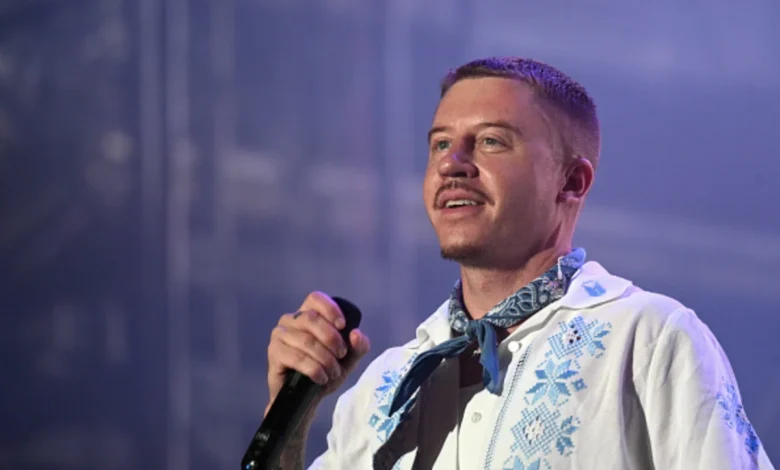
The prominent American rapper Macklemore returned to the stage this week, delivering a defiant and politically charged performance at the iconic Red Rocks Amphitheatre in Colorado. The October 22 concert marked the artist’s first live appearance since his high-profile removal from Ed Sheeran’s North American "Loop" tour, a decision that sparked a firestorm of controversy regarding the intersection of celebrity, political activism, and the corporate influence governing modern concert venues.
During his 17-song set, Macklemore utilized the platform to reiterate his unwavering support for Palestinian liberation, while simultaneously broadening his critique to include global humanitarian crises and the domestic policies of U.S. Immigration and Customs Enforcement (ICE). His return to the live circuit signals a pivot toward independent touring, characterized by a series of sold-out, mission-driven benefit concerts across the United Kingdom and Europe.
The Anatomy of the Tour Departure
The sequence of events leading to Macklemore’s exit from the Sheeran tour began in September 2024. During a performance at MetLife Stadium in New Jersey, Macklemore performed his viral protest track, "Hind’s Hall," while displaying imagery from the ongoing conflict in Gaza. His stage remarks, which called for dignity and equality for all human beings, prompted immediate backlash from various organizations, most notably the Israeli-American Council.
The situation escalated when billionaire businessman and New England Patriots owner Robert Kraft, who holds significant influence over the Gillette Stadium venue, reportedly objected to Macklemore’s continued presence on the bill. According to statements provided by the rapper, Ed Sheeran informed him that venue owners were no longer comfortable hosting him, effectively leading to his dismissal from the remaining dates of the tour.
The fallout was swift and unprecedented in the modern music industry. In an act of collective solidarity, several support acts and members of Sheeran’s backing band withdrew from the remaining tour dates. The controversy placed Sheeran in a difficult position, as he faced intense scrutiny from peers, activists, and the public. In a subsequent public statement, Sheeran expressed regret for his handling of the situation, admitting that the internal turmoil had led him to question his own career trajectory and the pressures of navigating political discourse within the framework of massive corporate-sponsored tours.
Chronology of Escalation
- September 2024: Macklemore performs at MetLife Stadium, delivers a pro-Palestine speech, and performs "Hind’s Hall."
- Late September 2024: Robert Kraft and other venue stakeholders reportedly apply pressure to the Sheeran camp regarding the content of the support acts.
- Early October 2024: It is confirmed that Macklemore has been dropped from the "Loop" tour.
- Mid-October 2024: Macklemore announces a "Free Palestine" benefit tour across Europe and the UK, which sells out rapidly.
- October 22, 2024: Macklemore performs at Red Rocks Amphitheatre, further cementing his commitment to his political messaging.
Financial Commitments and Humanitarian Aid
In the wake of his removal, Macklemore took the rare step of publicly disclosing his financial involvement in the tour. He announced the donation of his entire $1 million in earnings from the Sheeran tour to six international organizations dedicated to providing humanitarian relief in Palestine.
This gesture was met with a counter-response from Robert Kraft, who pledged a $2 million donation toward humanitarian aid in the region. While the financial contributions were significant, the discourse remained polarized. Observers noted that the situation highlighted a growing tension between artists who wish to use their platforms for global advocacy and the corporate entities that control the infrastructure of live performance.
A Spectrum of Industry Reaction
The entertainment industry remains deeply divided on the issue. While figures like Tom Morello have praised Macklemore’s willingness to face professional consequences for his convictions, noting that "courage is contagious," others have taken a more skeptical view.
Metallica’s James Hetfield recently weighed in on the practice of using live performances as a political soapbox. In remarks that were widely interpreted as a veiled critique of artists like Macklemore, Hetfield expressed disdain for entertainers attempting to influence audiences with what he termed "bullshit." This sentiment echoes a broader, ongoing debate within the music community about the responsibility of the artist to provide a neutral space for entertainment versus the moral imperative to address geopolitical atrocities.

Furthermore, public figures ranging from Greta Thunberg and Charlotte Church to Bob Geldof have commented on the incident. Thunberg focused on the lack of "spine" exhibited by artists who shy away from controversy, while Geldof, despite defending Sheeran’s character, offered a clear nod of respect toward Macklemore’s principled stance.
The Broader Implications for Live Music
The Macklemore-Sheeran saga serves as a case study for the evolving relationship between stadium owners, promoters, and touring artists. As venues become increasingly reliant on corporate sponsorship and private ownership, the autonomy of the performer is being tested. The incident at Gillette Stadium, which was eventually cancelled due to severe weather, serves as a symbolic endpoint to a tour that had become synonymous with a crisis of conscience.
For the industry, the implications are profound. There is a discernible trend toward artists prioritizing direct connection with fans through smaller, independent tours where they maintain full creative and political control. Macklemore’s sold-out "Free Palestine" tour indicates that there is a significant audience segment that values, and is willing to pay for, performances that align with their social and political values.
As Macklemore continues his tour, the focus will likely remain on whether his approach marks a permanent shift in how pop artists interact with the political sphere. While the "Loop" tour has moved on with new support acts, the conversation sparked by the exclusion of a major artist for his political speech is unlikely to dissipate. The tension between institutional control and individual expression remains a defining feature of the contemporary musical landscape.
Analysis: Art as Resistance
The effectiveness of using a concert stage for political advocacy is often debated in media studies. Critics argue that such platforms risk alienating segments of an audience or simplifying complex geopolitical realities. However, proponents, including Macklemore himself, argue that art is inherently a form of resistance.
By framing his performances as "community" events, Macklemore is attempting to redefine the concert experience from a purely transactional entertainment model to one of collective action. His rhetoric—connecting the plight of Palestinians to the struggles of those affected by ICE in the United States—is a deliberate attempt to build a coalition of causes.
As the industry looks forward, the legacy of this event will likely be measured by whether other artists follow suit in taking direct, high-stakes stands on international issues. If the success of Macklemore’s current, self-funded tour is any indicator, the market for politically engaged music is not only alive but is expanding. The "Free Palestine" tour serves as a test case for whether artists can sustain a career while openly challenging the established political and corporate status quo.
The incident has also highlighted the outsized role of stadium owners in shaping cultural discourse. When individuals with significant capital can dictate the content of a performance through threats of venue access, it creates a "chilling effect" on free speech. This reality has prompted calls for greater transparency in how touring contracts are managed and how much influence private stakeholders should wield over the artistic output of performers.
Ultimately, the events of late 2024 have proven that the stage remains one of the most powerful arenas for social and political dialogue. Whether this leads to a new era of "protest pop" or a period of increased self-censorship among major touring artists remains the central question for the industry as it moves into the next season of large-scale, international touring. For now, Macklemore remains at the forefront of this debate, signaling that he has no intention of tempering his message for the sake of mainstream, corporate-friendly stability.
Related posts: