McLaren Faces Straightline Speed Crisis as Oscar Piastri Questions Deficit at Las Vegas Grand Prix

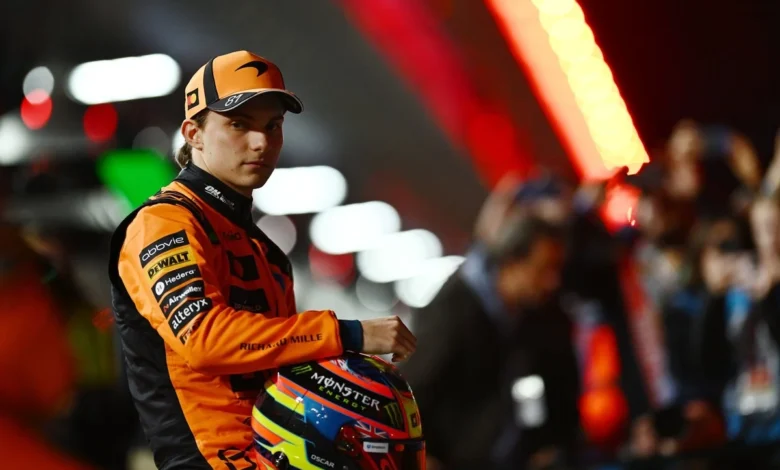
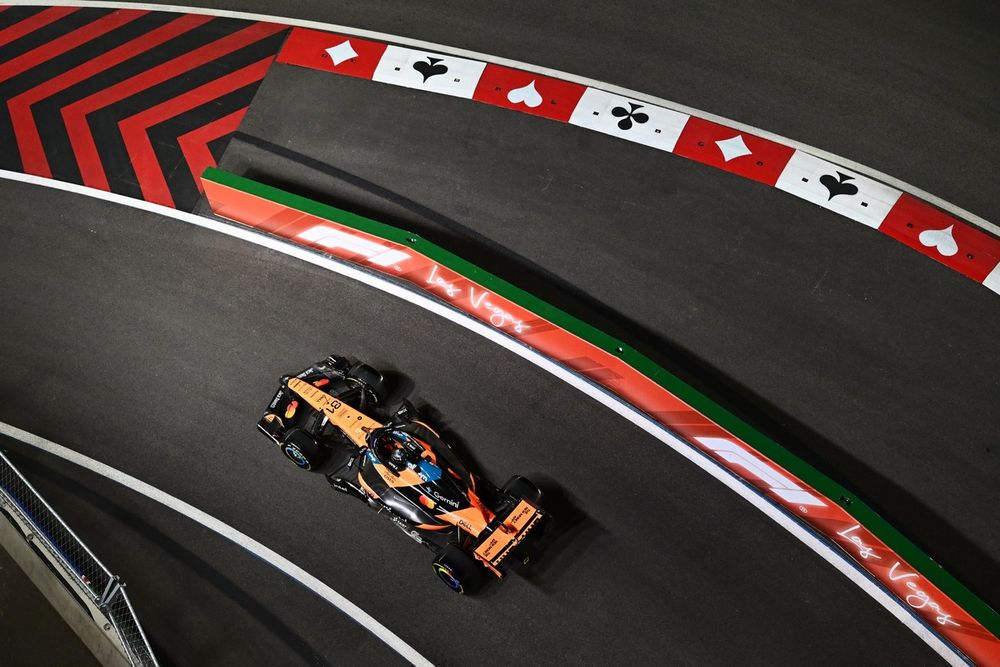
The Formula 1 paddock’s return to the neon-lit streets of Las Vegas has proven to be a technical crucible for McLaren, with the Woking-based outfit grappling with a persistent and alarming deficit in straightline performance. While teammate Lando Norris was quick to label the team’s pace on the Las Vegas Strip’s long, flat-out sections as "just shocking," Oscar Piastri has adopted a more measured, albeit concerned, tone. As the team prepares for the race, the disparity between their MCL40 chassis and their rivals—particularly those utilizing the same Mercedes power unit—has sparked an intense internal review into the fundamental design philosophy of their 2024 contender.
For Piastri, the challenge is compounded by a 10-place grid penalty for exceeding his internal combustion engine (ICE) quota, forcing him to start well down the order. Despite this, his qualifying session provided a clear window into the aerodynamic and mechanical hurdles the team is facing. Piastri, who managed the seventh-quickest time in Q3, described his outing as "messy," citing the extreme difficulty of navigating the complex energy management requirements of the Las Vegas circuit, where a misstep in the technical sectors can have a compounding negative effect on top-speed performance.
The Technical Roots of the Speed Deficit
The struggles currently plaguing McLaren in Nevada are not entirely unexpected, though the scale of the disadvantage has clearly caught the engineering team off guard. The MCL40’s aerodynamic efficiency has been a point of discussion throughout the season, characterized by a design that prioritizes mid-corner stability and high-downforce efficiency. To achieve specific weight-saving targets, the team opted for the shortest permissible wheelbase, a choice that has inherently limited the aerodynamic gains available from the floor and bodywork regions ahead of the rear wheels.
Furthermore, the team’s strategic decision regarding gear ratios has come under scrutiny. Andrea Stella, the McLaren Team Principal, recently addressed the nuances of this choice in an exclusive interview with Motorsport.com, revealing that the team’s gearbox architecture was finalized based on simulations of power unit characteristics that did not perfectly align with the finished, real-world output of the Mercedes engine package. This misalignment has forced the drivers into operating regimes that are far from optimal when the car is pushed to its absolute limit on long straights.

"It’s difficult to know and it caught us by surprise, to be honest," Piastri admitted following the qualifying session. "I don’t think we expected it to be such a big problem. At Monza, we were okay, and the strange part for us is it’s mostly compared with the other Mercedes-powered cars. So, maybe a lot of people took downforce off and we didn’t take enough off, but it seems like a pretty massive step that we were missing in practice."
Qualifying Dynamics and the ‘Slipstream’ Factor
The unique demands of the Las Vegas street circuit, defined by its blend of high-speed straights and cold, low-grip cornering sequences, have amplified these mechanical shortcomings. The aerodynamic "tow" or slipstream effect proved to be a critical variable in qualifying. Drivers were forced to balance the need for a clean, clear track to heat their tires with the tactical necessity of finding a tow to mitigate the car’s natural drag.
Piastri noted that the energy expenditure required to stabilize the car through Turn 1 dictates the potential top speed achieved later in the lap. "Even opening the lap here, I think there’s a bit of a difference between cars, how much energy they use to turn one, and if that’s half a second, that can be the difference of three or four tenths down the straight later in the lap," he explained.
Telemetry data from the qualifying session validates the drivers’ concerns. On the main straight, Piastri was observed losing up to 10km/h compared to the Alpine entries of Franco Colapinto and Pierre Gasly. While the McLaren driver was able to claw back time through superior braking and late-throttle application in the technical sections, the sheer speed loss on the straights suggests that the car is operating with an aerodynamic configuration that is too "draggy" for the specific layout of the Nevada track.
The Impact of Infrastructure and Updates
McLaren’s development path also faced a logistical bottleneck heading into the weekend. The team brought a significant floor upgrade to Las Vegas, but due to production constraints, only one unit was completed in time for the event. This component was fitted to Norris’s car, but the expected performance gains were obscured during a critical Q3 run when a stray plastic bag became entangled in the floor’s fences. This minor, yet frustrating, incident highlights the razor-thin margins in the current F1 midfield, where even a piece of trackside debris can derail a high-stakes qualifying effort.
The performance of the Mercedes-powered customer teams and the factory Mercedes squad serves as a benchmark that McLaren is currently failing to reach. The fact that Kimi Antonelli, driving for Mercedes, could set the fastest time while running in the wake of an AlphaTauri indicates that the Mercedes powertrain has the inherent grunt to overcome drag penalties in a way the current McLaren package does not.
Stella’s Strategic Outlook
Team boss Andrea Stella remains focused on a "holistic" approach to solving these issues. He acknowledges that the team is dealing with a multifaceted problem involving aerodynamic drag, gear ratios, and the power unit’s delivery characteristics. "Definitely, we had some concern in terms of how suitable the demand of this circuit will be for our car," Stella remarked. "Because this is not only the top speed, it is also the top speed that combines with the towing that everyone tries to see. So, you go in operating regimes of the engine that with our ratios are not ideal."
Stella’s admission suggests that while the team can make minor setup adjustments to drag levels, the fundamental limitations imposed by the gear ratios and wheelbase are baked into the 2024 car’s DNA. The focus for the remainder of the season, and indeed the transition into the 2026 technical regulations, will be to ensure that the correlation between simulation, engine output, and chassis design is significantly tightened.
Broader Implications for the Constructors’ Standings
The implications for the Las Vegas Grand Prix are clear: McLaren faces an uphill battle to defend its current position in the championship. With Piastri starting with a 10-place penalty and Norris battling both car balance issues and a competitive field that seems to have mastered the low-grip, high-speed nature of the track, the team’s ability to score heavy points is at risk.
The cold desert air, which lowers air density and theoretically aids top speed, has not provided the relief McLaren hoped for. Instead, it has exacerbated the tire-warming issues that plague every team, creating a "slippery" track surface that masks some of the aerodynamic deficiencies but creates new ones in terms of mechanical grip.

Looking beyond the Las Vegas event, this weekend serves as a stark reminder of the volatility of the current F1 grid. As the season nears its conclusion, the margin between success and stagnation is often determined by a team’s ability to adapt to extreme circuit conditions. For McLaren, the challenge is no longer just about adding downforce or improving the floor; it is about addressing the core efficiency of the machine. The team’s ability to analyze this weekend’s data and implement changes for the final rounds will be a testament to their engineering depth and their capacity to recover from a development miscalculation that has, for the moment, left them vulnerable on the sport’s fastest stages.
As the grid lines up for the start, the focus will shift from qualifying pace to race management. The team will likely prioritize defensive setups, hoping that the strategic application of DRS and careful tire management can offset the speed disadvantage. However, as the telemetry has shown, if they cannot solve the top-speed deficit, they will remain a target for every car behind them on the long, unforgiving straights of the Las Vegas Strip. Whether this serves as a wake-up call for the Woking factory or a sign of deeper structural issues remains to be seen, but the urgency in Piastri and Stella’s words suggests that McLaren is fully aware that their current trajectory requires immediate correction.