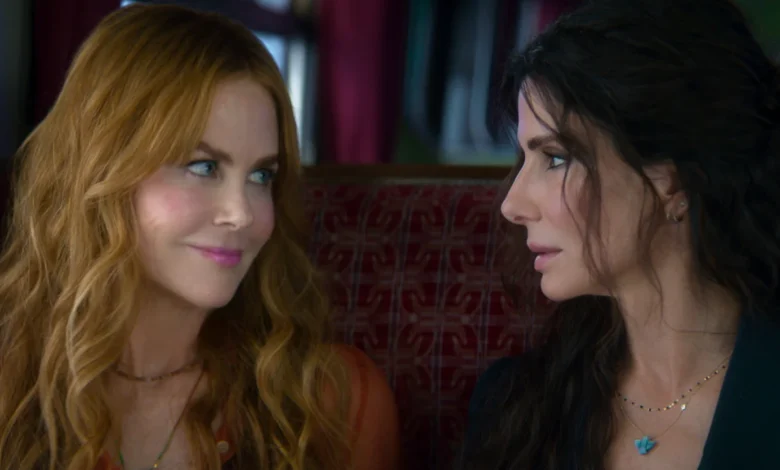
Nearly three decades after the release of the 1998 supernatural comedy-drama Practical Magic, Warner Bros. has debuted its long-awaited sequel, Practical Magic 2. Starring Academy Award winners Sandra Bullock and Nicole Kidman as the iconic Owens sisters, Sally and Gillian, the sequel has arrived amidst a wave of polarized reception. While the original film eventually transcended its initial critical failure to achieve enduring cult status, the follow-up faces a similarly frosty analytical landscape, opening on review aggregator Rotten Tomatoes with a meager 34 percent approval rating. Despite the harsh critical panning—which targets everything from its lighting and runtime to its screenplay choices—the film’s trajectory highlights a distinct disconnect between professional cinematic criticism and the enduring loyalty of a passionate fanbase celebrating themes of sisterhood and escapism.
Background Context and Production Journey
The genesis of Practical Magic 2 stems from a complex intersection of nostalgic demand, literary continuation, and Hollywood’s ongoing appetite for established intellectual property. The 1998 original, directed by Griffin Dunne and based on Alice Hoffman’s 1995 novel, was famously met with hostility by mainstream film critics upon its theatrical release. Retrospective analyses and commentary from the creative team reveal that the original production suffered not only from tonal whiplash—juggling elements of domestic drama, romance, and dark fantasy—but also from systemic industry biases. Producer Denise Di Novi previously recounted facing explicit criticism regarding the gender demographics of the cast, with some contemporary reviewers complaining that the film featured "too many women."
Despite these early hurdles, Practical Magic found its audience in the home video market, gradually evolving into a generational touchstone. Fans embraced its autumnal aesthetic, quotable dialogue, and memorable supporting performances from Stockard Channing and Dianne Wiest.
The impetus for a sequel materialized following the publication of Hoffman’s 2021 novel, The Book of Magic, which provided the source material required to bridge a 28-year narrative gap. Directed by Susanne Bier, Practical Magic 2 follows Sally and Gillian as they attempt to dismantle a centuries-old family curse that proves fatal to any man they love. The plot accelerates when Sally’s daughters, Kylie (Joey King) and Antonia (Maisie Williams)—having recently discovered their own innate magical lineage—face a crisis after Kylie’s boyfriend (Xolo Maridueña) falls into a coma following a vehicular accident. Driven by urgency, the younger generation triggers a narrative that pulls the family from New England to London, where they enlist a magic historian, played by Lee Pace, to assist in breaking the ancestral hex.
Critical Reception and Production Choices
Upon its wide release, Practical Magic 2 drew immediate ire from professional film critics, accumulating a 34 percent score on Rotten Tomatoes. Reviewers focused heavily on technical and narrative departures from the 1998 predecessor. Chief among the complaints is the film’s visual style; whereas the original relied on moody, warm, and atmospheric cinematography, the sequel has been criticized for bright, harsh lighting and heavy reliance on computer-generated imagery (CGI) that critics argue dilutes the tactile, minimalist charm of the practical effects used in the first installment.
Furthermore, the narrative relocation to London drew skepticism from reviewers who questioned the necessity of abandoning the beloved New England Victorian house that served as a central character in the original film. Pacing also emerged as a significant point of contention, with the sequel pushing a runtime of 130 minutes—nearly 30 minutes longer than the 1998 film.
Casting decisions further fueled online and critical debate. Because Hoffman’s 2021 novel required the Owens daughters to be portrayed as college graduates, original actors Evan Rachel Wood and Alexandra Artrip were recast with Joey King and Maisie Williams. While the recasting aligns with the literary source material, the complete absence of the original actors—even in cameo capacities—drew public critique. Additionally, reviewers noted that utilizing a rising talent like Xolo Maridueña primarily as a comatose plot device underutilized the actor’s screen presence.
Audience Engagement and Commercial Performance
While the critical consensus leans overwhelmingly negative, audience metrics and early box-office indicators suggest a stark divergence in reception. True to the legacy of its predecessor, Practical Magic 2 has resonated powerfully with its core demographic. On consumer-facing platforms, the film secured a robust 92 percent audience approval score on Rotten Tomatoes, accompanied by a projected $30 million domestic opening weekend box office haul.
This phenomenon underscores the unique resilience of comfort-driven media properties. For longtime fans, the value of the sequel lies less in technical cinematic perfection and more in the emotional gratification of seeing Bullock and Kidman reunite on screen to explore themes of familial loyalty, aging, and generational healing. The film functions as an immersive cultural reunion for an audience that grew up watching the original on VHS, incorporating modern musical nods—such as references to Stevie Nicks and Olivia Rodrigo—that bridge generational appeal.
Industry Implications and Broader Analysis
The commercial success of Practical Magic 2 in the face of widespread critical rejection offers several implications for contemporary Hollywood programming:
- The Critical-Audience Divide: The film serves as a prime example of media judged by distinct standards. While professional critics evaluate structural pacing, lighting design, and narrative cohesion, consumer audiences frequently prioritize emotional resonance, nostalgia, and character familiarity.
- The Valuation of Comfort Franchises: Studios increasingly recognize that intellectual properties possessing strong subcultural followings—particularly those centered around female-led narratives and communal rituals—possess a financial floor independent of traditional critical endorsements.
- The Longevity of Female-Centric Fantasy: The viability of revisiting 1990s properties involving mature female leads demonstrates a maturing demographic shift in Hollywood’s approach to casting older women in active, supernatural, and heroic roles.
As Practical Magic 2 continues its theatrical run, its trajectory mirrors that of the 1998 original: dismissed by contemporary critics, yet embraced by an audience that views the cinematic missteps as secondary to the warmth of the sisterhood depicted on screen.