Pulp recall the chaos of their 1996 Mercury Prize victory and reflect on the enduring legacy of the War Child charity album project

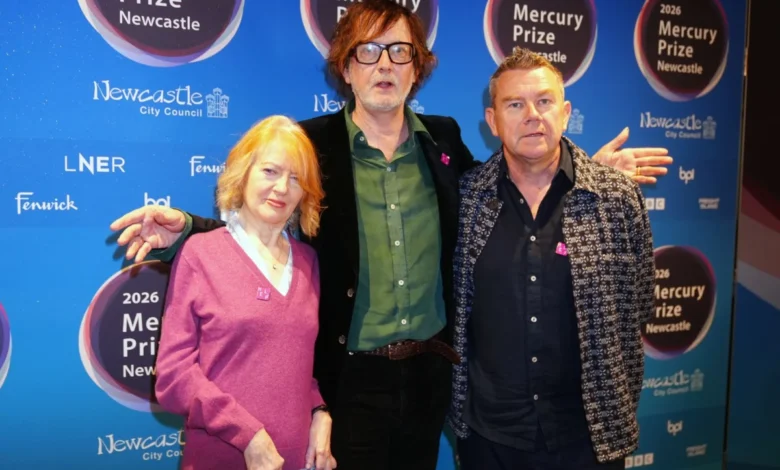
The Mercury Prize ceremony held in Newcastle on October 22, 2026, served as a poignant stage for one of British music’s most enduring acts to reflect on their own history while supporting a landmark charitable initiative. Pulp, the Sheffield-born icons of Britpop, were in attendance to perform their contribution to the Help(2) charity album, a successor to the legendary 1995 compilation that helped define an era of philanthropic music-making. During their appearance, band members Jarvis Cocker, Nick Banks, and Candida Doyle offered a rare glimpse into the logistical and personal memories surrounding their 1996 win for Different Class, revealing an anecdote involving producer Brian Eno that underscores the haphazard nature of the era.
A Historical Retrospective: The 1996 Mercury Prize
To understand the significance of Pulp’s return to the Mercury Prize orbit, one must look back at the landscape of 1996. The Mercury Prize, then known as the Mercury Music Prize, was in its infancy, having been established in 1992 to reward the best album from the United Kingdom and Ireland. In 1996, Pulp’s Different Class was pitted against the original Help album—a compilation organized by the War Child charity and spearheaded by Brian Eno.
The Help album was a monumental feat of industry coordination, recorded and released within a single week in 1995 to raise funds for children affected by the Bosnian War. It featured a "who’s who" of the 1990s music scene, including Oasis, Blur, Radiohead, Portishead, and Sinéad O’Connor. When Pulp emerged victorious in 1996, beating out the very charity record that had galvanized the industry, they made the decisive choice to donate their £25,000 prize money to the War Child cause.
The band’s recollection of that night remains characteristically candid. "I have no memories at all," Jarvis Cocker admitted during the interview. "I was pissed out my…" His bandmate, drummer Nick Banks, added that while his own memory of the ceremony is sparse, the visual evidence is undeniable. "There is footage of me spraying champagne over everyone. It’s stereotypical drummer behavior. It’s part of the manual."
The Brian Eno Incident
One of the more enduring stories to emerge from the 1996 ceremony involves the physical hand-off of the prize money. Candida Doyle, the band’s keyboardist, recounted the moment she attempted to transfer the funds to the charity, represented that night by Brian Eno.
"I remember we decided to give the cheque to the first War Child LP," Doyle said. "I had the cheque in an envelope with the award, and I gave it to Brian Eno. He just took it and thought he was just getting the award. I spoke to him later and he said, ‘I nearly threw that envelope away.’ He didn’t realize I’d given him £25,000."
This exchange represents a pivotal moment in the band’s history, marking their first direct interaction with Eno, an encounter that Doyle recalls with clarity. "I found out his dad was a postman. I do remember that very well," she noted. Cocker added a touch of levity, joking that Doyle had been in regular contact with the legendary producer ever since that near-miss with the donation.
The Evolution of the Help Project
The release of Help(2) in 2026 serves as a structural successor to the 1995 original. While the first record was a product of the mid-90s "cool Britannia" boom, Help(2) reflects the contemporary musical climate, featuring a diverse array of artists including Arctic Monkeys, Fontaines D.C., Wet Leg, Young Fathers, English Teacher, Damon Albarn, and global superstar Olivia Rodrigo.
The production of Help(2) was helmed by James Ford, a producer noted for his ability to unify disparate sounds. For Pulp, returning to the charity project represents a "full circle" moment. "It feels good," Cocker remarked. "We’re representing that album. There are 20 other people on it, and it’s a good album. It’s an honor to be asked to do that."
The band’s participation highlights the shift in how charity albums are perceived. In 1995, the urgency of the conflict in Bosnia necessitated a rapid-response format—recording at Abbey Road in a single day. Today, the process is more deliberate, yet the core mission—to utilize the cultural capital of the music industry to address humanitarian crises—remains identical.

The State of the Album as an Art Form
Beyond the charitable aspect, the interview with Pulp touched upon the cultural relevance of the album format in the digital age. Amidst a landscape dominated by streaming playlists and singles, Cocker remains a proponent of the long-form record.
"Albums, I think they’re coming back," Cocker argued. "Vinyl sales are up, CDs are kind of scheduled to disappear, and no one buys an album digitally. I always thought that a vinyl album was where records worked best. You’ve got a side that’s only 20 minutes long, you can listen to it, go and make a cup of tea or whatever, and it’s a good thing."
This sentiment is supported by industry data. Over the past decade, vinyl has seen a consistent resurgence, with the format now accounting for a significant portion of physical music revenue. For artists like Pulp, the album remains the primary vehicle for creative expression, providing a narrative arc that a collection of disparate tracks cannot replicate.
Looking Toward the Future
The 2026 Mercury Prize, which saw Raye take home the top honor for her album This Music May Contain Hope, serves as a barometer for the current state of British music. Pulp’s own recent activity—including the release of their comeback album More—has sparked discussions regarding the longevity of veteran acts in a youth-oriented industry.
When asked about the future of Pulp following their 24-year hiatus and subsequent return, Cocker offered a measured perspective. "I don’t like to make pronouncements on the future because the whole thing about the future is you just don’t know what’s going to happen," he stated. "We did the album More, and making it was quite a pleasant experience; playing it has been good, so that’s an inspiration."
Cocker emphasized that the band prefers an "organic" approach to their career trajectory. "Sometimes it bears fruit and sometimes it doesn’t," he explained. "I feel fairly confident that we will manage to do something else, but I don’t know when."
Contextual Impact and Industry Significance
The involvement of established acts like Pulp in the 2026 Mercury Prize ceremony, alongside their support for War Child, underscores the importance of institutional memory within the music industry. By bridging the gap between the 1990s and the 2020s, the band provides a sense of continuity for younger artists like Olivia Rodrigo and the members of Fontaines D.C.
The financial and cultural impact of the Help series cannot be overstated. Since 1995, War Child has leveraged the platform of the music industry to raise millions of dollars for children in conflict zones. The fact that the 2026 iteration received such high-profile support from industry veterans indicates that, despite the fragmentation of the music market, the capacity for collective action remains a cornerstone of the British music industry’s identity.
As the ceremony concluded, the focus shifted back to the importance of the medium itself. Whether through the lens of a charity compilation or a standalone band release, the album remains a vital vessel for social commentary and personal expression. Pulp, having navigated the peaks of the 90s and the realities of a modern, post-streaming industry, continue to act as a bridge between these two worlds—proving that while the industry changes, the necessity of the art form, and the desire to use it for positive change, persists.
The band’s latest project, the Garth Jennings-directed live film What Do You Do For An Encore?, is currently available on MUBI, further documenting this latest chapter in their storied career. For the members of Pulp, the focus remains on the music, the memories, and the occasional, necessary reminder of the power of a well-timed donation.