Shania Twain Discusses "Dirty Rosie," Opening for Harry Styles, and Missing Taylor Swift’s Wedding on The Tonight Show

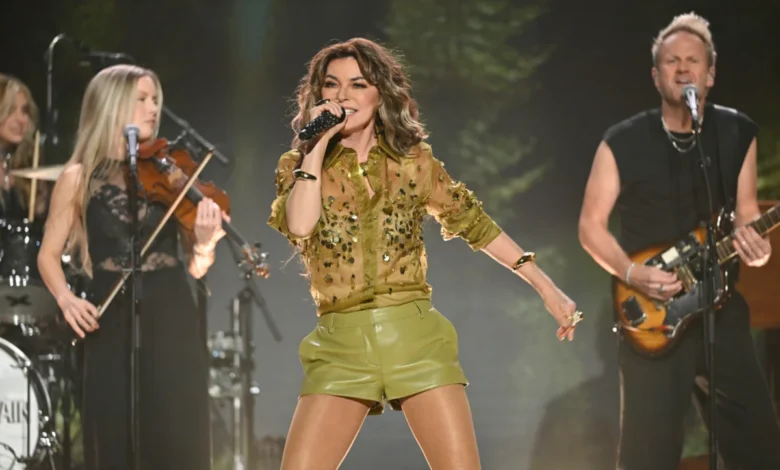
Country music icon Shania Twain recently graced the stage of The Tonight Show Starring Jimmy Fallon, delivering a captivating performance of her new single "Dirty Rosie" and engaging in a candid conversation with host Jimmy Fallon. The appearance, timed to coincide with the release of her latest album, Little Miss Twain, offered fans a glimpse into Twain’s enduring career, her new music, and her experiences within the broader music landscape. The performance itself, a robust rendition of "Dirty Rosie" accompanied by her live band, showcased Twain’s signature energy and vocal prowess, setting a vibrant tone for the subsequent interview.
The song "Dirty Rosie," as Twain explained to Fallon, is a nostalgic ode to her early driving experiences and a cherished childhood memory. She elaborated on the inspiration behind the track, sharing with Hits Radio Breakfast, "Dirty trucks were the only kind of trucks we had and they were always old and rickety and we could not afford new ones and nobody shines their truck. I remember my dad’s truck, it was a red truck, but it faded, of course, to a rosy color." This deeply personal connection to the song resonated with audiences, highlighting Twain’s ability to weave relatable narratives into her music, a hallmark of her songwriting throughout her career. The sentimentality of the track, rooted in humble beginnings and fond recollections, serves as a poignant reminder of Twain’s journey from her roots in Timmins, Ontario, to global superstardom.
Beyond the musical performance, the interview segment delved into two particularly noteworthy aspects of Twain’s recent professional life: her high-profile opening slots for Harry Styles and her unavoidable absence from Taylor Swift’s wedding to Travis Kelce. The juxtaposition of these two events provided a fascinating look at the interconnectedness of contemporary music titans.
A Monumental Collaboration: Shania Twain and Harry Styles at Wembley Stadium
Twain’s participation in Harry Styles’ record-breaking 12-night residency at Wembley Stadium in London was a significant event, drawing immense attention. She described the invitation as "such a special invitation" and spoke enthusiastically about the experience. "I had a great time. This was obviously his home city. 90,000 a night. So it was just a very exciting, great atmosphere," Twain recounted to Fallon. The sheer scale of the Wembley shows, with nightly audiences of 90,000, underscored the magnitude of this collaboration. This wasn’t merely a guest appearance; it was Twain stepping onto one of the world’s most iconic stages alongside one of the most prominent artists of the current generation.
The genesis of their professional relationship, as revealed by Twain, traces back to a more intimate setting. "We just chatted for a little bit," she recalled, describing their initial meeting "backstage at a very small show." She elaborated on Styles’ nascent career at the time, noting, "He was still just getting going. He wasn’t the Harry he is now." This chance encounter led to an exchange of contact information, and subsequently, a thoughtful request from Styles. "He called me a little bit later and said, ‘You know, it’s my mom’s birthday coming up. Would you mind wishing her a happy birthday because she’s the person that introduced me to your music and made it the soundtrack of my youth?’" This touching anecdote illuminates the deep admiration Styles holds for Twain’s music, revealing that her songs were formative to his own upbringing, a sentiment that likely resonated with many of Twain’s long-time fans. The fact that Styles specifically requested Twain to connect with his mother, highlighting the influence of her music on his formative years, speaks volumes about the enduring legacy and cross-generational appeal of her work. This personal connection, rather than a purely business arrangement, likely contributed to the genuine enthusiasm and successful chemistry observed during their Wembley performances.
The Unavoidable Conflict: A Wedding Missed for a Stadium Spectacle
The conversation then shifted to a more personal, albeit regretful, topic: Twain’s inability to attend Taylor Swift and Travis Kelce’s wedding. Twain expressed her sincere regret, stating, "I was very honored to be invited to Swift and Kelce’s wedding, but had to miss it for the Wembley shows." This situation highlights the demanding nature of a global touring artist’s schedule, where even significant personal events can be overshadowed by pre-existing professional commitments of comparable magnitude. The conflict between these two high-profile events underscores the complex realities of the music industry, where artists often juggle multiple significant obligations simultaneously.
Twain’s commitment to the Harry Styles concerts, a series of performances that were likely booked well in advance and represented a substantial professional undertaking, took precedence over attending the wedding. While the exact date of Swift and Kelce’s wedding has not been publicly disclosed, it is understood to have coincided with Twain’s obligations at Wembley Stadium. This situation offers a rare glimpse into the difficult choices artists sometimes face when their professional responsibilities clash with personal milestones.
Despite her absence, Twain conveyed her warm wishes and admiration for Swift. "I will make a point of, next time I see her, of course I will give her a big congratulations hug," Twain assured Fallon. "She’s just wonderful… I admire her musicianship and her commitment to telling her stories." This sentiment reflects a collegial spirit within the music community, where artists, despite their individual successes, often maintain mutual respect and support. Twain’s praise for Swift’s "musicianship and her commitment to telling her stories" is particularly significant, as these are qualities that have defined Twain’s own illustrious career. The ability to connect with audiences through authentic storytelling has been a cornerstone of country music, and Twain’s acknowledgment of Swift’s mastery in this regard suggests a shared understanding of the artistic values they both uphold.
"Box of Lies" and the New Album: A Multifaceted Appearance
The Tonight Show appearance was further enlivened by a playful segment of "Box of Lies," a popular game segment on the show. Twain and Fallon engaged in the lighthearted challenge, attempting to decipher the contents of mystery boxes, adding a layer of spontaneous fun to the evening. This segment showcased Twain’s personality and her ability to connect with Fallon in a relaxed and entertaining manner, demonstrating her versatility beyond her musical performances.
The interview also served as a platform to promote Little Miss Twain, Twain’s seventh studio album, which was released the day following her appearance. The album, produced by Zach Dawes, features a notable lineup of guest artists, including Tanya Tucker, the War and Treaty, Ronnie Wood, and Josh Homme. This impressive roster of collaborators suggests a diverse sonic landscape for the album, potentially bridging genres and generations, further cementing Twain’s influence and her continued relevance in the contemporary music scene. The inclusion of such varied artists hints at a rich tapestry of sounds and influences, promising an album that is both classic Twain and experimentally adventurous. The fact that established artists like Ronnie Wood and Josh Homme are featured alongside fellow country artist Tanya Tucker and the dynamic duo the War and Treaty speaks to Twain’s broad appeal and her ability to draw talent from across the musical spectrum.
Broader Implications and Analysis
Shania Twain’s appearance on The Tonight Show and her recent professional endeavors offer several points of analysis regarding her career trajectory and her standing in the music industry.
Firstly, the performance of "Dirty Rosie" and the discussion surrounding Little Miss Twain indicate a continued commitment to creating new music and engaging with her fanbase on a personal level. Her ability to draw inspiration from her past while producing contemporary work demonstrates a remarkable artistic longevity. The album’s release, following her high-profile television appearance, strategically capitalizes on heightened public attention, a testament to her understanding of modern promotional tactics.
Secondly, her collaboration with Harry Styles signifies a bridging of generational divides within popular music. Twain, a reigning queen of country-pop, sharing a stage with Styles, a global pop phenomenon, highlights the fluid boundaries of contemporary music and the enduring appeal of artists who have shaped genres. This partnership not only provided Styles with a legendary guest but also introduced Twain’s music and persona to a younger demographic, potentially expanding her already vast audience. The economic impact of such stadium tours is also significant; Wembley Stadium concerts, especially multi-night residencies, generate substantial revenue for artists, venues, and the local economy through tourism and associated services. Twain’s involvement in these financially lucrative events underscores her continued commercial viability.
Thirdly, the missed wedding scenario, while unfortunate, inadvertently underscores the immense demands placed upon artists of Twain’s caliber. It paints a picture of a professional life that, while glamorous, is also characterized by rigorous schedules and difficult compromises. The public’s awareness of such conflicts can foster a deeper appreciation for the dedication and sacrifices involved in maintaining a high-profile career in the entertainment industry. The value placed on these high-profile performances, such as the Wembley dates, can be seen as a reflection of their significant artistic and commercial importance, often outweighing even highly anticipated social events for artists whose careers are built on such monumental stages.
Finally, Twain’s continued admiration for emerging and established artists like Taylor Swift suggests a supportive and interconnected music community, despite the competitive nature of the industry. Her willingness to publicly praise Swift’s talent and artistry reflects a mature perspective, where mutual respect and encouragement are valued. This intergenerational dialogue and support are crucial for the continued evolution and health of the music ecosystem. The fact that artists like Twain and Swift, who operate within different but overlapping spheres of the music industry, express mutual admiration, speaks to a shared understanding of the pressures, joys, and artistic integrity required to succeed at the highest levels.
In conclusion, Shania Twain’s appearance on The Tonight Show was a multifaceted event, celebrating her new music, reminiscing about her past, and offering insights into her significant professional relationships and commitments. Her ability to seamlessly transition between heartfelt storytelling, energetic performances, and engaging conversation solidifies her status as an enduring icon in the music world. The narratives woven around "Dirty Rosie," the electrifying experience at Wembley with Harry Styles, and the unavoidable conflict with Taylor Swift’s wedding collectively paint a portrait of an artist who remains deeply connected to her craft, her fans, and the ever-evolving landscape of contemporary music.