The Unveiling of the Iconic Grid Walk: Martin Brundle Recounts the Genesis of Formula 1’s Most Beloved Pre-Race Tradition

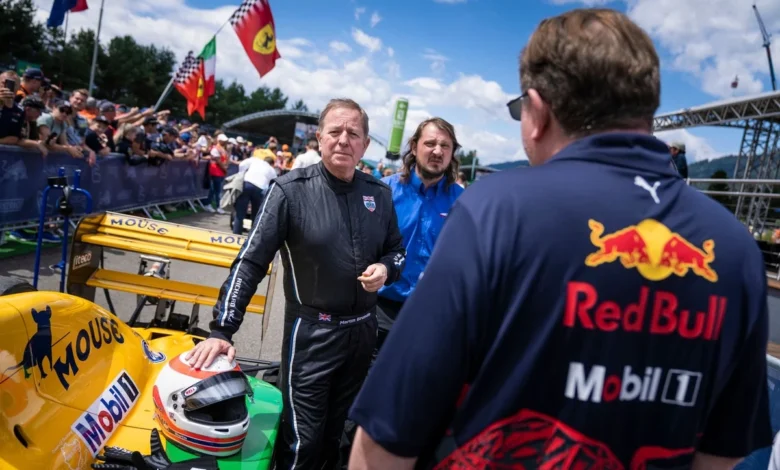
The electrifying anticipation that precedes the roar of Formula 1 engines is a spectacle in itself, a complex tapestry woven with technical prowess, driver drama, and the palpable buzz of global fandom. For nearly three decades, a unique element has become as indispensable to this pre-race ritual as the starting lights themselves: the "grid walk." This segment, helmed by veteran Formula 1 driver and now esteemed Sky Sports analyst Martin Brundle, has evolved into a fan-favourite moment, celebrated for its candid celebrity interactions, Brundle’s sharp wit, and invaluable pre-race insights. Recently, in a candid interview with Natalie Pinkham on Sky Sports F1, Brundle pulled back the curtain on the surprising origins of this iconic television feature, revealing its humble beginnings at the 1997 British Grand Prix.
From Producer’s Pitch to Global Phenomenon
The genesis of the grid walk, now a cornerstone of Formula 1 broadcasting, was not a meticulously planned strategic manoeuvre but rather an inspired improvisation. Brundle, then working with ITV, was approached by producers with a novel concept: to traverse the grid and offer commentary on the scene unfolding before the race commenced. "Wasn’t my idea," Brundle candidly admitted. "I was at ITV at the time, and they said to me, the producers, ‘We’ve got an idea. Why don’t you walk down the grid and say what you see?’ Like, ‘All right, I’ll give it a go.’" This simple directive, devoid of the elaborate production values that often accompany modern sports broadcasting, laid the groundwork for a segment that would captivate millions.
The inaugural grid walk, according to Brundle, took place at the 1997 British Grand Prix held at the historic Silverstone Circuit. This choice of venue was not coincidental; Silverstone, a circuit steeped in motorsport history, provided a fitting backdrop for the birth of a new tradition. The inaugural interviewee, a familiar face to Brundle, was his former teammate Rubens Barrichello. "He was my teammate the year before. That’s why I probably felt he’d talk to me," Brundle explained, highlighting the personal connection that facilitated this first interaction. This initial success set a precedent, as drivers soon began to proactively seek out Brundle, a testament to the segment’s growing appeal and the perceived access it offered to the inner workings of the sport.
A Driver’s Perspective: The Ingenious Seating Stunt
A key element that distinguished Brundle’s early grid walks, and indeed continues to resonate with audiences, is his unique perspective – quite literally. In a move designed to humanize the drivers and offer a tangible understanding of their pre-race environment, Brundle chose to sit down on the grid. This was not merely a stylistic choice; it was a deliberate attempt to convey the physical reality of a driver’s position moments before a Grand Prix.
"That’s when cars used to drive to the grid," Brundle recounted, drawing a stark contrast with current practices. "They don’t now, they stop at the back and get pushed through because Niki Lauda used to come through, cut his engine and freewheel through, which was terrifying. It was dangerous." The evolution of safety protocols in Formula 1, spurred by incidents and a growing awareness of the risks involved, meant that cars no longer navigated the grid under their own power. This shift necessitated a change in how the grid walk was conducted.
Brundle’s decision to sit was a poignant illustration of the confined space and the driver’s intimate connection with the tarmac. "I wanted to point out to people that you sit on the floor basically," he elaborated. "I always say it’s like laying in the bath looking over the taps, is how it looks when you’re in a Formula 1 car." This relatable analogy effectively bridged the gap between the extraordinary world of Formula 1 and the everyday experiences of viewers, making the drivers’ perspective more accessible.
Furthermore, the technical execution of the early grid walks played a crucial role in their effectiveness. "And then Keith, my cameraman back in those days, put the camera over my shoulder, and I think people liked that because we didn’t have many onboard cameras and all the sort of toys and tools we have today to see what the drivers are really doing, and data and what have you." The over-the-shoulder perspective, a novel approach at the time, provided viewers with an immersive glimpse into the grid, akin to seeing through Brundle’s own eyes. This innovative camera placement, coupled with Brundle’s insightful commentary, offered a level of detail and authenticity that was unprecedented, particularly in an era before the proliferation of advanced onboard telemetry and multi-angle camera systems.

The Evolving Landscape of Grid Interactions
The grid walk has undeniably evolved since its inception in 1997. Initially, drivers were more accessible and perhaps more inclined to engage in spontaneous conversations. Brundle recalls a period where drivers actively sought him out, a stark contrast to the current dynamic. "That’s when drivers used to come up to me in the next year or two and go, ‘You haven’t spoken to me on the grid. Come and find me. Why are you not talking to me on the grid?’" This suggests an era where the grid was a more social and less intensely guarded space for drivers.
However, as Formula 1 has grown exponentially in popularity and commercial value, so too has the level of scrutiny and the perceived need for drivers to maintain a more controlled public image. The sheer volume of media attention, coupled with heightened security measures and the demanding schedules of modern drivers, has inevitably altered the nature of grid interactions. "Now they just look at me like I’m a double glazing salesman or something, or an insurance salesman with his foot in the door," Brundle remarked with characteristic humour, illustrating the shift in how drivers perceive and engage with media presence on the grid.
This change is not necessarily a reflection of a lack of willingness on Brundle’s part, but rather a consequence of the sport’s maturation. The intense pressure, the corporate sponsorships, and the constant demand for performance mean that drivers are often more focused and insulated in the minutes leading up to a race. The grid walk, while still a valuable platform for insight, now navigates a more complex and sometimes guarded environment.
Supporting Data and Context
The 1997 Formula 1 season was a pivotal year in the sport. The championship was fiercely contested between Jacques Villeneuve of Williams and Michael Schumacher of Ferrari. The British Grand Prix at Silverstone, where the grid walk originated, was the 10th race of the season. Villeneuve ultimately won the championship that year, marking a significant moment for him and the Williams team. The sport was already a global phenomenon, with increasing television audiences and a burgeoning commercial landscape. The introduction of a more dynamic and personal segment like the grid walk, therefore, tapped into this growing appetite for behind-the-scenes access and driver personality.
The evolution of safety standards in Formula 1 is a critical piece of context. The terrifying incident involving Niki Lauda at the 1976 German Grand Prix, where his car caught fire and he sustained severe burns, was a stark reminder of the inherent dangers. While not directly linked to the grid walk’s origin, Lauda’s innovative approach to navigating the grid in later years, by cutting his engine and freewheeling, highlights the evolving practices and the inherent risks associated with car movement on the grid. The subsequent implementation of stringent safety regulations, including the mandatory use of safety trolleys for car transportation to the grid, has fundamentally altered the physical environment that Brundle initially sought to capture.
Broader Impact and Implications
The enduring popularity of Martin Brundle’s grid walk speaks volumes about its impact on the Formula 1 fan experience. It transcends mere sports commentary, offering a blend of entertainment, information, and personality that resonates deeply with audiences worldwide. The segment has not only provided fans with exclusive access to drivers and team personnel but has also showcased the vibrant and often eccentric personalities that populate the Formula 1 paddock.
The "snub" moments, where celebrities or drivers politely (or sometimes not so politely) decline an interview, have become legendary, adding a layer of unpredictkable humour and highlighting the unique social dynamics of the sport. Conversely, the moments of genuine connection and insightful pre-race analysis have solidified Brundle’s reputation as one of the most respected and beloved figures in the Formula 1 media landscape.
The grid walk’s success has also had implications for sports broadcasting in general. It demonstrated the power of a well-executed, personality-driven segment to enhance viewer engagement and provide a unique selling proposition for a broadcast. While many sports have attempted to replicate such pre-event rituals, few have achieved the same level of iconic status as Brundle’s grid walk, a testament to his unique talent, the evolution of Formula 1, and the enduring appeal of a candid glimpse into the heart of the sport. The segment continues to be a vital component of the Formula 1 weekend, offering a bridge between the intense competition on track and the human element that makes this sport so captivating.