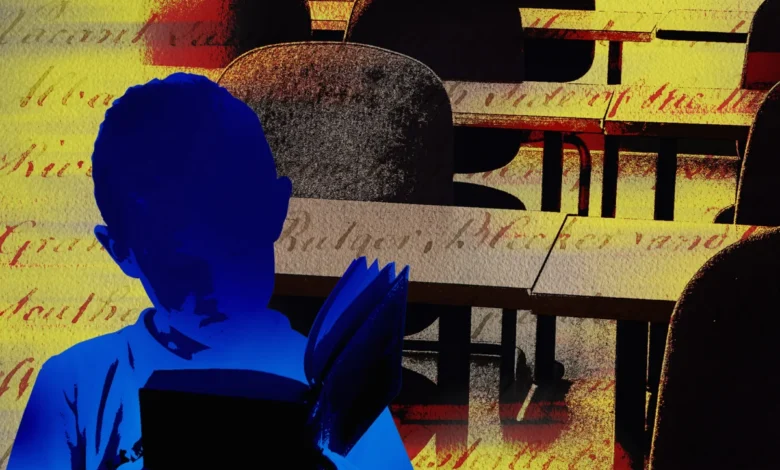
The rapid digitization of the modern classroom has ignited a nationwide debate over the necessity of teaching cursive handwriting. As tablets and laptops become standard fixtures in elementary education, traditional penmanship—once a fundamental pillar of primary schooling—has been relegated to an elective or abandoned entirely. This shift reflects a broader educational trend toward prioritizing technical efficiency over manual dexterity. However, cognitive experts and educators are increasingly concerned that the wholesale dismissal of handwriting, particularly cursive, may overlook critical developmental advantages that are not easily replicated by digital alternatives.

The Evolution of Penmanship in American Schools
For much of the 20th century, the Palmer Method was the gold standard for American handwriting instruction. Developed in the late 19th century and popularized throughout the 1900s, this approach emphasized repetitive, rhythmic motion to achieve fluid, uniform script. For generations, the first 15 minutes of every school day were dedicated to perfecting loops and connections.
However, the late 1990s and early 2000s marked a significant turning point. As computer literacy became a prerequisite for higher education and the workforce, school districts began to view cursive as an antiquated technical skill. The logic was pragmatic: why spend hundreds of hours training students in a script that would eventually be replaced by the universal, error-correcting convenience of the word processor? By 2010, the introduction of the Common Core State Standards did not mandate cursive instruction, leaving states and districts to decide the curriculum for themselves. This led to a fragmented landscape where some states, such as Louisiana and Texas, later legislated its return, while others viewed it as an inefficient use of limited classroom time.

The Cognitive Science of the Pen
Catherine Snow, the John H. and Elisabeth A. Hobbs Research Professor of Cognition and Education at the Harvard Graduate School of Education, suggests that the "problem" of putting pen to paper is, in fact, a vital cognitive exercise. The act of handwriting engages the brain in ways that typing simply does not.
Research in neuroscience indicates that handwriting involves a more complex integration of neural systems. When a child writes by hand, the brain must coordinate visual cortex activity with fine motor skills to form symbols. This multisensory engagement is a critical driver of "automaticity"—the ability to perform a task without conscious effort—which is a known prerequisite for fluent reading.

Furthermore, the manual sequencing of letters reinforces orthographic memory. When a student types a word, spellcheckers often intervene before the student can process their error. If a student types "moderate" incorrectly, the software corrects it to the proper spelling, potentially masking a fundamental misunderstanding of the word’s construction. By contrast, writing letter-by-letter forces the writer to pay close attention to the sequence of symbols, which cements the relationship between phonetic sounds and their corresponding orthographic representations.
Empirical Data and Developmental Benefits
Studies comparing note-taking methods have consistently shown that handwriting leads to better conceptual understanding. A seminal 2014 study by Pam Mueller and Daniel Oppenheimer, while focused on university students, demonstrated that those who took notes by hand were better able to synthesize and recall information compared to those who used laptops. The researchers argued that the slower speed of handwriting forced students to summarize and reframe content, rather than transcribing it verbatim—a process known as "generative" note-taking.

For younger children, the developmental implications are equally significant. Developing the motor control required for cursive requires spatial awareness and sustained attention. While printing—the formation of individual, disconnected letters—also provides cognitive benefits, the continuity of cursive may help students transition into more fluid writing styles. Despite these benefits, there is no definitive empirical evidence to suggest that cursive is inherently superior to print; rather, the act of writing itself—regardless of the style—appears to be the primary cognitive catalyst.
The Accessibility Argument: A Cultural Link
Beyond the classroom, the decline of cursive has created a secondary, unintended consequence: the loss of historical literacy. As the ability to write in cursive fades, so too does the ability to read it. Archivists and museum curators have noted that younger generations often struggle to decipher primary source documents, including personal letters, journals, and government records from the mid-20th century.

For historians, the ability to read cursive is the key to accessing the "shared culture" of the past. If a significant portion of the population cannot read the handwriting of their ancestors, a substantial barrier to historical literacy is created. Critics of this view argue that transcription technology and digital archives can bridge this gap; however, proponents suggest that the personal connection to historical documents is diminished when the direct link between the author’s hand and the reader’s eye is severed.
Institutional Responses and Modern Pedagogical Shifts
The current debate has prompted a variety of responses from educational institutions. Some districts have opted for a "hybrid" model: teaching the basics of printing early, then introducing cursive in late elementary school, but without the rigorous, hours-long drills of the past. Others have advocated for a focus on the content of writing rather than the form.

Professor Snow emphasizes that the objective should not necessarily be the preservation of cursive as an aesthetic standard, but the preservation of the act of writing itself. "There are kids who never learn cursive who can function with a pen in their hands perfectly well," she notes. "They should be writing with pencil or pen on paper, and we should be focusing much more on the content of what they write than correcting errors."
The Broader Implications for Education Policy
The future of cursive handwriting in American schools will likely remain a localized, contested issue. As artificial intelligence and speech-to-text technologies continue to advance, the necessity of manual writing will face even greater scrutiny. However, the pedagogical argument remains clear: the goal of education is not merely the production of error-free text, but the development of cognitive pathways that support deep learning.

If schools decide to phase out cursive, they must consider how to replace the specific cognitive benefits it provided. If they retain it, they must avoid the temptation to treat it as a rote, purely mechanical skill. The challenge for modern educators is to integrate handwriting into a curriculum that values both the technical efficiency of the digital world and the developmental necessity of manual, thoughtful composition. Whether through mandatory cursive programs or an increased emphasis on long-form, handwritten creative writing, the preservation of the "hand-brain" connection remains a critical component of a robust educational system.
As society continues to navigate the digital transition, the pen—or the stylus—remains a tool of profound intellectual importance. The debate over cursive is ultimately a debate over what it means to learn, and how we ensure that the next generation remains as intellectually connected to the written word as those that came before them.