The rapid rise of artificial intelligence has fundamentally altered the psychological landscape for young professionals, prompting a significant migration away from traditional white-collar sectors and toward tangible, human-centric careers. Since the public introduction of generative AI in late 2022, a growing number of university students and early-career workers have begun to view their digital-first skill sets as liabilities rather than assets. This shift is reshaping enrollment patterns in higher education, fueling a resurgence in vocational training, and highlighting a growing disconnect between the rapid pace of technological innovation and the stability of the American labor market.
A Seismic Shift in Career Strategy
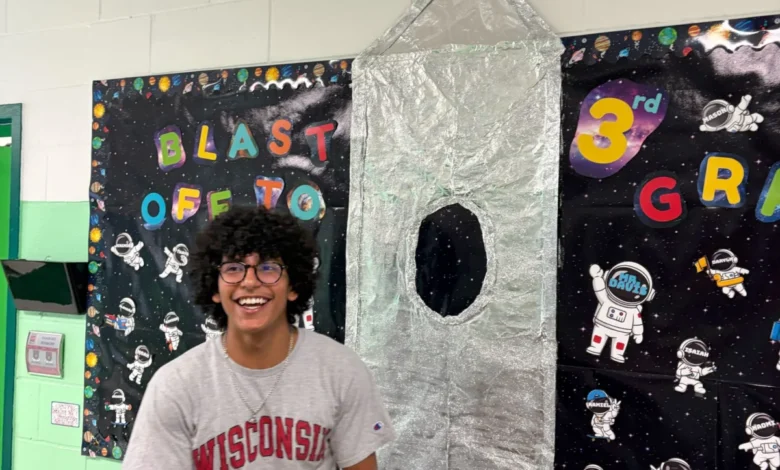
For many members of Gen Z, the decision to pivot careers is not born of a lack of ambition, but a desire for long-term professional survival. Keon Davis, a University of Wisconsin-Madison marketing graduate, serves as a primary example of this trend. During his junior year, as ChatGPT gained mainstream traction, Davis observed his internship tasks—once considered the foundation of a marketing career—being performed in seconds by algorithms. Recognizing that his chosen path was increasingly susceptible to automation, Davis opted to pivot just months before his 2024 commencement. He redirected his energy into Teach for America, now finding stability in a New York City classroom.
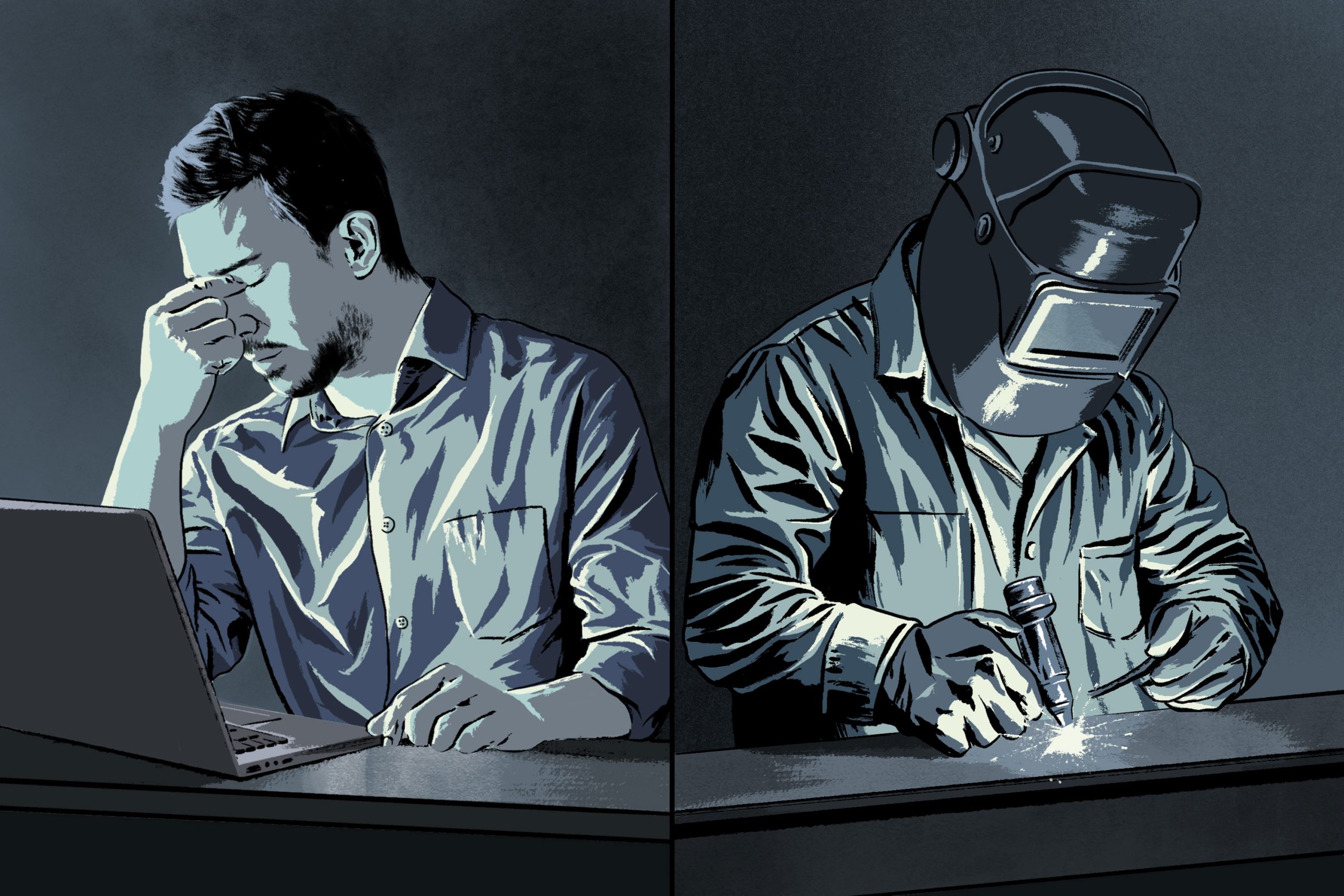
Davis is not an outlier. The prevailing sentiment among young workers is that if a task can be codified, it can be automated. This fear has led to a measurable retreat from computer science and digital media, with students increasingly seeking roles that prioritize human connection, empathy, and physical dexterity—qualities that current AI models struggle to replicate.
The Data Behind the Fear
The anxiety surrounding AI is backed by shifting employment trends. According to data from the Stanford Digital Economy Lab, the window between November 2022 and June 2026 revealed a stark divergence in job security. While employees in "AI-exposed" fields such as software development and customer service faced a 19 percent decline in employment relative to their peers, those in manual, hands-on sectors saw significantly higher retention and stability.
Public opinion polling by the Pew Research Center confirms that this anxiety is pervasive. As of August 2026, 73 percent of adults under 30 believe that AI will lead to a reduction in the total number of available jobs, a notable spike from the 61 percent who held that view just two years prior. This fear is not merely anecdotal; it is a primary driver in the decision-making process for millions of young people currently entering the workforce.
The Rise of the Vocational Path
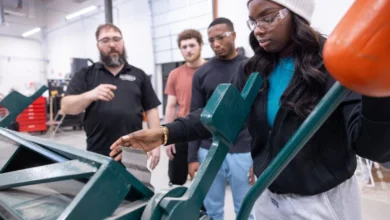
While traditional degree programs in humanities and tech face scrutiny, trade schools and apprenticeship programs are experiencing a renaissance. Institutions like Rosedale Technical College in Pittsburgh have reported a 50 percent increase in enrollment over the past two years, with an 80 percent surge in inquiries. These applicants, many of whom possess college degrees in white-collar fields, are deliberately seeking "AI-proof" careers in fields such as electrical work, HVAC installation, and automotive repair.
The demand for these roles is being bolstered by a "perfect storm" of economic factors. Beyond the fear of automation, the United States is currently facing a critical shortage of skilled tradespeople. A wave of retirements among older workers, combined with a surge in infrastructure projects—including the construction of massive data centers required to house the very AI systems causing this anxiety—has created a high-demand market. Consequently, the U.S. Bureau of Labor Statistics continues to project job growth for electricians and mechanical technicians at rates far exceeding the national average.

The Physical Trade-Off
Transitioning from a climate-controlled office to a job site is not without its challenges. For workers like Meagan Acevedo, a 33-year-old former HR professional and retail manager, the shift to becoming an industrial construction electrician was a calculated trade-off. After watching her previous roles disappear to self-checkout kiosks and automated chatbots, Acevedo sought a career with more permanence.
"I feel like I can see where my career is going," Acevedo noted, contrasting the stability of her union apprenticeship with the volatility of her corporate experience. However, the transition has required significant adjustment. The work is physically taxing, involving 5:30 a.m. start times and the frequent lifting of heavy equipment. Despite the physical toll, the promise of a stable, pension-backed career with significant growth potential has made the trade-off worthwhile for many like her.
The Education Gap and Institutional Responses
The sudden shift in career priorities has placed universities in an awkward position. Many institutions built their curricula around the assumption that students would be entering a tech-centric, office-based economy. To address this, some universities have begun to pivot. Purdue University, for instance, has implemented an "AI working competency" mandate, requiring students to demonstrate mastery of AI tools regardless of their major. Meanwhile, other institutions are focusing on the integration of human skills and AI, aiming to prepare graduates for a hybrid future.
However, the speed of the market is often outpacing the speed of academia. Some students, like those pursuing careers in forensic science, have found that even degrees intended to be "AI-proof" do not guarantee entry into the workforce. The misalignment between academic training and employer requirements—which often prioritize experience or specific certifications over generalist degrees—remains a significant hurdle for those attempting to retool their careers.

Policy and the Need for a Social Safety Net
The broader economic implications of this transition have caught the attention of both policymakers and industry leaders. Critics, including labor organizations like the AFL-CIO, have warned that if companies continue to use AI to "de-skill" and displace workers without providing a path forward, social unrest could follow.
While federal government action has been limited, there is a growing discourse around the need for an "AI-era social compact." Proposals from figures like Jacob Leibenluft and various political candidates suggest the implementation of federally funded retraining programs, wage insurance, and trust funds financed by taxes on AI companies. Even the developers of AI technology, such as OpenAI and Anthropic, have publicly advocated for stronger safety nets, though these proposals remain in the conceptual phase. As of mid-2026, the federal government has allocated limited funding for general workforce retraining, but there is no specific legislation currently addressing the unique displacement caused by artificial intelligence.
Implications for the Future Workforce
The trend of "AI-proofing" one’s career represents a fundamental shift in how the next generation perceives value and stability. By prioritizing roles that require complex physical interaction and high-level human social intelligence, workers are effectively building a hedge against technological disruption.
Yet, this shift creates its own set of risks. If an entire generation moves exclusively toward trades and human-centric roles, the economy may face a long-term deficit in high-level analytical and digital expertise. Furthermore, the physical demands of the trades may exclude segments of the population who are capable of high-level cognitive work but lack the physical capacity for manual labor.

As it stands, the "Great Pivot" is a decentralized, individual response to a global, systemic change. Millions of workers are effectively voting with their feet, choosing the reliability of the physical world over the efficiency of the digital one. Whether this movement succeeds in insulating the workforce from the volatility of the AI revolution remains to be seen, but the message from the next generation is clear: they are no longer willing to build a career on a foundation they believe can be dismantled by a prompt.