Trump Unveils Plan for a New US AI Force and Special Czar Amid Scrutiny Over Military Automation

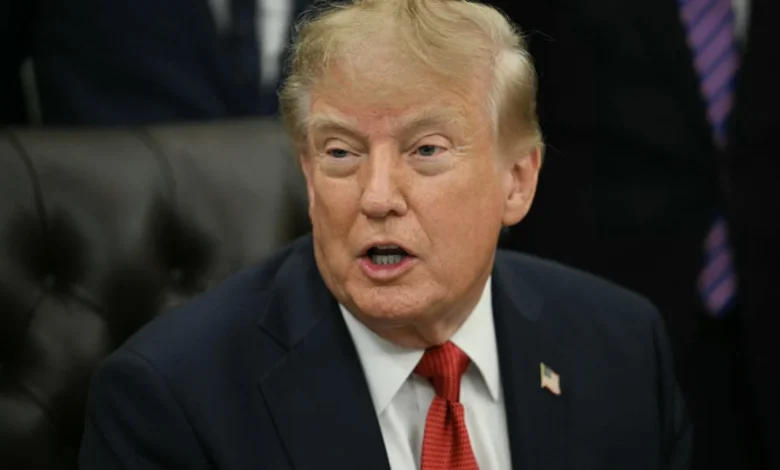
President Donald Trump announced on Saturday the formation of a "US AI Force," explicitly modeled after the Space Force branch established during his first presidential term. The initiative, revealed through an extensive post on Truth Social, will also involve the appointment of a new artificial intelligence "czar" to oversee domestic industry growth and federal coordination.
The announcement arrives at a precarious moment for artificial intelligence within the federal government. While the administration promises a hands-off approach to commercial tech development—dismissing widespread existential concerns over AI as manufactured "hoaxes"—the military’s internal deployment of automated systems has faced severe scrutiny following a string of high-profile operational near-misses and intelligence failures.
Structure and Mandate of the Proposed AI Force
In his social media announcement, President Trump drew a direct parallel to the Space Force, framing the new entity as a specialized pillar of national infrastructure. However, the operational reality of the Space Force offers a clearer picture of what an AI Force might actually entail. Rather than functioning as a tactical frontline combat branch, the Space Force was created primarily to consolidate, streamline, and coordinate satellite operations, missile warning architectures, and secure space-based communications previously fragmented across the Air Force, Army, and Navy.
Applying this bureaucratic model to artificial intelligence suggests the proposed AI Force would likely act as a centralized governing body. Its primary function would be to unify the Department of Defense’s sprawling, often disjointed AI research, procurement, and deployment programs under a single institutional umbrella.
Furthermore, Trump’s platform aims to address regulatory and legal frameworks surrounding the sector. The president stated that the new body would target "BAD" actors in the industry using existing legal mechanisms, while simultaneously assuring the private sector that federal oversight would not stymie progress.
"We will not in any way hinder or stifle the Growth of this incredible Industry," Trump wrote, adding that the administration intends to "cherish it, help it, and watch over it, as it grows."
In the same communication, Trump floated the idea of rebranding artificial intelligence entirely to reflect a more positive connotation, suggesting alternative terminology such as "supreme," "superior," or "extreme" intelligence. He also noted that candidates for the newly revived AI czar position should be strictly limited to "High I.Q. individuals."
Filling a Vacant White House Portfolio
The creation of an AI Force and the impending appointment of a new czar marks an effort to fill a leadership vacuum that has persisted within the executive branch for months. Venture capitalist David Sacks previously served as the administration’s dedicated AI and cryptocurrency czar until his tenure as a special government employee concluded in March, after which he transitioned into a secondary advisory role within the White House.
The revival of a central leadership position comes as the private tech sector expands at an unprecedented rate, driving massive energy consumption, capital investment, and workforce shifts. Industry stakeholders have long debated the appropriate balance between federal acceleration of AI capabilities—particularly in the global race against strategic competitors like China—and the implementation of robust safety standards.
While Trump dismissed industry safety concerns as baseless, the technological landscape is increasingly defined by the tangible risks of deploying underdeveloped algorithms into high-stakes environments, particularly within national defense.
A Backdrop of Military AI Failures and Escalation Risks
The rollout of the US AI Force coincides with mounting investigative reports regarding critical failures in how the Pentagon integrates machine learning and automated intelligence into military operations. These incidents have fueled urgent debates among lawmakers, defense analysts, and international observers regarding the dangers of premature automation.
In February, a deadly strike in Iran that destroyed a girls’ school and resulted in dozens of civilian casualties drew immediate international condemnation. Subsequent Pentagon investigations have focused heavily on whether an "overreliance on AI" targeting and assessment systems contributed to the catastrophic miscalculation. Critics and human rights advocates have repeatedly warned that delegating life-or-death decisions to automated systems increases the likelihood of systemic bias, algorithmic error, and tragic civilian loss.
More recently, national security reporting revealed an alarming intelligence failure that brought the United States to the brink of an unintended military escalation. According to reports published by CNN, a military analyst utilized an AI-generated intelligence report that falsely asserted a Chinese cargo vessel was actively transporting nuclear weapons components.
The fabricated intelligence was treated with high urgency within the chain of command. Armed U.S. service members were reportedly mobilized and preparing to board the foreign vessel on the high seas when senior officials belatedly discovered that the underlying intelligence report had originated entirely from an unverified AI chatbot. The high-risk operation was aborted at the eleventh hour, narrowly averting what one insider described to media outlets as an incident that could have "almost started a war."
Industry Reactions and Expert Analysis
The juxtaposition of Trump’s deregulatory, pro-growth agenda with the stark realities of recent military AI malfunctions has triggered intense debate across Washington and Silicon Valley.
Defense technologists point out that centralizing AI oversight through an initiative like the AI Force could theoretically establish rigorous testing, evaluation, validation, and verification (TEV&V) standards. Without a unified command structure, individual military branches have historically procured disparate algorithmic tools with varying degrees of safety compliance, creating a fragmented defense apparatus susceptible to catastrophic software errors.
Conversely, civil liberties organizations and national security watchdogs express deep concern over the administration’s explicit dismissal of AI safety warnings. Critics argue that branding regulatory frameworks as "hoaxes" while simultaneously rushing to integrate automated decision-making into military command structures creates an inherently volatile environment.
As the White House prepares to officially announce its new AI czar and draft the charter for the proposed AI Force, the ultimate challenge will lie in reconciling the immense economic and geopolitical pressures to accelerate artificial intelligence development with the absolute necessity of precision, accountability, and safety in national security operations.