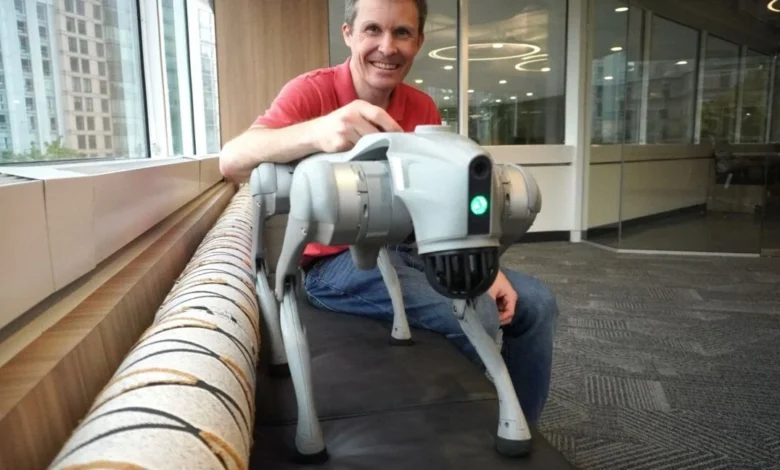
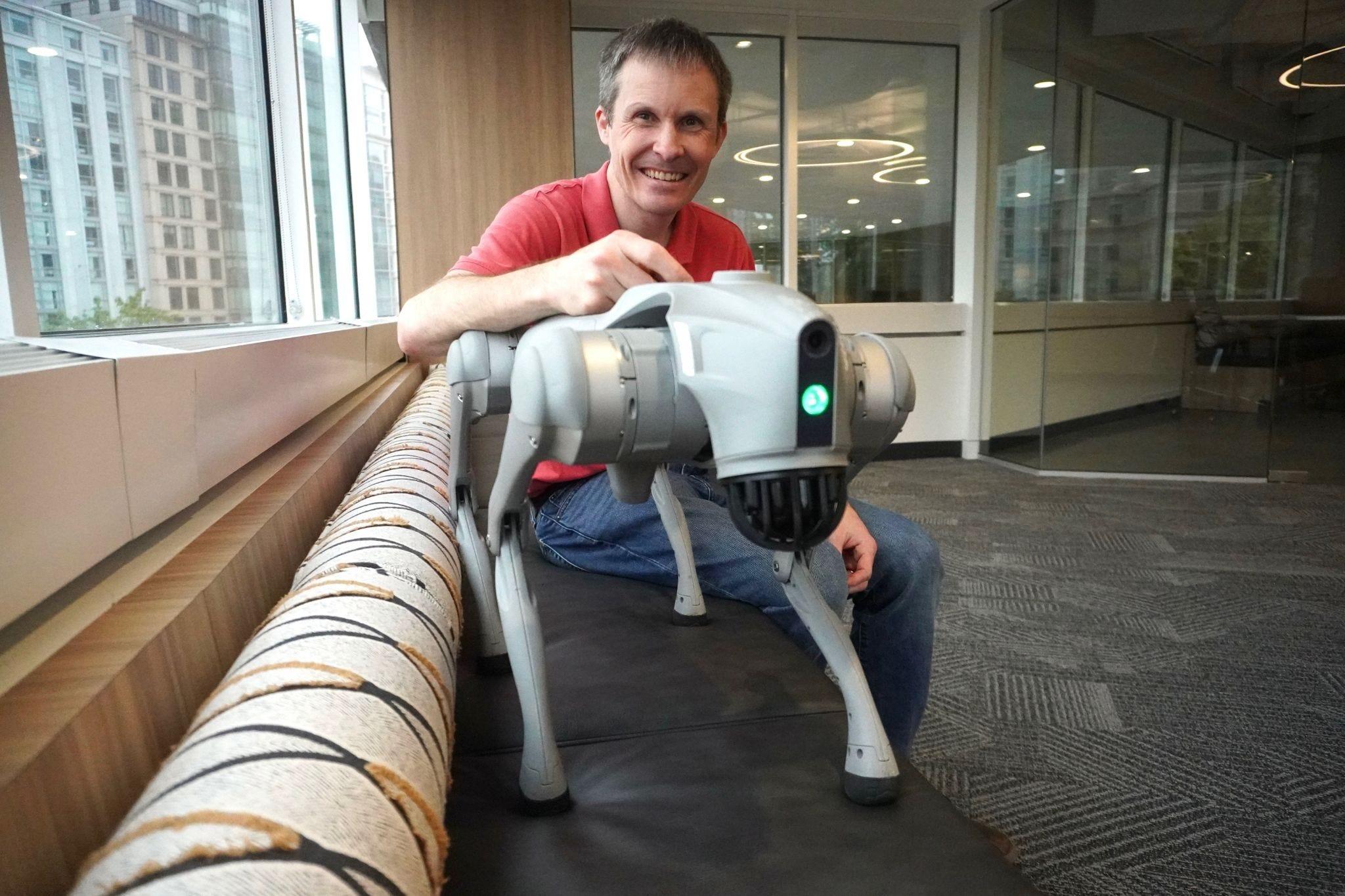
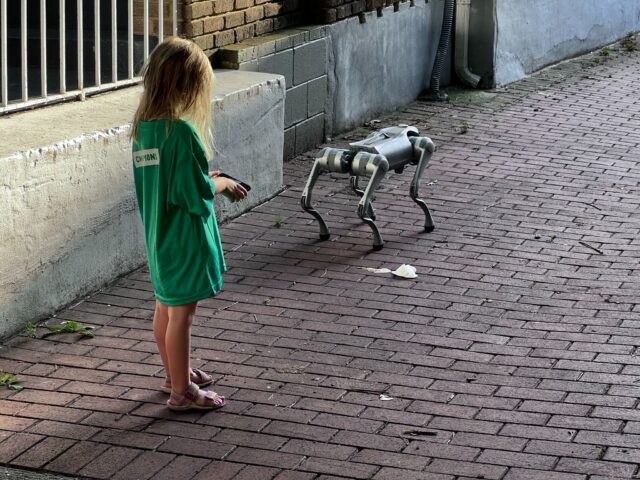
On a clear morning in June, a peculiar sight unfolded on the streets of Washington, D.C.: a pedestrian walking to work accompanied by a four-legged, autonomous machine. While the local neighborhood of Mount Pleasant is accustomed to the typical bustle of commuters and pet owners, this particular companion—a Unitree Go2 Pro robot dog—drew an immediate and intense reaction. Strangers paused to take photographs, children asked to see "tricks," and local biological dogs reacted with instinctive suspicion, growling at the mechanical interloper. This interaction encapsulates the strange, transitional moment in robotics, where high-end technology is moving from industrial research labs into the hands of curious consumers, albeit with significant technical growing pains.
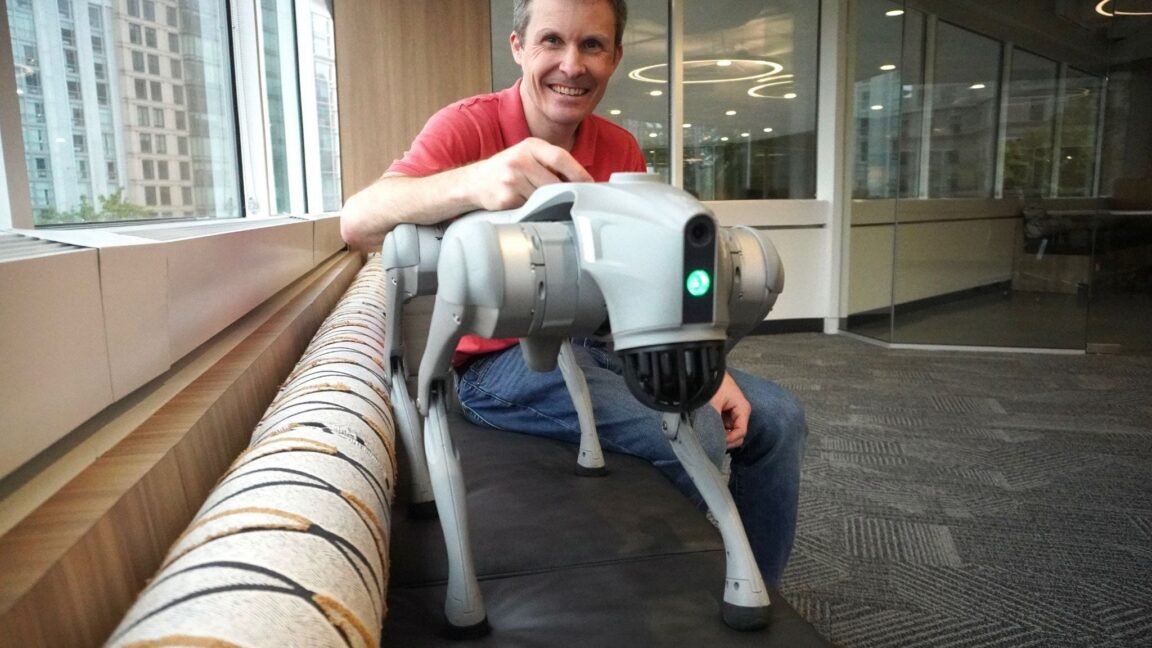
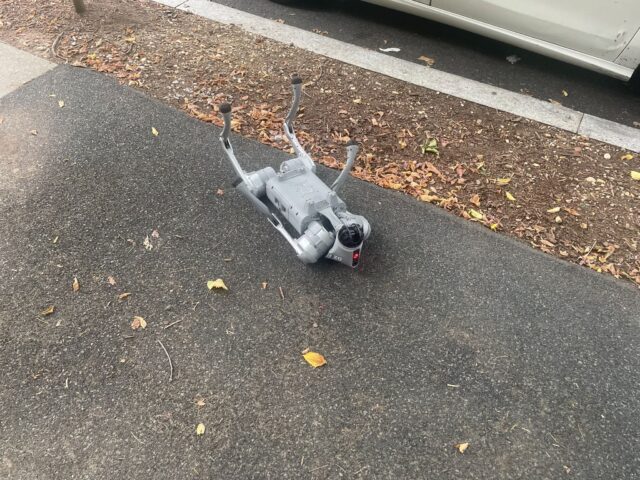
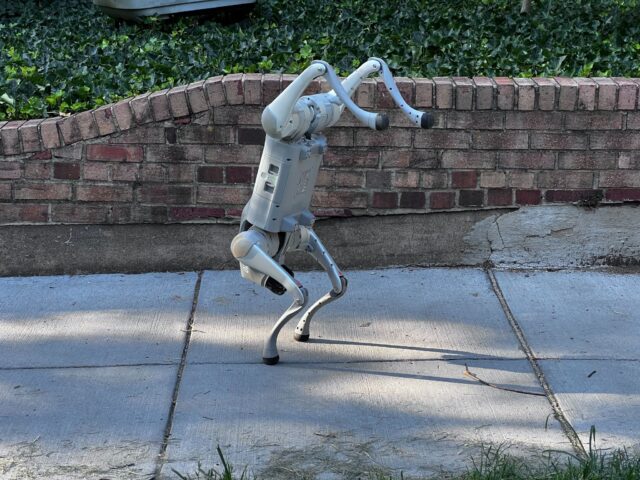
The journey to the office, spanning roughly two miles, highlighted both the promise and the current limitations of consumer-grade quadruped robotics. While the robot performed flawlessly on the downhill commute, the return journey proved far more challenging. Facing an 87-degree Fahrenheit (30-degree Celsius) afternoon and an uphill climb, the robot’s performance degraded rapidly. With five percent battery life remaining and internal temperatures reaching 84 degrees Celsius (183 degrees Fahrenheit), the machine suffered a critical failure, collapsing just yards from its destination. It did not shut down in a controlled manner; instead, it fell backward, legs splayed, a stark reminder that these machines remain in a state of early development.
The Democratization of Quadruped Locomotion
The rise of Unitree Robotics, founded by Wang Xingxing in 2016, marks a pivotal shift in the robotics industry. For decades, quadruped technology was the exclusive domain of elite research institutions and a few well-funded organizations like Boston Dynamics. The high cost of hardware—often exceeding $75,000 for a unit like the Spot—effectively barred smaller research labs, startups, and individual enthusiasts from entry.
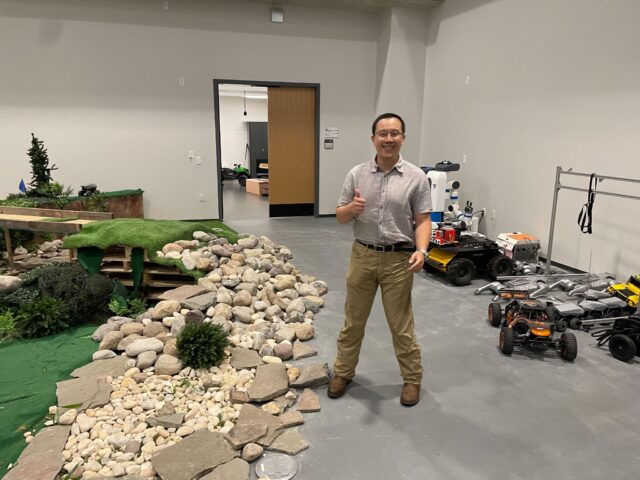
Professor Xuesu Xiao of George Mason University, whose lab currently houses several Unitree units alongside a legacy Spot robot, notes the profound impact of this shift. "Ten years ago, only a very small set of research groups were working on quadruped locomotion because they were the only people on the planet who could build a quadruped," Xiao observed. "Then Unitree came onto the market, and it basically democratized the entire world of quadruped locomotion research."
The company’s trajectory has been rapid. Wang Xingxing, who famously developed the "XDog" prototype for his master’s thesis, drew inspiration from pioneers like Marc Raibert of Boston Dynamics. However, while Boston Dynamics focused on high-performance, hydraulic-actuated systems that were often noisy and prohibitively expensive, Unitree pivoted toward electric, modular, and mass-market-friendly designs. By the time the Go1 was launched in 2021, and the subsequent Go2 in 2023, Unitree had successfully lowered the barrier to entry to roughly $1,600 to $4,000—a reduction in price exceeding 97 percent compared to industry incumbents.
Engineering for Affordability
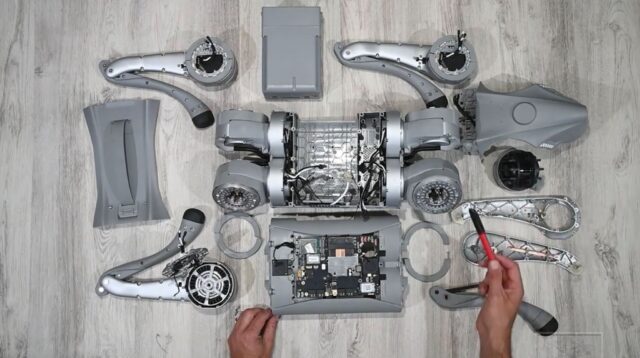
The secret to Unitree’s market dominance lies in a strategy of extreme simplification and component reuse. A technical analysis conducted by the engineering firm Simplexity revealed that the Go2 series utilizes 12 identical motors across its four legs. By standardizing these components, the company achieves significant economies of scale, reduces part counts, and simplifies the overall assembly process.
Unlike industrial robots that require high-precision, high-ratio gearboxes to execute tasks with millimeter accuracy, Unitree opted for a simple 6.33-to-1 gear ratio. This decision, while sacrificing some mechanical precision, offers several distinct advantages. It allows for "backdriveability," meaning the robot’s limbs can yield gracefully when encountering physical resistance, and it makes the robot inherently more nimble and easier to simulate in virtual training environments. This shift reflects a broader industry trend: as control software becomes more sophisticated and capable of making micro-adjustments in real-time, the hardware itself can be made simpler and more cost-effective.
The Transition to Humanoid Robotics
Having established a foothold in the quadruped market, Unitree has leveraged its existing supply chain and actuator expertise to pivot into the even more lucrative humanoid robot sector. The launch of the H1 in 2023 and the subsequent G1 model signals an aggressive move to capture the emerging market for general-purpose robotic labor.
The financial data underscores this transition. According to company filings, Unitree’s quadruped revenue saw a steady climb, but its humanoid revenue experienced an eightfold increase between 2024 and 2025, reaching RMB 867 million (approximately $129 million). Humanoids now account for over half of the company’s total revenue. Analysts at SemiAnalysis have drawn comparisons between Unitree and DJI, the Chinese drone manufacturer that revolutionized the aerial photography market by moving core components—such as flight controllers, gimbals, and motors—in-house. By mirroring this vertical integration, Unitree is positioning itself to dictate global pricing for both quadruped and humanoid platforms.
Geopolitical and Regulatory Hurdles
The meteoric rise of Unitree has not occurred in a vacuum. The company has benefited from a supportive domestic policy environment in China, including tax credits and state-backed institutional purchases. However, this success has also drawn the attention of Western policymakers concerned about national security and the dual-use nature of advanced robotics.
In June, a bipartisan group in the U.S. House of Representatives introduced legislation aimed at restricting the importation of Chinese-manufactured robots, specifically citing Unitree. Following this, the Federal Communications Commission (FCC) introduced broad new regulations in July targeting foreign-made robotic hardware. These moves reflect a growing anxiety in Washington regarding the dependence on Chinese technology for the development of future AI-integrated hardware.
The potential for a "robotics decoupling" is high. While the U.S. government seeks to protect domestic infrastructure and AI development, the global nature of the robotics market remains a wildcard. If Chinese companies like Unitree are restricted in the United States, they may simply double down on their growth in international markets, potentially leaving the U.S. to catch up in a field where it is currently losing ground.
The Road Ahead: Beyond the "Toy" Phase
Despite the impressive advancements, the current generation of consumer robots is still in its infancy. As noted in the experience with the Go2 Pro, the software remains buggy, and the hardware—while innovative—is prone to failure under stress. Many of the features promised in marketing materials, such as autonomous stair climbing or advanced human-following, often struggle in real-world, non-laboratory environments.
However, historical precedent suggests that these "rough edges" are temporary. Just as early personal computers were limited by clunky interfaces and restricted functionality before they became ubiquitous, current legged robots are establishing a baseline for future utility. As the "flywheel" of increased sales, lower manufacturing costs, and better software integration continues to spin, the gap between a $4,000 consumer robot and a functional, multi-purpose domestic assistant is expected to narrow.
Whether Unitree will maintain its lead remains to be seen. It faces stiff competition from Chinese rivals like AgiBot and a host of emerging American startups, including Tesla, Figure, and 1X. Yet, by successfully moving the quadruped from the specialized research lab to the common city sidewalk, Unitree has already achieved a feat that once seemed decades away. The future of robotics may not be built on the perfect, high-cost machines of the past, but on the affordable, mass-produced, and rapidly evolving platforms of the present. As the technology matures, the question will shift from "what can these robots do?" to "what will we allow them to do?"—a challenge that will soon move from the sidewalk to the center of global policy discourse.