Tom Cruise Details How He Streamlined His Six-Hour Prosthetic Transformation for Alejandro G. Iñárritu’s Upcoming Film Digger

Tom Cruise is well known for his relentless dedication to physical performance, death-defying stunts, and meticulous operational efficiency on movie sets. However, the legendary action star recently faced an entirely different kind of logistical challenge while preparing for his role in the upcoming dramatic feature Digger, directed by acclaimed filmmaker Alejandro G. Iñárritu. Speaking during a Friday appearance on the popular New Heights podcast hosted by NFL brothers Travis and Jason Kelce, Cruise opened up about how he drastically cut down the time required for his extensive prosthetic makeup application, turning a grueling six-hour daily routine into a far more manageable process.
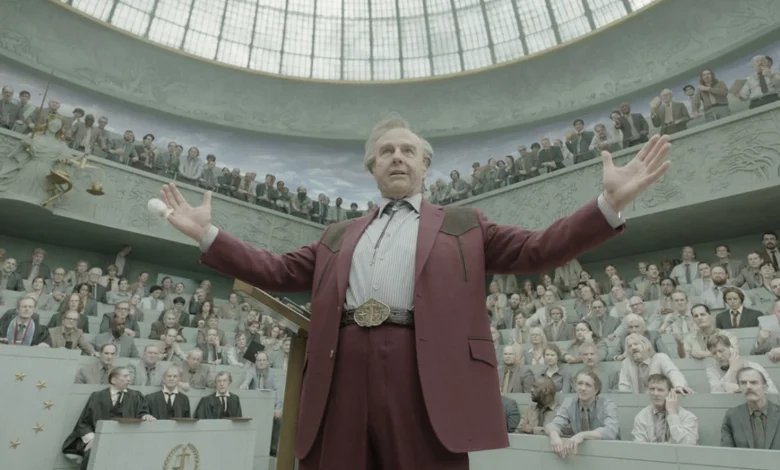
The film, which is scheduled to hit theaters on October 2, features Cruise in a rare and heavily disguised character role. In Digger, the actor plays eccentric oil tycoon Digger Rockwell, a character described as having a larger physical frame, deep wrinkles, and disheveled gray hair that renders Cruise almost completely unrecognizable. The narrative follows Rockwell after he triggers a massive environmental disaster, prompting the President of the United States—portrayed by veteran actor John Goodman—to order him to clean up the catastrophic mess he created.
The transformation required to bring Digger Rockwell to life, however, presented an immediate hurdle for standard film production schedules. When the hair and makeup departments first applied the full suite of prosthetics, the process took an exhausting six hours. For an actor who typically maintains rigorous shooting schedules spanning up to twelve hours a day, the time investment threatened to derail the production timeline or severely compromise his required rest.
Logistical Challenges and the Quest for Efficiency
The mathematics of Hollywood production schedules leaves little room for wasted hours. Cruise quickly calculated the daily toll of a six-hour prosthetic application when combined with a standard twelve-hour shooting day and the basic necessity of human sleep.
"The first time we did the makeup, it took six hours," Cruise explained to Travis and Jason Kelce during the podcast episode. "I gotta sleep at least six [hours]. They keep saying I need more… but OK, that’s twelve. Now, we have twelve-hour days filming. So now that’s six hours on, two hours off with the makeup."
Faced with a schedule that mathematically defied basic human recovery limits, Cruise took a proactive approach that mirrored his famous off-screen problem-solving techniques. Rather than accepting the lengthy process as an unavoidable consequence of cinematic prosthetics, the actor implemented a systematic efficiency initiative reminiscent of industrial process engineering.
To achieve his goal, Cruise brought a chalkboard into the makeup trailer and assigned a crew member to act as a timekeeper using a stopwatch. Every individual prosthetic piece and its application method would be analyzed, timed, and drilled until the entire team operated with synchronized precision.
"I had a guy there with a stopwatch, and I’m like, ‘OK, you see that time, six hours? By the time we’re done, we’re going to get it under an hour,’" Cruise recalled.
The initial reaction from the beauty and special effects department was one of skepticism and resistance. According to the actor, the makeup artists believed the target was entirely unrealistic.
"They were like, ‘No, I’m not doing that; it will never happen,’" Cruise said. "I’m like, ‘OK, first of all, if you say no, you can’t do it; you will never get there. So can we agree that we’ll maybe make it a little less?’ So with each piece that was going on, it was timed and then we’d drill and practice."
Through methodical repetition, continuous refinement, and collaborative practice between the actor and the artists, the team successfully dismantled the bottleneck. To the surprise of the makeup crew, the application time plummeted without sacrificing the quality or realism of the final look, and the artists achieved the feat without feeling rushed.
"They were like, ‘What?!’ And they didn’t even know it, and they didn’t even rush," Cruise noted.
A History of Transformative Character Work
Digger marks a significant return to heavy prosthetic character work for Cruise, a realm he has rarely entered during the height of his career as a traditional leading man. The last time the actor underwent such a radical physical transformation for a major motion picture was in 2008, when he famously played foul-mouthed, bald studio executive Les Grossman in Ben Stiller’s satirical comedy Tropic Thunder.
That performance earned Cruise widespread critical acclaim, a Golden Globe nomination, and a reputation for surprising audiences by completely shedding his traditional heroic persona. While Grossman relied on a bald cap, fat suit, and aggressive attitude, Digger Rockwell presents a more weathered, aged, and physically imposing aesthetic, requiring cutting-edge prosthetic techniques designed to withstand high-definition cinematography and grueling exterior location shoots.
The decision to cast Cruise in an Iñárritu film represents a fascinating collision of cinematic styles. Alejandro G. Iñárritu, known for directing visionary, deeply psychological, and technically complex films such as Birdman, The Revenant, and Biutiful, typically operates within the realm of auteur-driven drama rather than commercial blockbusters. The pairing of Iñárritu’s directorial gravity with Cruise’s blockbuster pedigree and relentless dedication to process has generated immense industry anticipation ahead of the October release.
Broader Implications and Cruise’s Management Philosophy
Cruise noted during the podcast interview that his hands-on approach to the makeup trailer is emblematic of his broader philosophy regarding filmmaking and enterprise management. For decades, the actor has not only starred in major franchises like Mission: Impossible and Top Gun but has also served as a hands-on producer, deeply involved in budgeting, safety protocols, distribution strategies, and technological innovations.
"I like going into a system, studying it and trying to figure out how I can do it better, more efficient," Cruise explained to the Kelce brothers. "The films that I make, I’m constantly going, how can I do it better? How do I prepare better?"
This management style has earned Cruise a reputation among directors, studio executives, and technical crews as an exceptionally detail-oriented collaborator. Industry analysts often point to his rigorous preparation and problem-solving mindset as key factors behind the long-term box office viability of his projects and his ability to navigate complex logistical hurdles during global crises, such as the pandemic-era filming of Mission: Impossible – Dead Reckoning.
In the case of Digger, the ability to shave hours off the daily makeup routine not only preserved the mental and physical well-being of the star but also protected the production budget from the massive financial overhead associated with delayed shooting schedules and extended crew hours. In modern filmmaking, where daily operational costs for major studio features frequently run into the hundreds of thousands of dollars, a six-hour delay at the start of every production day represents a staggering financial liability. By applying industrial efficiency practices to a creative department, Cruise successfully mitigated that risk.
Chronology of the Production and Anticipation for the Release
The development of Digger has been closely monitored by industry insiders since the project was first announced. Principal photography took place under tight security, with early reports leaking sparse details regarding Cruise’s unconventional casting and his collaboration with Iñárritu.
The release of the official trailer earlier this year provided the first public glimpse of Cruise in full character as Digger Rockwell, sparking widespread discussion across social media platforms regarding the actor’s willingness to subvert his traditional screen persona. The inclusion of John Goodman as the President of the State has further heightened expectations for the dynamic between the two veteran actors.
As the October 2 theatrical release date approaches, the marketing campaign is expected to ramp up, offering audiences further insight into the making of the film. While much of the promotional discourse surrounding Cruise typically focuses on his practical stunt work—such as scaling skyscrapers, piloting fighter jets, or riding motorcycles off cliffs—the revelations on the New Heights podcast highlight the less-visible, highly technical problem-solving required to bring complex characters to life behind the scenes.
Ultimately, the transformation of Digger Rockwell stands as a testament to the intersection of artistic vision and rigorous logistical planning. By treating the prosthetic makeup trailer as a system ripe for optimization, Tom Cruise demonstrated that even the most daunting cinematic challenges can be overcome through collaboration, preparation, and the strategic use of a stopwatch.