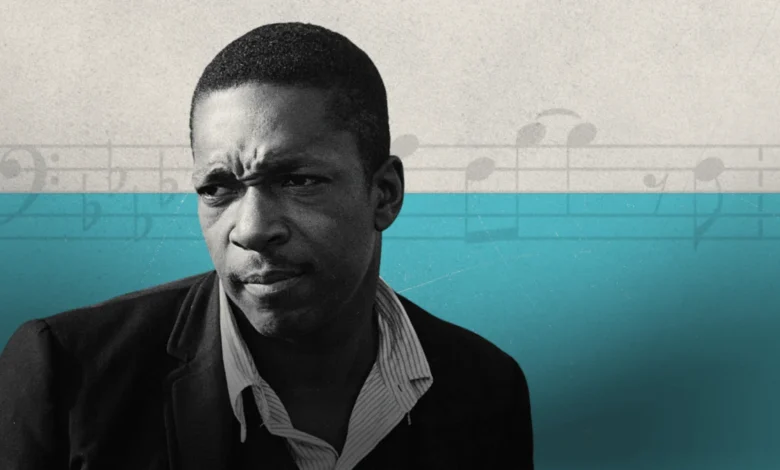
Nearly six decades after his passing, the sonic imprint of John Coltrane remains a defining force in modern music, transcending the boundaries of jazz to influence generations of artists across rock, hip-hop, and contemporary classical genres. As the global musical community prepares to honor the centenary of his birth on September 23, scholars, critics, and performers are reflecting on a career defined by an relentless pursuit of technical perfection and spiritual transcendence. Despite his premature death from liver cancer in 1967 at the age of 40, Coltrane’s influence has only expanded, bolstered by a 2007 Pulitzer Prize special citation and an ever-growing archival catalog that continues to captivate new audiences.
A Chronology of Artistic Evolution
To understand the magnitude of Coltrane’s contribution, one must trace the rapid trajectory of his professional life. Born in 1926 in Hamlet, North Carolina, Coltrane did not emerge as a household name until his late twenties. His career can be segmented into distinct phases of growth, marked by significant geographic and stylistic shifts.
The year 1955 serves as the pivot point for his emergence, when he joined the Miles Davis Quintet. This period was fraught with personal struggle; Coltrane battled severe substance abuse issues that frequently hampered his reliability as a performer. His dismissal from Davis’s group in 1957 proved to be a critical inflection point. During a period of seclusion in Philadelphia, Coltrane successfully addressed his dependencies, returning to the scene with a renewed sense of purpose and a heightened technical command.
By the end of 1957, he was performing with Thelonious Monk, a collaboration that refined his harmonic language. Returning to the Miles Davis fold in 1958, he participated in the sessions for Kind of Blue (1959), widely considered the most influential jazz recording in history. Soon after, he transitioned into his role as a bandleader. The 1960 formation of the "Classic Quartet"—featuring pianist McCoy Tyner, bassist Jimmy Garrison, and drummer Elvin Jones—marked the beginning of his most fertile creative period. This ensemble moved away from conventional chord-based improvisation toward modal frameworks, fundamentally altering the grammar of jazz performance.
Technical Mastery and Harmonic Innovation
Coltrane’s approach to the saxophone was characterized by a distinctive, dark, and lyrical tone that set him apart from his contemporaries. His technical facility, often described as "sheets of sound" by critics, allowed him to navigate complex chord progressions with unprecedented velocity.
His 1960 album, Giant Steps, remains a benchmark in music theory. The title track, a 16-bar etude, introduced a harmonic sequence that challenged even the most seasoned improvisers. While to the casual listener the piece sounds like a seamless composition, its internal structure demands a sophisticated, innovative approach to soloing. Coltrane did not merely perform; he engineered new musical languages.
Furthermore, his 1961 exploration of Rodgers and Hammerstein’s "My Favorite Things" demonstrated his ability to strip away complex western harmonic structures in favor of drone-based, meditative explorations influenced by South Asian musical traditions. This shift signaled his transition toward the avant-garde "free jazz" movement, where he prioritized emotional resonance and spiritual expression over the rigid structural constraints of traditional bebop.
The Intersection of Music and Spirituality
For Coltrane, the technical mastery of his instrument was never an end in itself; it was a conduit for spiritual communion. This philosophy culminated in his 1964 opus, A Love Supreme. The four-part suite is widely interpreted as an act of prayer and an expression of his deep personal faith.
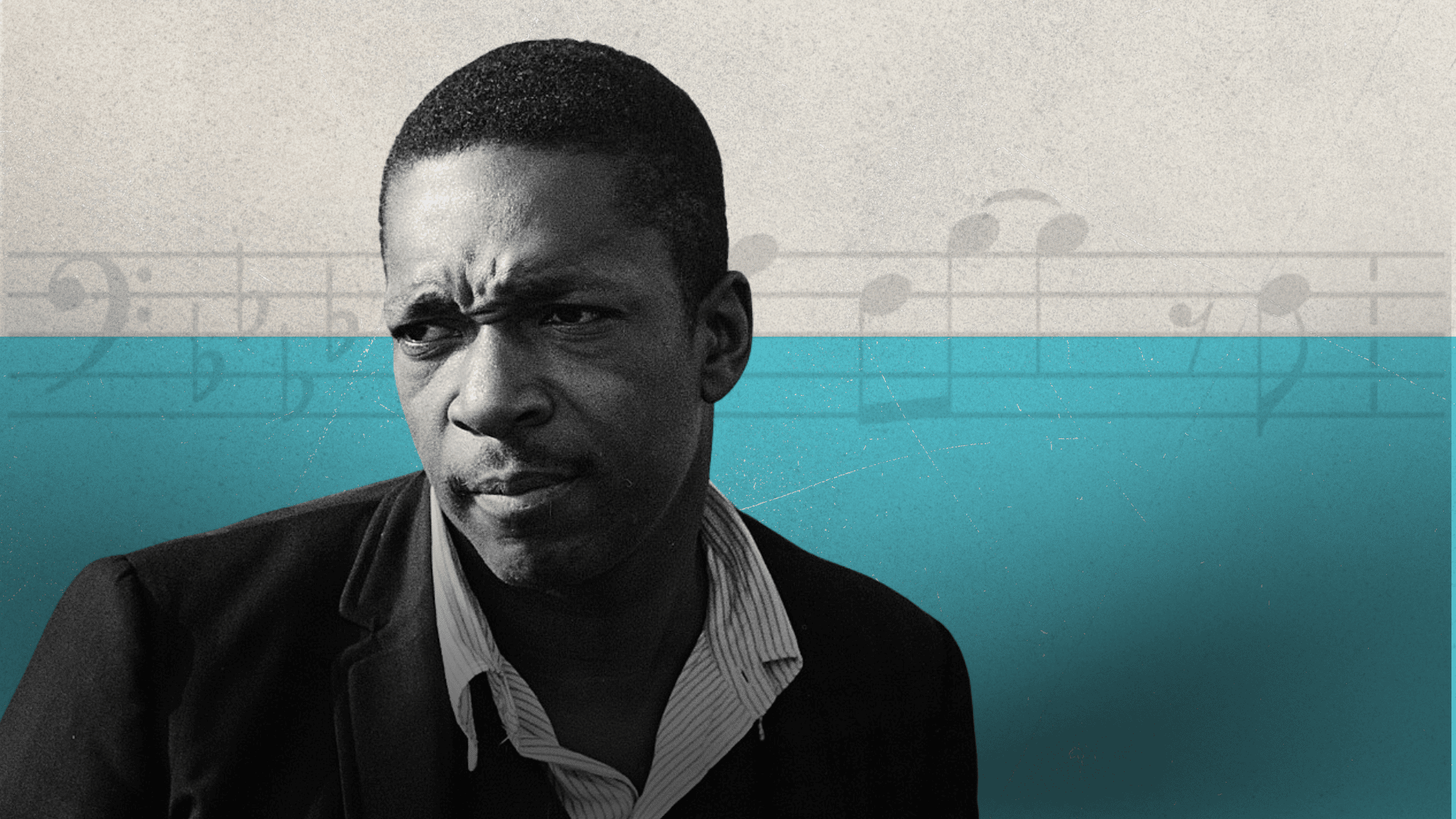
Experts note that his later work, including the haunting, poignant composition "Alabama"—written as a response to the 1963 bombing of the 16th Street Baptist Church—showcases a shift toward social commentary infused with spiritual gravity. By the time of his death in 1967, Coltrane had successfully integrated his personal search for meaning with his professional practice, creating a template for the "artist-as-seeker" that continues to inspire musicians today.
Perspectives from the Harvard Community
Reflecting on these contributions, members of the Harvard faculty provide context for why Coltrane remains a singular icon. Ingrid Monson, the Quincy Jones Professor of African American Music, asserts that Coltrane’s profound influence stems from the integrity of his commitment. "There has never been a jazz artist more profound than John Coltrane," Monson notes. "He used music to communicate with the divine. For him, the relationship between musical excellence and his spiritual beliefs was the most important thing."
Bob Blumenthal, a noted jazz critic and author of two Grammy-winning sets of liner notes for Coltrane retrospectives, highlights the sheer emotional impact of his sound. "Nobody ever really heard of him until he was 29," Blumenthal explains. "But he had a sound that was so arresting, it just grabbed you. He was the first bandleader to break the convention of the nightclub circuit, deciding to play as long as the music required rather than adhering to set industry time limits. He changed the way music was presented to the public."
Vijay Iyer, the Franklin D. and Florence Rosenblatt Professor of the Arts, emphasizes the "hard-won" nature of Coltrane’s work. "There is a narrative of overcoming hardship that you feel in the energy of his music," Iyer observes. "He wasn’t just a virtuoso for his own sake; he was a composer constantly seeking new breakthroughs. His curiosity was not idle; it was a conscious effort to understand his place in the post-World War II era, linking his fate to the Global South."
Broader Impact and Global Legacy
Coltrane’s influence extends far beyond the jazz club. His work has informed the structural improvisations of progressive rock, the sampling foundations of modern hip-hop, and the complex harmonic inquiries of contemporary classical composers. His obsession with global musical traditions—from the modal structures of India to the rhythmic complexity of Africa—predated the modern "world music" movement by decades.
Beyond the music itself, his legacy serves as a testament to the discipline of the creative process. His habit of practicing for hours, even during the intermissions of his own performances, was not merely a desire for technical polish but an attempt to refine the very act of creation. As Iyer notes, Coltrane was interested in "channeling something from beyond," acting as a conduit for healing and transformation.
Essential Discography for the Modern Listener
For those seeking to explore the breadth of his work, scholars and critics suggest a non-linear approach. Rather than beginning at the start of his career, listeners are encouraged to find an entry point that resonates and work both forward and backward.
- The Ballad Period: Ballads (1963) and his collaboration with vocalist Johnny Hartman, particularly the track "My One and Only Love," exemplify his unmatched lyrical capacity.
- The Harmonic Laboratory: Giant Steps (1960) remains the essential text for understanding his approach to complex chordal progressions.
- The Spiritual Peak: A Love Supreme (1965) is cited universally as his magnum opus, a unified work of art that bridges the gap between music and the divine.
- The Avant-Garde Expansion: Live in Seattle (1965) and Interstellar Space (1967) offer a window into his late-career experimentation with turbulence, noise, and spiritual liberation.
- The Iconic Collaborations: Kind of Blue with Miles Davis and his work on ‘Round About Midnight serve as vital historical documents of his ascent to greatness.
As the centenary of his birth approaches, the consensus among experts is clear: John Coltrane is not merely a figure of historical interest, but an active, living presence in music. His life serves as a blueprint for artistic integrity, illustrating that the pursuit of truth through sound is a journey without a final destination, but one that rewards the listener with profound, timeless beauty.