In one of Denver’s wealthiest suburbs, where median family income exceeds $150,000 and the expectation of a four-year university education has long been an immutable cultural pillar, a quiet revolution is taking place: students are increasingly lining up for trade certifications and vocational training. This shift, occurring in affluent districts like Cherry Creek, signals a broader national reconsideration of the "college-for-all" movement that has dominated American education policy for the better part of three decades. As parents and educators grapple with the rising costs of higher education and the sobering realities of the labor market, the traditional path—four years of college immediately following high school—is no longer being treated as the only viable route to professional success.
The Failure of the College-for-All Paradigm
The "college-for-all" movement, which gained significant political and educational momentum in the 1990s and early 2000s, was built on the premise that a bachelor’s degree was the primary equalizer in the American economy. While the intention was to increase social mobility and bridge the income gap, the results have been, at best, mixed. Data from the Burning Glass Institute reveals a persistent disconnect between academic credentialing and workforce needs. Despite nearly 90 percent of college freshmen identifying the prospect of a "good job" as their primary motivation for enrollment, the reality for graduates is often stark.
One year after graduation, more than half of college degree holders are categorized as underemployed, working in roles that do not require a bachelor’s degree. This trend is not merely a temporary hurdle for recent graduates; a decade later, approximately 45 percent of those individuals remain in positions that fail to utilize their formal education. This phenomenon suggests that for many, college has evolved into an expensive, protracted period of career exploration rather than a targeted bridge to a profession. With student loan debt in the United States topping $1.7 trillion, the financial burden of this "exploration" has reached a breaking point, contributing to a significant decline in public confidence regarding the value proposition of traditional higher education.
Chronology and the Shift in Educational Philosophy
The historical trajectory of vocational education in America has been one of stigma and underfunding. Throughout the mid-20th century, "shop class" became synonymous with a lack of academic ambition, relegated to the periphery of high school curricula. However, the economic pressures of the 21st century have forced a re-evaluation.
- 1990s–2000s: The peak of the "college-for-all" era, where federal and state policies incentivized high school graduation rates and immediate college matriculation as the sole markers of district success.
- 2010s: The emergence of the "skills gap" narrative. As manufacturing and technical industries modernized, employers began reporting difficulty finding workers with the necessary technical proficiencies, even as the number of college graduates rose.
- 2020–Present: The post-pandemic acceleration. Supply chain disruptions and labor shortages in skilled trades—such as aviation, healthcare, and advanced manufacturing—have highlighted the critical importance of technical labor. Programs like the Cherry Creek Innovation Campus have emerged as the vanguard of a new, hybrid model of education.
Data-Driven Realities: The Return on Investment (ROI)
The economic argument for diversifying educational pathways is bolstered by recent findings from the Georgetown University Center on Education and the Workforce. Their research indicates that the United States faces an annual shortfall of nearly 712,000 workers equipped with certificates or associate degrees in high-demand, high-wage fields. In sectors such as healthcare technology, cybersecurity, and specialized construction management, workers without a bachelor’s degree are routinely earning upwards of $55,000 annually—often with less debt and earlier entry into the workforce.
When analyzing Return on Investment (ROI), the data presents a nuanced picture. While a bachelor’s degree often provides a higher cumulative lifetime earning potential when viewed over a 20-to-30-year span, the first decade of a career tells a different story. Shorter-term certifications and associate degrees frequently outperform bachelor’s degrees in ROI during the first 10 years after completion. For students who need immediate economic traction, the shorter, more focused credential can serve as a superior financial strategy.
The Cherry Creek Model: Integrating Academics and Trade
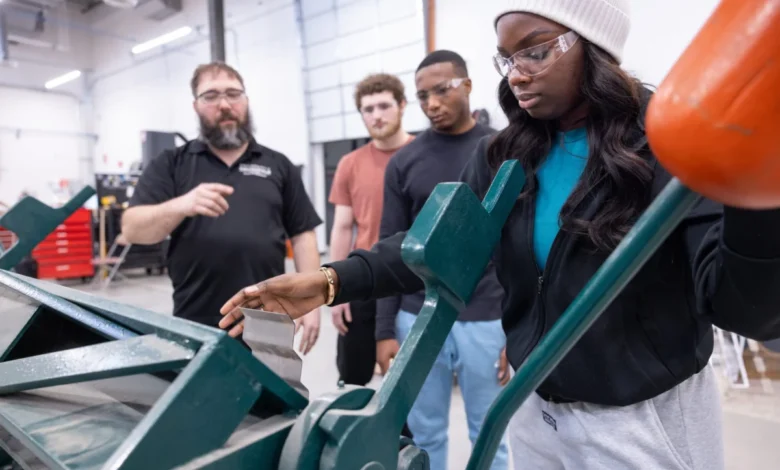
The Cherry Creek Innovation Campus (CCIC) in Colorado serves as a practical blueprint for this structural change. By allowing students to split their time between their home high school and the innovation campus, the district enables them to earn industry-recognized credentials in fields ranging from computer science to health science.
The program’s success lies in its ability to provide "career clarity." During a recent observation of the program, it became evident that students involved in these pathways were not necessarily eschewing college; rather, they were entering it with a defined purpose. One student might be using the program to gain a head start on an engineering degree, while another might be acquiring the specific skills needed to enter the workforce directly as a certified chef. By removing the false binary between "academic" and "vocational," the school allows students to graduate with both a diploma and a portfolio of professional experiences.
The Human Cost: Stories of the "Lost Phase"
The consequences of the current system are most visible in the lives of students who navigate the traditional path without guidance. Educators and administrators often recount stories of students who, like a recent graduate from Oakland, enter university with a fixed goal—such as nursing—only to find that they have no real-world exposure to the profession. After two years of coursework, the student discovers the reality of the work does not match their expectations, leading to a pivot that often involves transferring to community college and entering a "lost phase" of employment in low-wage sectors. These stories underscore the systemic failure to provide vocational exposure before the financial commitment of a four-year degree is made.
Broader Implications and Institutional Responses
The push to redefine the high school experience is gaining traction among policymakers and non-profit organizations. Ridgeline, a nonprofit operating in the San Francisco Bay Area, is currently working to connect students from underserved communities to high-wage maritime careers. By providing hands-on experience in port management, ship engineering, and logistics, the program offers a pathway to six-figure salaries that do not necessarily require a traditional four-year degree from the outset.
The implication for the American educational system is clear: the goal should not be to lower expectations, but to expand the definition of success. A growing chorus of experts argues that every high school should offer students the opportunity to graduate with both a diploma and an industry-recognized credential. This dual-track approach—often referred to as "college and career readiness"—is intended to move the nation away from the stigma of the past and toward a model where students are empowered to choose their own trajectories.
Conclusion: A New Standard for the Future
As the economy continues to shift, the divide between the skills employers need and the skills graduates possess is expected to widen unless educational institutions change their approach. The "college-for-all" movement served its purpose in highlighting the importance of post-secondary education, but the rigid, one-size-fits-all implementation of that philosophy has created a generation of graduates who are both over-educated and under-prepared.
Moving forward, the successful model will be one that treats academic learning and workforce training as complementary, not competing, forces. By providing students with the chance to test their interests in real-world environments before they are burdened with significant debt, the educational system can better serve both the individual student and the national economy. The goal is to create a culture where the choice to pursue a trade is respected as highly as the choice to pursue a degree—and where both lead to a clear, sustainable, and prosperous future.