The Shifting Sands of Global Climate: How Extreme Heat Seasons Are Expanding Beyond Traditional Boundaries


Extreme heat remains one of the most lethal climate hazards globally, yet the nature of these events is undergoing a profound and dangerous transformation. For decades, meteorological models have relied on the assumption that extreme heat is confined to well-defined summer months. However, a landmark study published in the journal AGU Advances reveals that this foundational assumption is crumbling. As global temperatures continue to climb, extreme heat is no longer staying within its historical lanes; instead, it is bleeding into the "shoulder seasons," creating new, unmonitored risks for populations, ecosystems, and infrastructure that are ill-prepared for high temperatures during spring and autumn.
The Anatomy of a Shifting Climate
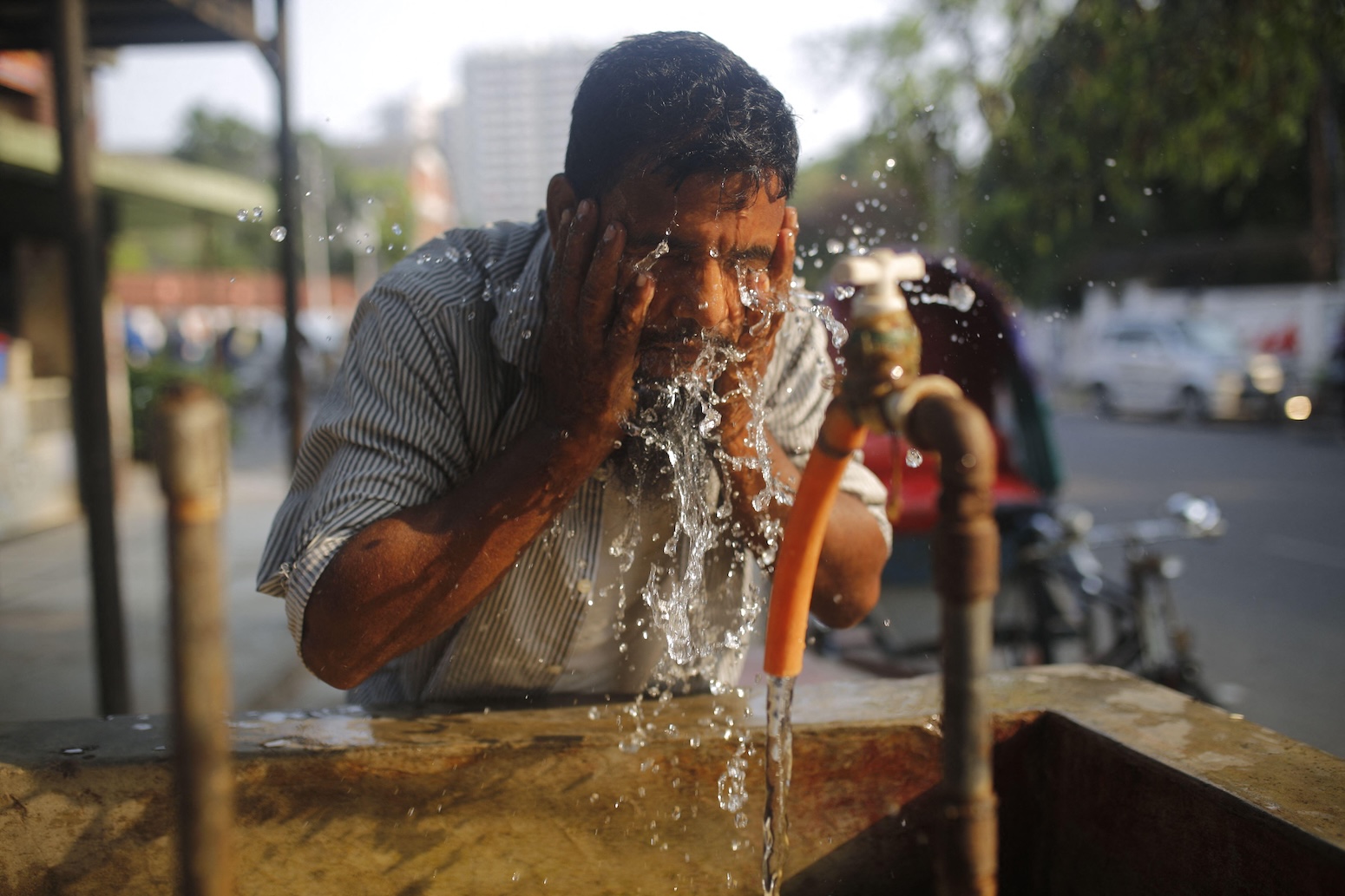
The danger of extreme heat is not uniform. Research consistently demonstrates that heatwaves occurring outside of peak summer are often more lethal than those occurring during the height of the season. This is primarily a matter of physiological and systemic preparedness. When a heatwave strikes in early spring, the human body has not yet undergone the necessary acclimatization processes to regulate internal temperatures effectively. Furthermore, public infrastructure—such as the activation of public cooling centers or the seasonal deployment of air conditioning systems—is often not yet fully operational. Conversely, late-autumn heatwaves, arriving after a summer of sustained thermal stress, push already taxed infrastructure and exhausted populations to their breaking point.
To understand how these events are changing, researchers analyzed climate data spanning from 1980 to 2024. By utilizing the MERRA2 and ERA5 reanalysis datasets, the study moved away from the simplistic meteorological definition of summer (June–August in the Northern Hemisphere) and instead adopted a "local heat season" framework. This method defines the heat season based on the specific three-month window where extreme heat was most prevalent during the 1980s baseline decade. By comparing this to the most recent decade (2015–2024), the researchers were able to quantify the migration of extreme heat into the two-month windows flanking the historical season, known as the shoulder seasons.
Data-Driven Observations: The Asymmetric Spread
The findings indicate that in more than half of the world’s landmass, the boundaries of extreme heat are blurring. In the 1980s, heat was remarkably disciplined; roughly 93% of the world’s land area experienced over 80% of its extreme dry-heat days within its primary three-month window. Today, that discipline has evaporated.
The expansion is not uniform, revealing a complex, asymmetric pattern of climate change. In regions such as Western Europe, Southern Africa, and Northwestern India, the trend is skewed toward an early arrival, with a higher concentration of extreme heat events occurring in the weeks leading up to the traditional season. In contrast, large swaths of the United States, Eastern China, Northern Africa, and Eastern Europe are witnessing a "tail" of extreme heat that stretches well into the autumn months.
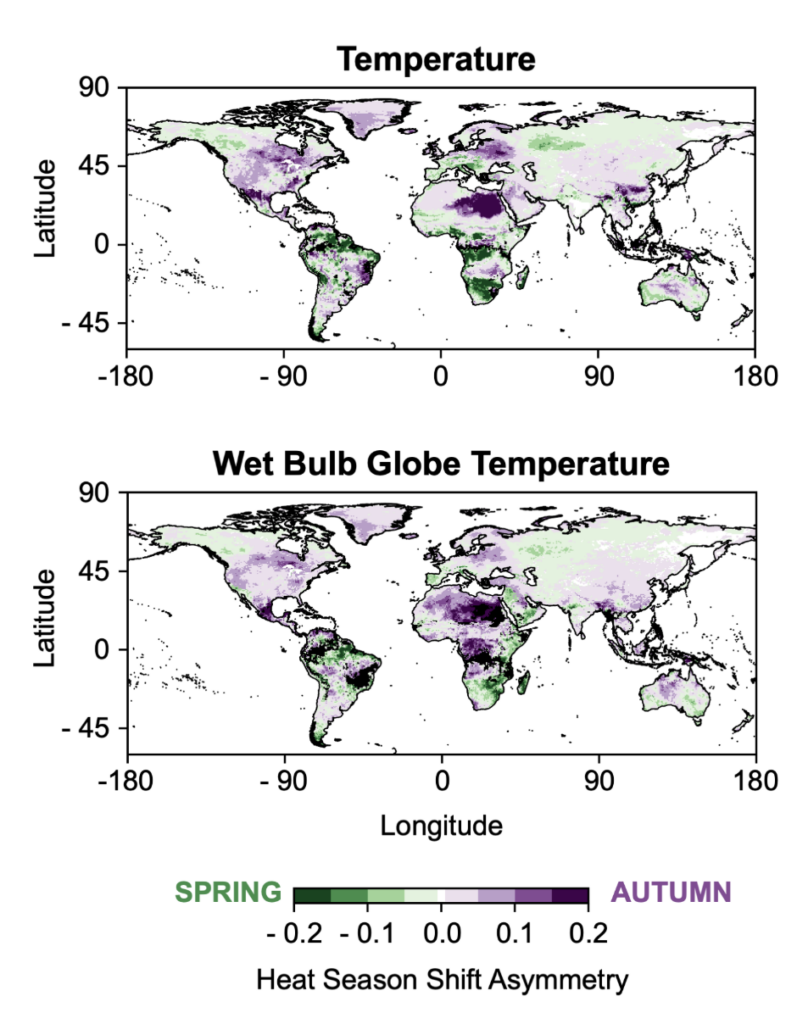
This divergence suggests that global warming is not merely a uniform "step up" in temperature. While a general increase in average annual temperature explains some of the changes within the traditional peak season, it fails to account for the lopsided extension into the shoulder months. This implies that other climate drivers—such as shifting patterns in soil moisture, long-term changes in regional precipitation, agricultural intensification, and larger ocean-atmosphere oscillations like the Pacific Decadal Oscillation—are likely exerting a heavy influence on the timing of heat extremes.
Implications for Human Health and Safety
The implications of this temporal expansion are significant for public health policy. Existing early warning systems and disaster response frameworks are largely calibrated to a summer-centric risk model. If extreme heat begins to occur in May or October, the current lack of public awareness and the unavailability of cooling infrastructure could result in a disproportionate spike in heat-related morbidity and mortality.
The study also highlights the critical distinction between dry heat and humid heat. While dry-bulb temperature is a standard metric for general heat assessment, the researchers emphasized the use of "wet-bulb globe temperature" (WBGT) to track humid heat. Developed by the U.S. military in the 1950s, WBGT accounts for temperature, humidity, wind speed, and solar radiation—factors that collectively dictate how much physical stress the human body can endure. Humid heat is notoriously more strenuous for human physiology, as it hampers the body’s ability to cool itself through sweat evaporation. When humid heat waves expand into the shoulder seasons, the risk to outdoor laborers and athletes increases substantially, necessitating a total overhaul of occupational safety standards.
The Collision of Hazards
Perhaps the most alarming aspect of this research is the potential for the overlapping of previously distinct seasonal hazards. In the Western United States, the extension of heat into the autumn months creates a volatile synergy with wildfire seasons. Increased temperatures in the fall dry out vegetation that might otherwise be entering a period of dormancy, effectively extending the window of wildfire risk.
Similarly, in the Eastern United States, the overlap between late-season heatwaves and the Atlantic hurricane season presents a logistical nightmare for emergency managers. Multiple, concurrent, or sequential disasters—such as a heatwave immediately followed by a tropical storm—place a catastrophic strain on energy grids, hospitals, and emergency services. This "compounding hazard" effect is a growing focus for climate researchers who argue that current disaster management is too siloed to handle the complexity of a warming world.
A Call for Strategic Adaptation
As the scientific community continues to dissect the regional nuances of this data, the message for policymakers is clear: adaptation strategies must become as dynamic as the climate itself. The reliance on fixed seasonal calendars for public health interventions is an outdated practice that leaves the most vulnerable populations exposed.

To address these findings, experts suggest the following actions:
- Dynamic Warning Systems: Transition from calendar-based to threshold-based heat warnings that trigger regardless of the time of year.
- Infrastructure Resilience: Upgrade building codes and urban planning to account for heat risks in spring and autumn, including improved ventilation and green space integration to combat urban heat island effects.
- Cross-Sectoral Coordination: Integrate heat risk data into wildfire and hurricane preparedness plans to manage the risks associated with overlapping hazards.
- Targeted Research: Future studies must move beyond global averages to focus on localized, granular data that can help individual municipalities anticipate their specific shifting heat windows.
The study, led by C. Ivanovich and colleagues, provides a robust quantitative basis for what many have felt anecdotally: the seasons we once knew are no longer the ones we inhabit. The expansion of the "heat season" is not a future projection—it is a documented reality of the last four decades. As the planet continues to warm, the ability to predict and prepare for these "off-season" heatwaves will become a critical determinant of global public health and economic stability. The challenge lies not just in recognizing the threat of rising temperatures, but in acknowledging that the very timing of the danger is becoming more volatile, more frequent, and more difficult to ignore. As society navigates the remainder of the 21st century, the ability to adapt to these shifting temporal boundaries will be the true test of climate resilience.