The global travel industry has witnessed a significant shift in consumer preferences regarding luggage, moving away from traditional softshell designs toward high-durability hardshell alternatives. At the forefront of this transition is the Quince Expandable Carry-On Hardshell Suitcase, a product that has garnered attention for its $170 price point and its attempt to bridge the gap between luxury performance and budget-conscious accessibility. As travelers increasingly prioritize maneuverability and organizational efficiency, the performance of mid-range luggage has become a focal point for industry analysts and frequent flyers alike. Recent field testing and consumer reports indicate that the Quince model is positioning itself as a formidable competitor to premium legacy brands by offering high-end features—such as 360-degree spinner wheels and an integrated compression system—at a fraction of the traditional retail cost.
Market Context and the Rise of Direct-to-Consumer Travel Gear
To understand the relevance of the Quince Expandable Carry-On, one must examine the broader landscape of the luggage industry over the last decade. Historically, the market was bifurcated into two distinct categories: high-end luxury brands that utilized premium materials like aluminum or high-grade polycarbonate, and budget-friendly "big box" brands that often compromised on wheel quality and handle durability.
The emergence of the direct-to-consumer (DTC) model changed this dynamic. By bypassing traditional retail markups and shipping directly from manufacturers to customers, brands like Quince have been able to offer materials typically reserved for $300 to $500 suitcases. The Quince Carry-On utilizes a polycarbonate shell, a material known for its high impact resistance and flexibility. Unlike cheaper ABS plastic, which is prone to cracking under the pressure of temperature changes or rough handling, polycarbonate is designed to flex and return to its original shape. This technical distinction is a primary driver behind the product’s growing popularity among travelers who require luggage capable of surviving international transit.
:quality(85):upscale()/2024/10/07/698/n/43463692/37b3be1967040228b312b7.70650696_.png)
Technical Specifications and Interior Architecture
The Quince Expandable Carry-On is engineered with a focus on maximizing the internal volume allowed by major airline carriers. The dimensions are optimized for overhead bin compliance, while the expandable middle section provides an additional one to two inches of depth for return trips or less restrictive domestic flights.
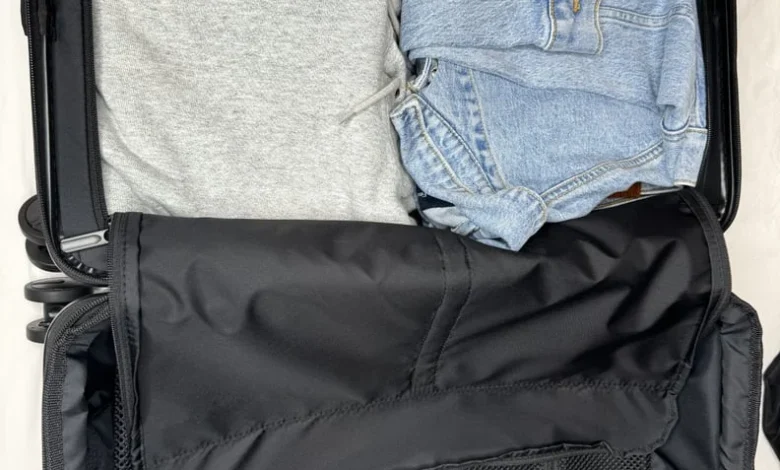
The interior of the suitcase is divided into two primary functional zones. The left-hand side features a fully zippered enclosure, a design choice intended to secure smaller items and footwear, preventing them from shifting during transit. This "clamshell" approach is a departure from the single-cavity design found in traditional soft-sided luggage. On the right-hand side, the suitcase employs a removable compression panel equipped with heavy-duty plastic buckles. This panel serves a dual purpose: it compresses clothing to save space and features a mesh pocket for immediate access to essentials like reading materials, electronics, or travel documents.
Further attention to detail is evident in the inclusion of a dedicated laundry bag, a feature often omitted in budget-tier luggage. This addition reflects a growing trend in "smart" luggage design, where internal organization is treated with the same importance as external durability.
Performance Analysis: Maneuverability and Durability
The defining characteristic of modern high-quality luggage is the wheel assembly. The Quince model utilizes a four-wheel spinner system designed for 360-degree rotation. In practical applications, the performance of these wheels is tested against a variety of urban and transit environments. Reports from field tests conducted in diverse locations—ranging from the heavily carpeted terminals of LaGuardia Airport to the uneven cobblestone streets of historic European cities—suggest that the wheel bearings are engineered for low friction and high stability.
:upscale()/2026/07/21/897/n/43463692/tmp_II14e4_3e2110dc1204d74a_Untitled_-_April_28_2026_at_19.47.10-4-Main_2_up_-_1456x970.png)
However, the efficiency of these wheels presents a unique challenge. Due to the low-resistance design, the suitcase has been noted to roll autonomously on slight inclines, requiring the traveler to maintain a constant grip. This "buttery smooth" movement is a hallmark of high-end engineering but necessitates a level of mindfulness from the user when navigating sloped sidewalks or public transportation.
In terms of structural integrity, the hardshell exterior is designed to protect fragile contents from the "bullying" often associated with baggage handling. While softshell bags are susceptible to compression and tearing, the polycarbonate shell of the Quince unit provides a rigid barrier. Despite this strength, the aesthetic longevity of the bag is a point of consideration. Like most hardshell luggage, the Quince suitcase is susceptible to surface scuffing and "transfer marks" from conveyor belts and other luggage. To mitigate this, the manufacturer includes a melamine foam sponge (commonly known as a magic eraser) within the interior mesh pocket, allowing users to buff out cosmetic imperfections and maintain the bag’s sleek appearance.
The Economic Impact of the Manufacturer-to-Consumer Model
Quince’s entry into the luggage market is a case study in modern supply chain economics. The company’s "Manufacturer-to-Consumer" (M2C) model is designed to eliminate the costs associated with wholesalers, distributors, and expensive retail storefronts. By operating with a leaner overhead, Quince can price its hardshell carry-on at approximately $170, whereas competitors with similar material specifications often retail for $275 to $350.
This pricing strategy has broader implications for the travel industry. As more consumers gain access to high-performance gear at lower price points, the "luxury" status of premium luggage is being challenged. This democratization of quality travel gear allows a wider demographic of travelers to avoid the pitfalls of low-quality luggage—such as broken handles or failed wheels—which can cause significant delays and added expenses during a trip.
:quality(70):extract_cover():upscale():fill(ffffff)/2026/07/21/902/n/44344577/de82c7186a5fd8ebd2d137.47299472_imgi_317_U-O.jpg)
Comparative Analysis: Quince vs. Industry Standards
When compared to industry leaders such as Away or Monos, the Quince Expandable Carry-On holds its own in several key metrics:
- Weight-to-Strength Ratio: The use of lightweight polycarbonate ensures that the bag does not consume a significant portion of an airline’s weight limit, a critical factor for international travelers facing strict 7kg or 10kg carry-on restrictions.
- Hardware Reliability: The zippers and telescopic handles are the most common points of failure in luggage. The Quince model utilizes reinforced zipper tracks and a multi-stop handle system that has shown resilience in high-frequency use scenarios.
- Expansion Capabilities: While many hardshell bags are "fixed volume," the expansion zipper on the Quince model offers versatility that many premium "minimalist" bags lack, catering to the reality of souvenir shopping or varying trip lengths.
Broader Implications for the Future of Travel
The shift toward hardshell, expandable carry-ons like the Quince model reflects a larger trend in global travel: the move toward "carry-on only" transit. As airlines increase checked baggage fees and the logistics of global baggage handling become more complex, travelers are incentivized to pack more efficiently and keep their belongings within reach.
The success of the Quince Carry-On suggests that the future of the industry lies in "quiet luxury"—products that offer high-end aesthetics and performance without the conspicuous branding or inflated price tags of traditional luxury houses. Furthermore, the inclusion of maintenance tools (like the scuff eraser) indicates a shift toward product longevity and consumer self-sufficiency, aligning with broader sustainability trends that discourage the "disposable" nature of cheap, short-lived travel gear.
Conclusion
The Quince Expandable Carry-On Hardshell Suitcase represents a significant evolution in the mid-range travel market. By combining the maneuverability of high-end spinner wheels with a thoughtful, dual-compartment interior and a durable polycarbonate shell, it addresses the primary pain points of the modern traveler. While the tendency for the shell to show cosmetic wear remains a minor drawback, the inclusion of cleaning tools and the significant cost savings offered by the M2C model make it a compelling option for frequent flyers. As the travel landscape continues to prioritize efficiency and durability, products that offer this level of performance at an accessible price point are likely to redefine consumer expectations for years to come. The suitcase is currently available exclusively through Quince’s digital platform, marking a continued trend of online-first retail dominance in the travel sector.