European Commission Proposes Strategic Reform of Emissions Trading System to Balance Industrial Competitiveness with 2040 Climate Targets

The European Commission has unveiled a comprehensive and controversial proposal to overhaul the European Union’s Emissions Trading System (ETS), signaling a significant shift toward a more "business-friendly" climate policy as the bloc navigates the complexities of industrial decarbonization. Presented on July 17 by EU Climate Commissioner Wopke Hoekstra, the reform package outlines a plan to reduce emissions more gradually from 2031 onwards, extending the lifespan of free carbon allowances and integrating new sectors into the market. While the Commission frames the proposal as a pragmatic necessity to ensure "regulatory stability" and prevent industrial flight, environmental advocates and several member states have raised alarms that the slowdown could result in billions of tonnes of additional CO2 entering the atmosphere, potentially jeopardizing the EU’s legally binding commitment to reach net-zero emissions by 2050.
The Evolution of the European Carbon Market
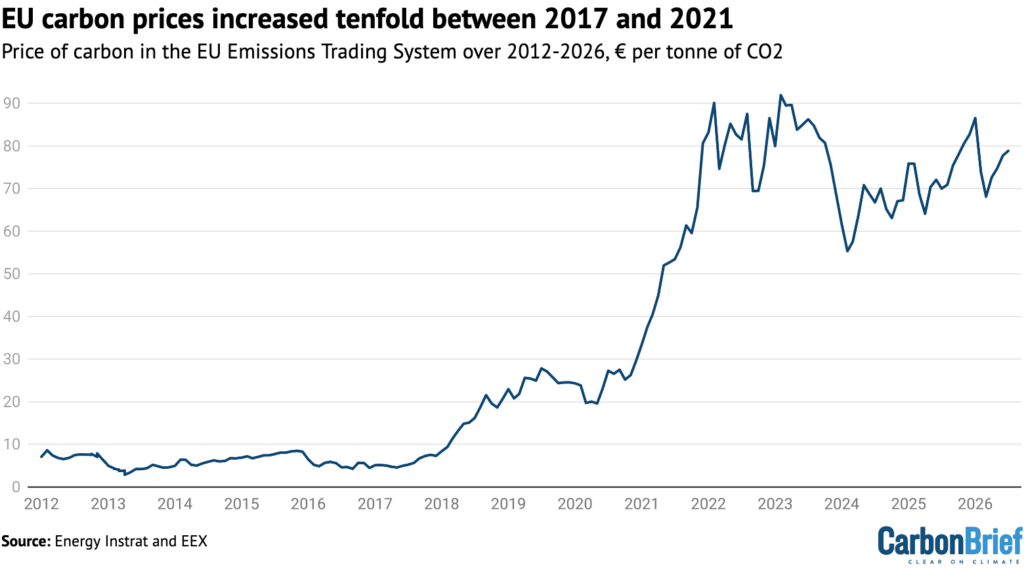
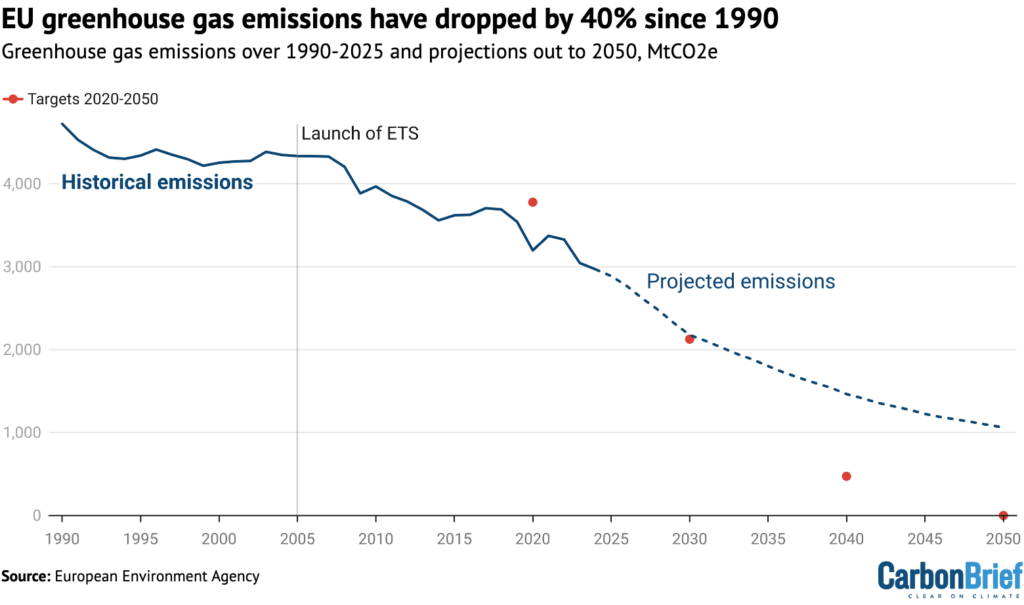
The EU Emissions Trading System, launched in 2005, serves as the cornerstone of the Union’s strategy to combat climate change. Operating on a "cap and trade" principle, the system sets an absolute limit on the total amount of greenhouse gases that can be emitted by installations in the power sector, heavy industry, and aviation. Since its inception, the ETS has been credited with halving emissions within the sectors it covers, which account for approximately 40% of the bloc’s total output. By putting a price on carbon, the system incentivizes companies to invest in cleaner technologies; however, the volatility of carbon prices—which saw a tenfold increase between 2017 and 2021—has created a friction point between climate ambition and economic viability.

As the EU moves toward its "Fit for 55" goals—aiming for a 55% reduction in emissions by 2030—the ETS has come under intense scrutiny. The new proposal is designed to align the market with the subsequent 2040 target: a 90% reduction in emissions compared to 1990 levels. However, the path to that target is now being recalibrated to provide what Commissioner Hoekstra describes as a "savvy" approach that protects the European industrial base from "carbon leakage"—the risk of companies relocating to regions with less stringent environmental regulations.
Key Pillars of the Reform: Slower Declines and Extended Concessions
At the heart of the new proposal is a recalibration of the "linear reduction factor," the rate at which the total number of emission allowances shrinks each year. Under previous agreements, the cap was set to decline by 4.3% annually from 2024 to 2027, rising to 4.4% from 2028. The new plan suggests a significant deceleration: a 3.7% annual drop between 2031 and 2035, falling further to just 1.7% per year from 2036 to 2040. This adjustment effectively pushes the date for a "zero-cap" system—where no new allowances are issued—beyond the original 2039 estimate and well into the 2040s.
In a major concession to heavy industry, the Commission has proposed extending the phase-out of free allowances. Originally slated to be completely eliminated by 2034, these "pollution permits" will now be available until 2038, albeit with strict new conditionalities. From 2031, 80% of these free allocations will be tied to the submission of rigorous decarbonization investment plans. The final 20% will only be granted to firms that successfully demonstrate they have met their stated reduction milestones. This "carrot and stick" approach aims to ensure that the relief provided to industry directly fuels the transition to green energy.
Furthermore, the Commission plans to reintroduce 15% of the free allocations that were previously scheduled for removal under the Carbon Border Adjustment Mechanism (CBAM). This move is intended to cushion the blow for exporters who fear that the transition to a border tax will not fully compensate for the loss of internal subsidies during the early stages of the mechanism’s implementation.
Expanding the Scope: Aviation, Maritime, and Waste
The reform package does not only focus on slowing existing mechanisms but also on broadening the ETS’s reach to cover previously exempted or under-regulated sectors.
- Aviation: Starting in 2029, the ETS will expand to include all flights departing from the European Economic Area (EEA) that land within 5,000 kilometers of central Europe. This includes major regional hubs but strategically avoids conflict with the United States and China by exempting ultra-long-haul flights. Additionally, for the first time, private jets and "business aviation" will be brought into the system, addressing long-standing criticisms regarding the disproportionate carbon footprint of the wealthy.
- Maritime: The proposal scales up the inclusion of the shipping industry by lowering the tonnage threshold. Small vessels between 400 and 5,000 tonnes will now be required to participate, ensuring that a larger portion of the maritime sector’s 4% contribution to EU emissions is accounted for.
- Waste Incineration: In a gradual phase-in starting in 2031, waste-to-energy plants will be required to purchase allowances. The obligation will start at 25% of their emissions, reaching 100% by 2034, closing a loophole that has long concerned environmentalists.
Financial Strategy and the 46% Electricity Target
To support this massive transition, the Commission has proposed a more disciplined use of auction revenues. Currently, EU member states generate tens of billions of euros annually from selling carbon permits—reaching €43 billion in 2025 alone. However, the Commission noted that transparency regarding how this money is spent has been "insufficient," with only 5% directly supporting industrial decarbonization.
The new proposal mandates that 50% of all ETS auction revenues be funneled directly into green energy projects, waste management improvements, and industrial electrification. This is expected to unlock over €100 billion in investment before the end of the decade. Parallel to this, the Commission announced an ambitious target for electricity to comprise 46% of total energy consumption by 2040, a doubling of the current 23% rate. This shift is projected to save the EU approximately €260 billion annually in fossil fuel import costs, enhancing energy security in the wake of the volatility caused by the Russian invasion of Ukraine.
Integration of Carbon Removals and International Credits
A forward-looking element of the proposal involves the formal integration of carbon removal technologies into the market. Recognizing that certain "hard-to-abate" sectors like heavy chemicals and cement may never reach absolute zero through process changes alone, the Commission will allow the use of certified permanent removals—such as Direct Air Capture (DAC) with geological storage.
From 2036, the proposal also opens the door for companies to use "high-integrity" international carbon credits to meet up to 5% of their reduction targets. While proponents like Professor Ottmar Edenhofer of the Potsdam Institute see this as a vital investment signal for the removal industry, critics like Climate Action Network (CAN) Europe warn it could create "loopholes for polluters" and undermine the internal carbon price.

Political Reactions and the Road Ahead
The proposal has exposed deep ideological rifts within the European Union. A coalition of ten nations, including Italy, Hungary, and Poland, had previously lobbied for a significant rollback of carbon rules, citing "existential risks" to their industrial bases. For these nations, the Commission’s proposal may not go far enough in providing relief. Conversely, "ambition-leaning" countries like Spain and the Netherlands have urged the Commission to resist "gutting" the system, arguing that regulatory stability is the most effective stimulus for green investment.
The most vocal opposition has come from environmental NGOs and the European Green Party. The World Wildlife Fund (WWF) estimates that the proposed slowdown could result in an additional 2 billion tonnes of CO2 emissions, while Green MEP Michael Bloss described the plan as "climate vandalism." They argue that by easing the pressure on polluters now, the EU is merely shifting a much heavier and more expensive burden onto future generations.
On the industrial side, the reaction has been cautiously mixed. BusinessEurope expressed concerns over the "bureaucratic complexity" of the new conditionalities for free allowances, while the International Air Transport Association (IATA) slammed the expansion of aviation permits as a threat to European competitiveness.
Timeline and Implications
The proposal now enters the "trilogue" phase, a complex negotiation process between the European Commission, the European Parliament, and the Council of the EU (representing member states). Ireland, which currently holds the rotating presidency of the Council, has expressed a desire to reach a definitive agreement by the end of the year, though seasoned observers suggest that negotiations could stretch into early 2027 given the technical and political sensitivities involved.
If adopted, this reform will represent a fundamental shift in the EU’s climate philosophy: moving away from a "speed-at-all-costs" approach toward a managed transition that prioritizes industrial survival and social stability. The success of this strategy hinges on whether the €100 billion in mandated investment can indeed trigger the technological breakthroughs necessary to meet the 2040 targets, or if the "more gradual path" will simply provide a reprieve for fossil-fuel-dependent industries at the expense of the planet’s climate stability. As the world watches, the European Union is attempting to prove that it can remain a global leader in climate action while simultaneously safeguarding its status as an industrial powerhouse.
Related posts: