Range Rover Unveils Electrified GT: A Paradigm Shift Towards a Car-Like Grand Tourer on the New EMA Architecture

Range Rover has officially announced the forthcoming introduction of its groundbreaking GT model, a vehicle poised to redefine the luxury grand tourer segment by seamlessly blending the brand’s iconic capability with a sophisticated, car-like driving experience, all built upon the innovative electrified EMA architecture. This strategic move represents a significant evolution for the brand, traditionally synonymous with opulent and highly capable sport utility vehicles, as it ventures into a more dynamic and electrified future.
Martin Limpert, managing director of Range Rover, underscored the intensive development efforts behind this new offering. "We have spent the last few years working obsessively on the fundamentals of the GT formula, reinterpreted in a sophisticated, uniquely Range Rover way," Limpert stated. He elaborated on the outcome, describing it as "the most car-like, yet unmistakably capable, Range Rover ever created, now possible on our electrified EMA architecture—complementing our existing powertrain portfolio to deliver a complete set of options for every customer need." Limpert emphasized that the GT’s blend of "effortless EV performance, first-class long-haul refinement and all-terrain capability is pure Range Rover; while its calming interior previews our vision of a modern grand tourer."
Background and Strategic Context: JLR’s Reimagine Strategy
The Range Rover GT’s development and impending launch are intrinsically linked to Jaguar Land Rover’s (JLR) overarching "Reimagine" strategy, unveiled in February 2021 by then-CEO Thierry Bolloré. This ambitious strategy outlined a profound transformation for the British luxury automotive group, centering on sustainability, electrification, and a refocused brand identity. Key tenets of Reimagine include Jaguar becoming an all-electric luxury brand by 2025, and Land Rover introducing six pure electric models by 2026. The ultimate goal is for JLR to achieve net-zero carbon emissions across its supply chain, products, and operations by 2039.
The introduction of the Range Rover GT, an electric grand tourer, serves as a tangible manifestation of this strategy. It signals Range Rover’s intent to diversify its product portfolio beyond traditional SUVs, tapping into the growing market for luxury electric vehicles that prioritize dynamic performance and long-distance comfort, while retaining the brand’s unique attributes. This move positions Range Rover not merely as an SUV manufacturer but as a broader luxury mobility provider, capable of delivering electrified experiences across various vehicle segments. The GT is expected to attract a new demographic of discerning buyers who seek the environmental benefits of electric propulsion without compromising on luxury, performance, or the distinctive Range Rover DNA of refinement and capability.
The Genesis of the Grand Tourer Concept for Range Rover
The concept of a grand tourer (GT) has historically been associated with high-performance, long-distance touring cars, often with two doors and a sleek, aerodynamic profile. For Range Rover, a brand built on the pillars of luxury, capability, and command-driving position within the SUV segment, venturing into a "car-like" GT represents a significant philosophical shift. However, it also signifies an astute adaptation to evolving market demands and technological advancements.
From its utilitarian roots in 1970 to its current status as a global luxury icon, Range Rover has consistently redefined its segment. The brand has demonstrated a remarkable ability to blend rugged off-road prowess with unparalleled on-road comfort and sophisticated design. The GT, while departing from the traditional SUV form factor, aims to carry forward these core values. The "modern grand tourer" in the electric age is characterized by silent, powerful acceleration, extended range, and supreme comfort – attributes that align perfectly with an electric powertrain. Range Rover’s interpretation, however, is unique in its commitment to retaining genuine all-terrain capability, a hallmark that sets it apart from purely road-focused electric GTs from competitors. This blend of attributes aims to offer a holistic luxury experience that is both exhilarating and reassuring, whether traversing urban landscapes or challenging natural terrains.
Engineering the Future: The Electrified Modular Architecture (EMA)
Central to the Range Rover GT’s innovative character is its foundation on the new Electrified Modular Architecture (EMA). This platform is JLR’s third distinct electrifiable architecture, signifying a dedicated approach to future electric vehicles. The other two are the MLA (Modular Longitudinal Architecture), which underpins current Range Rover and Range Rover Sport models, and the JEA (Jaguar Electrified Architecture), currently under development for Jaguar’s forthcoming Type 01 and other future electric Jaguars.
The EMA platform is engineered from the ground up to optimize electric vehicle performance and packaging. Unlike multi-energy platforms that must accommodate both internal combustion engines and electric powertrains, a dedicated EV architecture like EMA allows for fundamental design advantages. These include a lower center of gravity due to the strategic placement of the battery pack within the floor, leading to improved handling dynamics and a more "car-like" feel. The flat floor design also maximizes interior space and flexibility, contributing to the "first-class long-haul refinement" Limpert mentioned.
EMA is expected to support advanced battery technologies, enabling substantial driving ranges that are critical for a grand tourer. While specific figures are yet to be revealed, industry benchmarks suggest ranges exceeding 300-400 miles (480-640 km) on a single charge are increasingly expected in this luxury segment. Furthermore, the architecture will likely incorporate 800-volt charging capabilities, allowing for ultra-rapid DC charging that can replenish a significant portion of the battery in under 30 minutes, drastically reducing charging times on long journeys. The integrated nature of EMA also facilitates the seamless integration of advanced driver assistance systems (ADAS), over-the-air (OTA) software updates, and sophisticated connectivity features, ensuring the GT remains at the forefront of automotive technology throughout its lifecycle.
Design Philosophy: Blending Heritage with Ultraminimalism
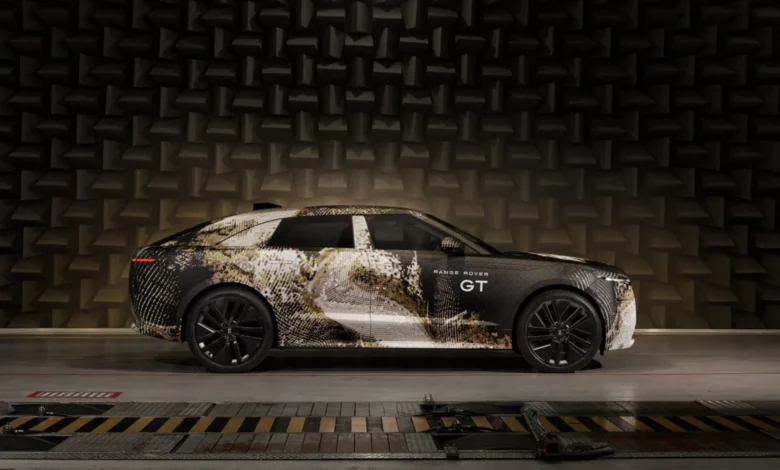
While the exterior of the Range Rover GT has so far only been seen under camouflage, giving tantalizing hints of a sleeker, lower profile than its SUV siblings, the interior design has been partially revealed, showcasing a clear departure from traditional Range Rover cabins. The approach is described as "ultraminimalist," at least at first glance, signifying a reduction in visual clutter and an emphasis on clean lines and sophisticated materials.
Despite this minimalist aesthetic, Range Rover has made a deliberate choice to ensure functionality and safety are paramount. The design team has meticulously satisfied safety regulators in Europe and other regions, including Australia, which increasingly require physical controls for certain critical functions. This trend represents a notable shift back from the industry’s previous inclination towards entirely touch-based interfaces, acknowledging the importance of tactile feedback for reducing driver distraction and enhancing safety. Range Rover’s adherence to these guidelines positions the GT as a thoughtful and user-centric design, providing an intuitive experience that balances digital innovation with ergonomic practicality.
A particularly noteworthy decision is the eschewal of a third screen for the front passenger, a feature that has gained traction in some luxury EV cabins. Instead, the GT focuses on two primary, high-definition OLED screens: a main instrument display for the driver and a central infotainment touchscreen. OLED technology offers superior contrast, deeper blacks, and vibrant colors, enhancing the visual experience and clarity of information. Furthermore, Range Rover has made the head-up display (HUD) standard for the GT. This feature projects key driving information directly onto the windshield within the driver’s line of sight, allowing drivers to monitor speed, navigation, and other critical data without diverting their gaze from the road, further contributing to safety and driver focus.
The "calming interior" philosophy extends beyond screen placement and physical controls. It implies a holistic approach to the cabin environment, encompassing meticulously selected materials, sophisticated ambient lighting, exceptional sound insulation to capitalize on the EV’s silent operation, and ergonomic seating designed for first-class long-haul comfort. This interior is not just a space but a sanctuary, designed to reduce stress and enhance well-being during journeys.
Performance and Capability: The Range Rover Equation
The Range Rover GT promises a unique combination of "effortless EV performance, first-class long-haul refinement and all-terrain capability." These three pillars represent the core of its appeal and differentiate it within the competitive luxury EV market.
Effortless EV Performance: Electric powertrains are inherently suited to delivering instant torque and smooth, linear acceleration. The GT will undoubtedly leverage this, offering exhilarating performance that is both potent and refined. While specific power outputs are yet to be confirmed, one can anticipate figures competitive with other high-performance luxury EVs, potentially allowing for rapid 0-60 mph (0-100 km/h) acceleration times. The absence of gear changes and engine noise further enhances the sense of effortless motion, contributing to a serene yet dynamic driving experience.
First-Class Long-Haul Refinement: This aspect is crucial for a grand tourer. The EMA platform’s dedicated EV design contributes significantly here, minimizing noise, vibration, and harshness (NVH) typically associated with internal combustion engines. Advanced adaptive air suspension systems, a hallmark of Range Rover, will undoubtedly be employed to provide an exceptionally smooth ride, capable of absorbing road imperfections with remarkable composure. Coupled with the meticulously crafted interior, premium materials, and sophisticated climate control, the GT is engineered to make long journeys feel relaxing and luxurious.
All-Terrain Capability: This is arguably the most distinctive feature of the Range Rover GT in the grand tourer segment. While a lower-slung, car-like vehicle might seem at odds with off-road prowess, Range Rover’s heritage dictates that capability must remain. This will likely be achieved through a combination of intelligent electronic terrain response systems, which optimize traction and stability across various surfaces (snow, mud, sand, rocks), and potentially an advanced version of the brand’s adjustable air suspension, allowing for increased ground clearance when needed. Robust underbody protection and sophisticated torque vectoring systems will further enhance its ability to navigate challenging conditions, setting it apart from its purely road-biased competitors. This unique blend ensures that the GT is not just a luxury EV, but a true Range Rover, capable of venturing beyond the tarmac.
Market Positioning and Competitive Landscape
The Range Rover GT enters a nascent but rapidly expanding luxury electric grand tourer market. Its direct and indirect competitors include established players like the Porsche Taycan, Mercedes-Benz EQS, Audi e-tron GT, and Lucid Air, as well as forthcoming models from other luxury marques such as Bentley and Aston Martin.
What sets the Range Rover GT apart is its unique combination of luxury, dynamic EV performance, and genuine all-terrain capability. While other luxury EVs excel in performance and refinement, few, if any, offer the promise of Range Rover’s traditional off-road prowess in a car-like form factor. This distinct selling proposition positions the GT to appeal to a demographic that values sustainability and cutting-edge technology, but also demands versatility and the confidence to tackle diverse environments. It targets discerning luxury buyers who may currently own high-end sedans or performance EVs but are looking for a vehicle that offers a broader range of utility without compromising on the tenets of luxury and performance.
Timeline and Future Outlook
More comprehensive details about the Range Rover GT, including its final exterior design, specific performance metrics, and pricing, are expected to be revealed later this year. This full unveiling will undoubtedly provide a clearer picture of its market positioning and its anticipated impact on the luxury automotive landscape.
The GT’s introduction also has significant implications for JLR’s broader product strategy. The shared platform strategy, with EMA underpinning the Range Rover GT and JEA supporting Jaguar’s Type 01, highlights a synergistic approach within the group. While both are four-door grand tourers, it is anticipated that the Range Rover GT will lean into its brand’s core values of sophisticated luxury and capability, while the Jaguar Type 01 will likely emphasize more aggressive performance and a distinct design language reflective of Jaguar’s sporting heritage. This allows JLR to address different segments of the luxury EV market effectively.
The Range Rover GT represents not just a new model, but a bold statement about the future direction of the Range Rover brand and JLR as a whole. It embodies the "Reimagine" strategy’s commitment to electrification, sustainability, and innovative luxury, setting a new benchmark for what an electric grand tourer can be. Its success will undoubtedly pave the way for further diversification and electrification within the Range Rover portfolio, solidifying its position as a leader in the evolving world of luxury mobility.