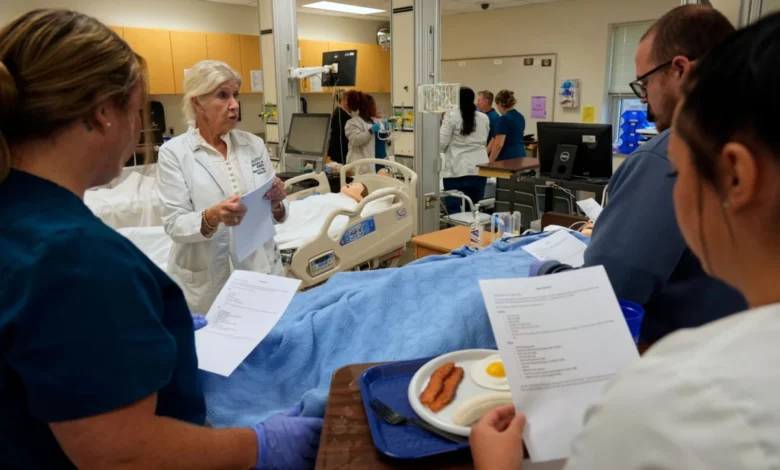
For thousands of graduate students across the United States, the path to advanced degrees has been paved with a new, destabilizing layer of uncertainty. As federal legislative changes collide with legal challenges, students like 21-year-old Mitzie Westgate, an exercise science major at the College of Charleston, find themselves in a precarious position. Westgate, who aspires to earn a doctorate in occupational therapy to establish a nonprofit for children with disabilities, is currently unable to finalize her graduate school applications. The ambiguity surrounding federal loan availability has transformed her academic planning into a guessing game, forcing her to consider lower-tier institutions or potentially abandon her preferred programs entirely due to the threat of insurmountable tuition costs.
The crisis stems from a sweeping reclassification by Congress last year, which removed numerous graduate-level programs from the Department of Education’s list of "professional" degrees. This legislative maneuver effectively imposed stringent caps on the federal loans available to graduate students. While previous iterations of the Grad PLUS program allowed students to borrow up to the total cost of attendance, the new regulations—which officially took effect on July 1—sought to slash annual federal borrowing limits to $20,500, with a lifetime cap of $100,000 for most programs. Only 11 select professional programs retained higher borrowing thresholds of $50,000 annually and $200,000 in total.
A Timeline of Legislative and Legal Turmoil
The current state of affairs is the result of a rapid and contentious legislative cycle followed by immediate judicial pushback.
- Mid-2025: Congress passes legislation targeting the graduate loan structure, aiming to curb federal lending as a mechanism to force tuition restraint among universities.
- July 1, 2026: The new lending limits officially take effect, sending shockwaves through financial aid offices nationwide.
- Late 2026: A coalition of nursing associations, healthcare unions, and educational advocacy groups files a federal lawsuit challenging the legality of the reclassification, arguing that the sudden change unfairly penalizes essential service sectors.
- December 2026: A federal judge grants a preliminary injunction, suspending the enforcement of the stricter limits until at least December of the following year.
This stay of execution has not brought relief, but rather increased confusion. Because the law remains in a state of suspended animation, students applying for the 2027-28 academic year are operating in a "policy vacuum." They cannot be certain if their chosen programs will eventually fall under the restricted caps or retain the higher, more flexible limits.
The Financial Chasm: Debt and ROI
The implications of this policy shift are particularly acute in the health and human services sectors. Fields such as occupational therapy, physical therapy, social work, and psychology are disproportionately affected by the reclassification. The American Enterprise Institute (AEI) has highlighted a critical disconnect in these fields: the cost of a graduate degree often far exceeds the salary growth associated with those professions.
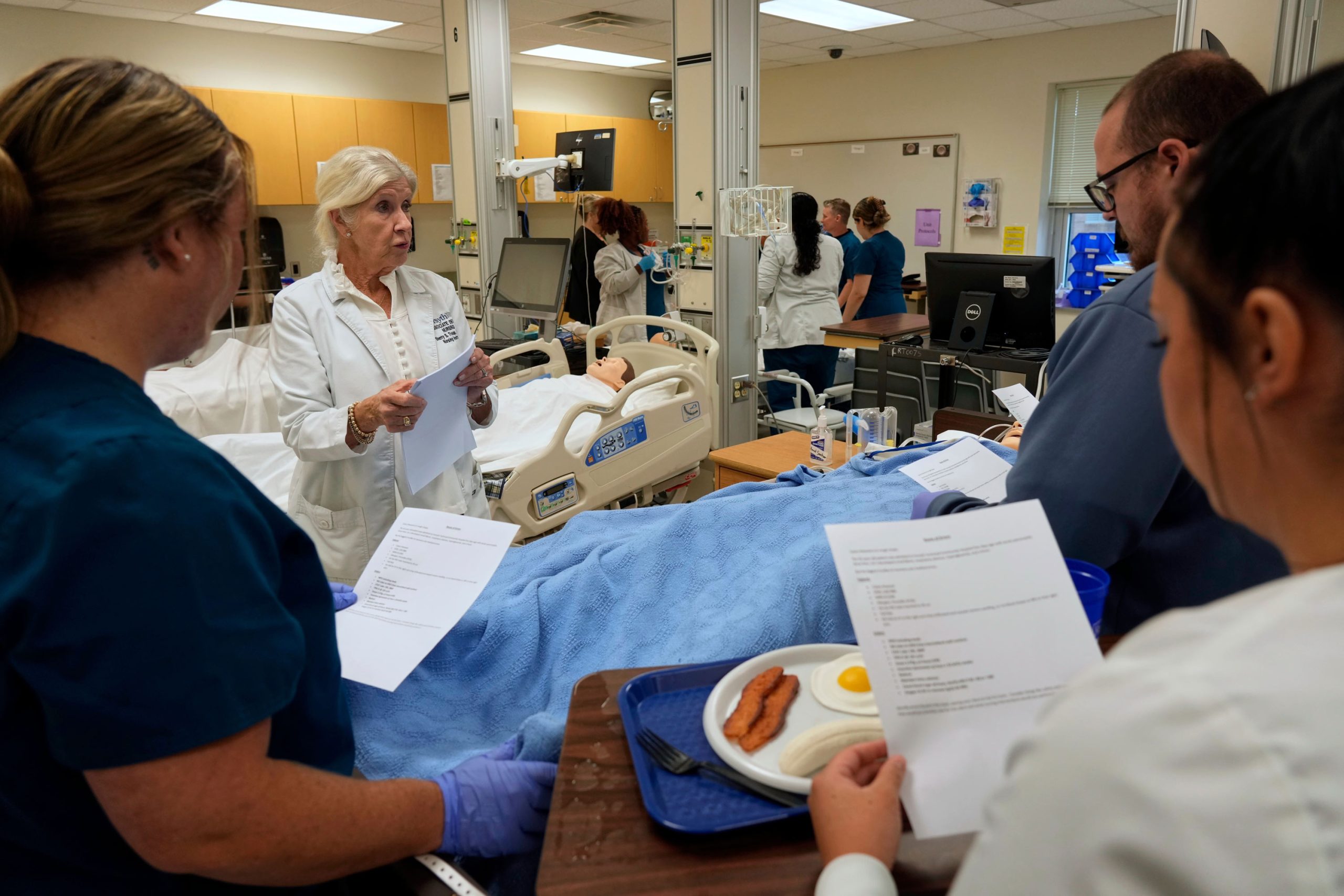
Unlike high-earning fields like law or medicine, where graduates often see a clear return on investment, graduates in social work or counseling frequently face lower earning ceilings. According to recent economic analysis, private lenders are becoming increasingly risk-averse. They are scrutinizing student applicants more aggressively, often denying loans to those in fields with lower "earning potential" or those with imperfect credit scores.
"From the marketing that I’ve seen from lenders, they’re targeting grad students who are likely to be lucrative," explains Mark Kantrowitz, a noted expert in student financial aid. This trend risks creating a two-tiered system where only the wealthiest students, or those pursuing the most profitable degrees, can secure the necessary financing to complete their education.
Perspectives from the Field
The potential long-term consequences extend beyond individual students to the workforce at large. Kayce Cordray, a 44-year-old doctoral student in nursing practice at Oral Roberts University, warns that the policy is a recipe for a systemic labor crisis.
"We are facing a real nursing shortage and a real rural health care shortage," Cordray said. "We’re not even going to be able to get registered nurses if we don’t have faculty. It’s a domino effect." For students like Cordray, who are often balancing the demands of parenthood and professional life, the uncertainty is a deterrent. Many are questioning whether the personal and financial risk of pursuing an advanced degree is sustainable, especially when private lenders—should they be willing to lend at all—often demand repayment schedules that begin while the student is still enrolled.
Eileen Connor, director of the Project on Predatory Student Lending, warns that the vacuum left by federal retreat may invite predatory practices. "There’s a lot of different ways these loans can have traps," Connor noted, pointing to hidden fees, mandatory arbitration clauses, and interest rates that can climb as high as 16 percent for high-risk borrowers.
Institutional Responses and Market Pressures
The reaction from higher education institutions has been fragmented. While some wealthy universities have established internal low-interest loan funds to bridge the gap created by federal limits, many others remain silent or have yet to announce policy adjustments.

There is a theoretical argument, supported by some conservative think tanks, that these limits will force universities to lower tuition to remain competitive. The logic follows that if the federal government will no longer subsidize high tuition through unlimited loans, universities will be forced to compete on price to attract students. Some data suggests this is already occurring; for instance, at the University of Pennsylvania, a master’s degree in educational leadership is significantly more expensive than comparable programs at nearby institutions like Temple and Drexel. Analysts suggest that as the lending landscape tightens, price-sensitive students will naturally migrate toward these more affordable alternatives, pressuring expensive private programs to adjust their tuition models.
However, advocates for students remain skeptical. Sarah Sattelmeyer of the nonprofit New America argues that there is currently no evidence of a systemic, across-the-board reduction in tuition. "We’ll see what happens," she remarked, noting that the "policy whiplash" makes it impossible for institutional leaders to make long-term financial commitments to their students.
The Broader Implications
The uncertainty surrounding graduate lending is not merely a technical issue of federal accounting; it is a fundamental challenge to social mobility. Graduate degrees have historically been the primary vehicle for career advancement in the public service, healthcare, and education sectors. By restricting access to these degrees, the policy effectively creates a barrier to entry that may exacerbate existing inequalities in the American workforce.
As students like Mitzie Westgate continue to "play it by ear," the silence from major university systems and the ongoing legal battles suggest that the current period of instability is unlikely to end in the immediate future. For the thousands of students currently drafting their applications for the next academic year, the decision is no longer just about where they want to study, but whether the financial path to that study remains viable at all.
Until the judicial process concludes or Congress provides a clear path forward, the higher education landscape will remain defined by a deep, systemic caution. Whether this results in a necessary correction of tuition costs or a hollowed-out graduate education sector remains the defining question for the next generation of American professionals.
Related posts: