Federal Court Clears Path for Nation’s First Jewish Public Charter School in Oklahoma Following Landmark Legal Battles

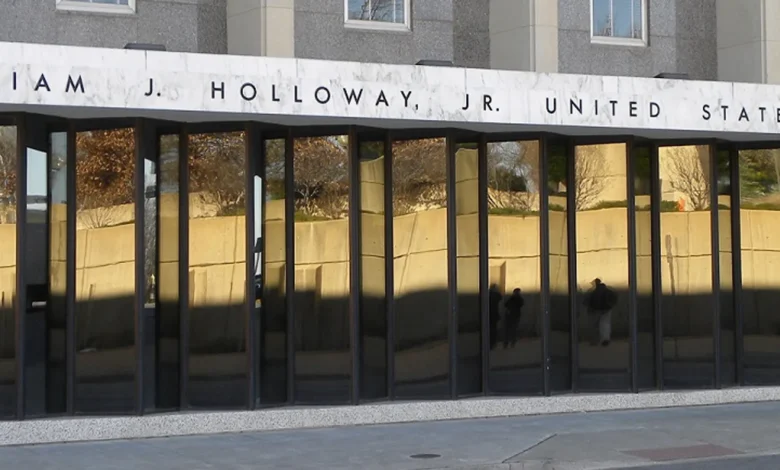
A federal court order issued in late September has cleared the way for the establishment of the nation’s first Jewish public charter school in Oklahoma, marking a significant and controversial milestone in the ongoing expansion of the American school choice movement. The decision, handed down by the U.S. District Court for the Western District of Oklahoma, temporarily pauses the enforcement of a key provision within the state’s Charter Schools Act that has long required all charter institutions to remain strictly nonsectarian.
This judicial development arrives more than a year after a deadlocked U.S. Supreme Court effectively upheld a state-level block on what would have been the country’s very first religious public school—a Catholic virtual institution. Legal scholars, religious freedom advocates, and civil rights organizations are closely watching the proceedings, recognizing that the Oklahoma litigation could establish a nationwide precedent for the intersection of public education, state funding, and the First Amendment’s Free Exercise Clause.
Chronology and Case Background: From St. Isidore to Ben Gamla
The legal journey leading to the late-September ruling is rooted in a series of ambitious applications submitted by religious organizations seeking to operate publicly funded, tuition-free charter schools in Oklahoma.
In 2023, the Oklahoma Statewide Charter School Board narrowly approved an application for the St. Isidore of Seville Catholic Virtual School. The approval was celebrated by school choice advocates who viewed it as a long-awaited test case to break down the traditional wall separating religion from publicly funded schooling. St. Isidore was originally scheduled to open its virtual doors for the 2024–25 academic year, designed to provide both standard secular curricula and comprehensive Catholic religious instruction.
However, the school’s trajectory was halted abruptly. In 2024, the Oklahoma Supreme Court ruled that the creation of St. Isidore violated both the Oklahoma and federal constitutions, as well as the explicit mandates of the Oklahoma Charter Schools Act, which forbids public charter schools from maintaining a religious character or affiliation. Proponents of the Catholic school appealed the state court’s decision to the U.S. Supreme Court. In a high-profile stalemate, the nation’s highest court deadlocked, leaving the Oklahoma Supreme Court’s block in place and keeping religious charter schools out of reach.
Undeterred by the St. Isidore setback, The National Ben Gamla Jewish Charter School Foundation pursued a parallel path. Ben Gamla submitted an application to the Oklahoma Statewide Charter School Board to establish a Jewish virtual charter school aimed at serving families for the 2027–28 academic year. According to court filings, the proposed institution intends to deliver a rigorous academic program tightly intertwined with instruction in Jewish religion, culture, values, rituals, texts, holidays, and practices, noting that transmitting these beliefs is a core element of its mission.
Faced with the binding precedent of the 2024 Oklahoma Supreme Court ruling, the state’s charter school board unanimously voted in February to reject Ben Gamla’s application. Board members expressed sympathy for the applicants but maintained they were legally bound by state law and the prior state supreme court verdict.
The Federal Court Intervention and Legal Arguments
Following the board’s rejection, the Ben Gamla Foundation filed a federal lawsuit challenging the constitutionality of the Oklahoma Charter Schools Act’s nonsectarian requirement.
In the September 24 order, the U.S. District Court for the Western District of Oklahoma sided with the plaintiffs. The court determined that the statutory provision requiring charter schools to be nonsectarian “expressly discriminates against otherwise eligible recipients solely because of their religious character.” The judge concluded that such discrimination directly violates the First Amendment’s Free Exercise Clause, granting a preliminary injunction that pauses the enforcement of the nonsectarian mandate against the Jewish foundation.
Attorneys representing the plaintiffs, including the Becket Fund for Religious Liberty, praised the ruling as a victory for equal access and religious liberty. Representatives noted that under current federal jurisprudence, religious organizations cannot be categorically excluded from participating in public benefit programs simply because of their religious identity.
Broader Legal Context: The Evolution of Supreme Court Precedent
The federal district court’s decision does not exist in a vacuum; it is the latest iteration of a steady legal evolution driven by the U.S. Supreme Court over the past decade. Legal analysts point to two foundational rulings that systematically dismantled traditional restrictions on public funding for religious entities:
- Espinoza v. Montana Department of Revenue (2020): The Supreme Court ruled that a state program providing tuition assistance to private schools could not exclude religious schools simply because of their religious status, establishing that penalizing the religious character of an institution violates the Free Exercise Clause.
- Carson v. Makin (2022): The high court further solidified this principle by ruling that Maine could not exclude religious private schools from a state tuition assistance program for secondary education in rural districts where there are no local public schools.
These decisions signaled to school choice advocates that state-level Blaine Amendments—historical constitutional provisions in dozens of states prohibiting the use of public funds for sectarian education—were increasingly vulnerable to federal constitutional challenges. The push for religious public charter schools represents the logical next frontier in this legal campaign, shifting the focus from private school voucher programs to the creation of publicly funded, independently operated religious schools within the public education system.
Official Responses and Divergent Perspectives
The federal court’s intervention has generated sharp polarization among advocacy groups, legal scholars, and state officials.
School choice proponents and religious freedom organizations celebrated the ruling as a monumental step forward for pluralism and parental rights. They argue that public charter schools, which are public-funded alternatives often managed by non-profit or private boards, should be fully accessible to religious groups seeking to serve communities with specialized educational and cultural needs.
Conversely, civil rights organizations and advocates for the strict separation of church and state condemned the decision, warning of catastrophic consequences for public education and democratic norms. A coalition of prominent organizations—including the American Civil Liberties Union (ACLU) and Americans United for Separation of Church and State—has actively intervened in the litigation.
In a joint statement released shortly after the ruling, the civil rights groups asserted: “The court’s conclusion that a public charter school can be religious opens the door to a dangerous sea change for our democracy.”
Alex Luchenitser, associate vice president and associate legal director at Americans United for Separation of Church and State, indicated that his organization is actively consulting with clients and co-counsel to determine immediate legal responses, signaling that further appeals and courtroom battles are all but guaranteed.
Interestingly, members of the Oklahoma Statewide Charter School Board have previously expressed a degree of philosophical alignment with the push for religious charters, even as they felt constrained by existing state law. In February, board chairman Brian Shellem explained the difficult position the board faced when reviewing Ben Gamla’s application.
“I believe the Board was placed in a difficult position,” Shellem said at the time. “While we value innovation, parental choice, and high-quality educational opportunities for families, we are unfortunately bound by the Oklahoma Supreme Court ruling from 2024, even if we disagree with it.”
Implications and Next Steps for Oklahoma Education
The immediate effect of the federal court order is that Ben Gamla’s application process may resume without the barrier of the nonsectarian mandate, bringing the state closer to hosting the nation’s first operational religious public charter school. However, the legal architecture governing the case remains highly volatile.
According to legal experts tracking the litigation, the State of Oklahoma and the intervening civil rights organizations have a 30-day window to file an appeal with the U.S. Court of Appeals for the Tenth Circuit. Given the high stakes involved—touching on foundational questions of constitutional law, the definition of public education, and the allocation of taxpayer funds—an eventual appeal to the U.S. Supreme Court remains a distinct possibility.
As this legal tug-of-war continues, Oklahoma finds itself at the epicenter of a national debate that could permanently reshape the landscape of American public education. If the federal court’s reasoning ultimately prevails through the appellate process, it could trigger a wave of similar initiatives across the country, transforming charter school systems into a battleground where religious and secular educational philosophies compete directly for public recognition and state funding.