Isack Hadjar secures podium finish at Azerbaijan Grand Prix following impressive return from injury

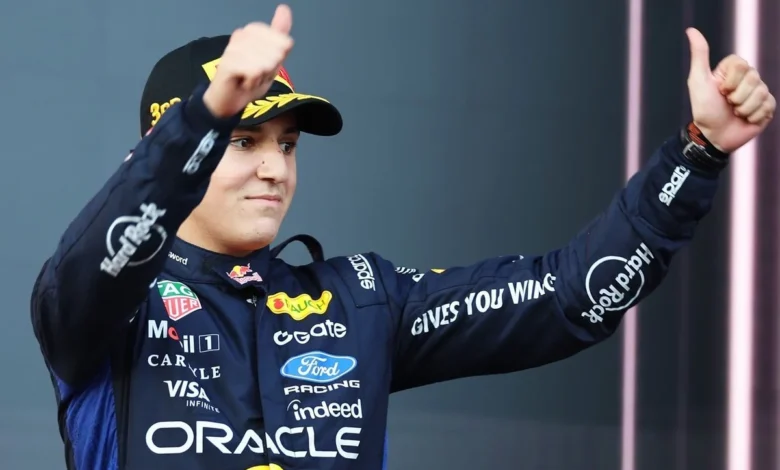
The Azerbaijan Grand Prix served as the stage for a remarkable display of resilience and strategic execution by Red Bull Racing, as Isack Hadjar returned from a debilitating wrist injury to clinch a hard-fought third-place finish. Navigating the treacherous, narrow confines of the Baku City Circuit, Hadjar’s performance was not merely a feat of physical recovery but a pivotal moment in his tenure with the Milton Keynes outfit. Having recently secured a contract extension through 2027, the young driver’s podium finish—bolstered by a late-race tactical error from McLaren’s Oscar Piastri—underscores his burgeoning maturity and his ability to integrate seamlessly into a team currently fighting to re-establish its dominance in the Formula 1 hierarchy.
A Chronology of the Baku Breakthrough
The weekend in Baku was defined by uncertainty surrounding Hadjar’s physical readiness. Having been sidelined due to a wrist injury that necessitated a temporary substitution by Liam Lawson, the pressure on Hadjar to prove his fitness was immense. From the outset of Friday’s free practice sessions, however, it became evident that the driver had undergone rigorous rehabilitation. Despite the technical challenges posed by the Baku circuit’s mix of high-speed straights and tight, technical sectors, Hadjar maintained a consistent pace that kept him in contention throughout the qualifying sessions.
As the race commenced, the narrative centered on tire management and the punishing nature of the Baku street circuit. While Max Verstappen led the team’s charge from the front, Hadjar executed a calculated race strategy. By the mid-point of the Grand Prix, he had firmly established himself within the top five, consistently lapping at a pace that mirrored the lead group. The turning point occurred in the closing laps when Oscar Piastri, under immense pressure, suffered a critical lock-up that compromised his trajectory and allowed the pursuing Red Bull to capitalize. Hadjar remained composed, navigating the incident without error to secure the final step of the podium, effectively locking in a double-podium result for Red Bull.
Tactical Discipline and Team Dynamics
Post-race analysis highlighted not only Hadjar’s raw pace but his adherence to team protocols. F1 TV pundit and former racer Alex Brundle was quick to emphasize that Hadjar’s willingness to hold position behind his teammate, Max Verstappen, was a testament to his value as a team player.
"This way or that way, I think Max would have ended up generously ahead of Hadjar at the end of the race," Brundle observed during the broadcast. "And as it played out, he probably would have passed him pretty quickly when he was on the soft tyre. But Hadjar really had an exceptional comeback today and has earned himself some good team-mate points for playing the game and he demonstrated amazing pace this weekend. If you want to have a comeback from an injury with a new contract in your hands, that’s the one to have."
This discipline serves as a crucial metric for Red Bull management. In a sport where internal friction can derail a season, the ability of a driver to prioritize the collective Constructors’ Championship points over individual ego is highly prized. By executing the team’s strategy, Hadjar has solidified his standing within the organization, proving that his long-term contract is built on a foundation of reliability and cooperation.
Historical Context and Red Bull’s Resilience
Damon Hill, the 1996 Formula 1 World Champion, offered a broader perspective on the team’s performance, noting the institutional strength of Red Bull Racing. "Incredible recovery from Isack Hadjar to bounce back after his injury and being away," Hill remarked. "They were a strong team. You can never discount Red Bull. They are an aggressive attacking racing team who take chances. They’re always fighting for things, and they’re incredible. You have to say they’ve been through so many different iterations of management and goodness knows what, but they’re still there fighting."

This assessment resonates with the broader history of the team. Since its inception as a force in the sport, Red Bull has navigated various technical regulations and management transitions, consistently emerging as a top-tier contender. The current season, while challenging, has demonstrated this persistence. Despite being fourth in the Constructors’ standings, the team remains a significant threat to the front-runners, aided by the contributions of drivers like Liam Lawson, who filled the void during Hadjar’s recovery, and now by the return of a rejuvenated Hadjar.
Data-Driven Performance Metrics
The current standings provide a clear picture of the stakes involved for Red Bull. Max Verstappen currently leads the team’s efforts with 163 points, placing him firmly in the championship mix. Isack Hadjar, despite his absence for several rounds, has accumulated 86 points, a figure that highlights his efficiency in the races he has participated in. The combined total of 263 points for the team reflects the impact of the mid-season lineup changes.
The integration of Liam Lawson during the interim period provided stability, ensuring that the team did not fall further behind in the standings while Hadjar recovered. However, the return of the primary driver has signaled a shift in momentum. Hadjar’s ability to secure a podium immediately upon his return provides the team with a necessary boost in both morale and raw points, which are essential as they look to close the gap on the teams ahead in the final stretch of the season.
Implications for the Future
The implications of Hadjar’s performance in Baku extend well beyond the immediate championship table. For Red Bull, the focus is now on maintaining this upward trajectory. The Baku result serves as a case study for how the team manages driver recovery and integration. With a contract secure for 2027, Hadjar is no longer in a position where he is fighting for his seat on a race-by-race basis; rather, he is now tasked with developing into a consistent podium challenger.
This newfound stability is likely to influence his driving style, allowing for more aggressive maneuvers while maintaining the calculated risk-taking that the team favors. Furthermore, the performance of the Red Bull car in Baku suggests that recent technical updates have been effective. The ability to manage tire degradation while maintaining speed on the long straights of the Azerbaijan track indicates that the engineering team has successfully balanced aerodynamic efficiency with mechanical grip.
A Turning Point for the Season
As the Formula 1 circus moves to the next venue, the narrative will shift toward whether this performance can be replicated on more traditional circuits. Baku is a unique challenge, often described as a hybrid of a street circuit and a high-speed track. However, the confidence gained from a podium finish is a powerful catalyst for any driver.
Hadjar’s return has effectively reset the expectations for the remainder of the season. With both drivers now operating at a high level, the internal competitive dynamic will shift. Verstappen, ever the benchmark, will continue to push the limits, and having a teammate who can consistently finish on the podium will provide him with the strategic options needed to challenge for race wins against the dominant McLarens and Ferraris.
In conclusion, the Azerbaijan Grand Prix will likely be remembered as the moment Isack Hadjar transitioned from a promising talent to a confirmed, reliable asset for Red Bull Racing. Through his physical endurance, tactical adherence, and on-track performance, he has not only justified the team’s investment in his long-term future but has also reinvigorated the team’s pursuit of excellence in the Constructors’ Championship. The road ahead remains demanding, but with the data and momentum gathered in Baku, the team is well-positioned to continue its tradition of aggressive, high-stakes competition.
Related posts: