The reported consideration by Chinese regulators—specifically the Ministry of Industry and Information Technology—to authorize tech giants like Alibaba and ByteDance to procure Nvidia’s RTX Pro 5500 graphics processing units (GPUs) marks a pivotal moment in the ongoing semiconductor trade dispute. While these specific units are categorized as gaming-grade hardware, industry analysts suggest their deployment in server clusters could significantly bolster China’s domestic AI model development, providing a crucial workaround to existing prohibitions on more advanced data-center-specific chips.
A Tenuous Diplomatic Landscape
The recent summit between President Donald Trump and President Xi Jinping underscored the fragility of the current US-China trade truce. Despite high-level meetings, the fundamental friction points regarding export controls remain largely unresolved. The temporary extension of the trade agreement, set for a duration of only two months, highlights the lack of long-term consensus between the two powers.
For months, the market has anticipated a new round of US export restrictions that could effectively sever access to high-end silicon for Chinese firms. In response, Beijing has signaled its willingness to leverage its control over rare earth minerals—essential components in modern electronics—as a retaliatory measure. This geopolitical chess match has created a climate of uncertainty, leaving global supply chains and tech corporations caught in the middle.
Chronology of Escalation and Alignment
The relationship between Nvidia and the current US administration has undergone a dramatic transformation. At the outset of the administration, the executive stance toward Nvidia was one of skepticism. President Trump, famously questioning the company’s role in the national economy, initially favored stricter export controls and even explored the possibility of antitrust measures to break up the firm, viewing market fragmentation as a catalyst for domestic innovation.
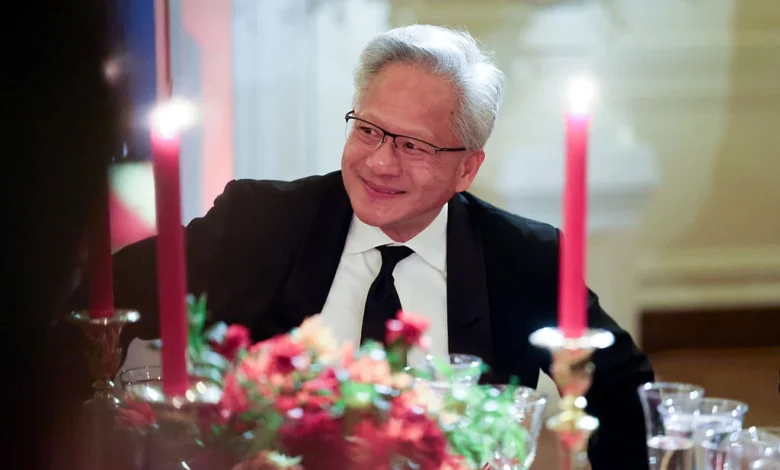
However, a private dinner at Mar-a-Lago between the President and Nvidia CEO Jensen Huang served as a turning point. Following this engagement, the administration’s rhetoric shifted, with Trump subsequently loosening export restrictions on specific models like the H200 chips. This reversal has drawn intense scrutiny from national security experts who argue that the administration is prioritizing the short-term profits of a single corporation over the broader strategic imperatives of the United States.
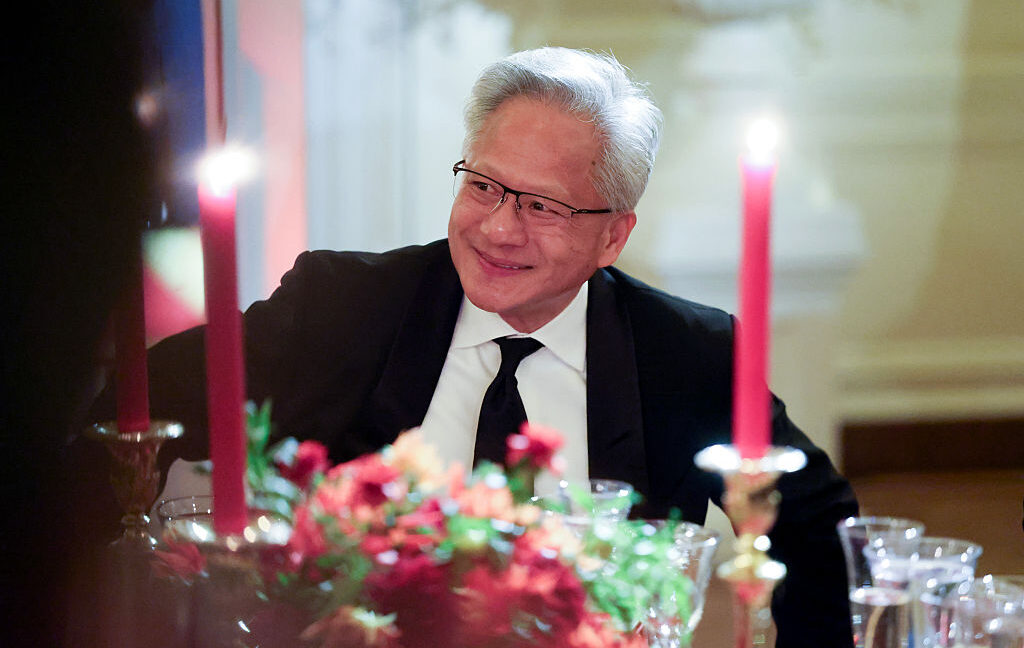
Industry observers note that Huang’s influence has become a defining feature of the administration’s AI policy. As the author of The Thinking Machine, Stephen Witt, has observed, the President’s public assertions—that fears of AI-driven existential risks are overblown and that AI represents an purely economic boon—mirror the talking points long espoused by the Nvidia leadership.
Data-Driven Implications of the Shift
The economic stakes of the potential RTX Pro 5500 procurement are significant. For ByteDance, the prospect of acquiring up to 1 million units would provide a massive influx of compute power. From a financial perspective, this would secure two quarters of steady revenue for Nvidia, which has seen its data center sales in the Chinese market plummet to less than 1 percent of its total revenue following previous sanctions.
However, critics like Andrew Yoon of the AI safety nonprofit CivAI argue that this move reflects a "profit-first" ideology that ignores long-term systemic risks. If the United States continues to permit the flow of even mid-tier gaming hardware into Chinese servers, it could inadvertently provide the infrastructure necessary for Chinese firms to bridge the gap in large language model (LLM) performance.
Furthermore, some policy experts fear a "crowding out" effect. If demand for these chips in China increases, it could put pressure on global supply chains, potentially diverting hardware that might otherwise be allocated to US-based research initiatives. While Nvidia maintains that these chips are "outdated" and incapable of advanced AI training, the reality of "cluster-computing"—where thousands of smaller chips are linked together to perform heavy-duty calculations—suggests that hardware restrictions based on single-chip performance may be increasingly obsolete.
Official Responses and Technical Reality
The official narrative from the White House remains one of confidence. Treasury Secretary Scott Bessent has publicly affirmed that the President is "completely aligned" with Jensen Huang, framing the partnership as a necessary alliance for American competitiveness. In contrast, lawmakers such as Representative Ro Khanna have expressed frustration, suggesting that the administration missed a vital opportunity at the recent summit to establish international working groups for AI safety monitoring.
The technical community remains divided. While some hardware developers echo Huang’s optimism, viewing the current wave of AI development as a purely engineering-based challenge, others, including those at organizations like Anthropic and OpenAI, continue to push for tighter safety guardrails. The lack of tech experts in the recently announced US-China safety alert system has fueled concerns that the current approach is reactive rather than proactive.

The Broader Strategic Outlook
The question of whether China will ultimately grant approval for these imports remains open, though reports suggest that the Chinese government is under mounting pressure to act. As domestic firms roll out AI products at an unprecedented rate, the hunger for compute resources has become a primary bottleneck.
The potential for "distillation"—a process where Chinese firms might reverse-engineer or "copy" the architecture of US frontier models—remains a major point of contention. While Jensen Huang has downplayed these risks, characterizing them as standard competition, the FBI has expressed alarm over the aggressive practices of several Chinese AI entities.
As the situation unfolds, the alignment between Nvidia’s corporate interests and the US government’s policy trajectory will likely face increased scrutiny. With the President positioning himself as the sole arbiter of AI safety, the coming months will test whether a strategy of deregulation and market expansion can coexist with the national security requirements of a modern superpower. For now, the global AI race continues at a pace that seems to outstrip the ability of regulators to fully comprehend the implications of the technologies they are helping to proliferate.
Analysis: A Shift in Governance
The emerging reliance on private-sector advisory in the realm of AI regulation represents a departure from traditional democratic processes. By allowing a single corporate entity—Nvidia—to serve as the primary architect of the administration’s understanding of AI, the government risks creating a policy environment that is highly sensitive to the fluctuations of the stock market but perhaps less attuned to the long-term societal stability of the country.
Should the proposed sales of RTX Pro 5500 chips proceed, it will serve as a bellwether for the future of the trade war. If the US government remains silent or supportive of these transactions, it will signal a decisive move away from the "containment" strategy that defined the previous administration. In its place, a more transactional, commerce-centric model is emerging—one that prioritizes the health of the semiconductor industry above the containment of foreign technical advancement.
Ultimately, the decisions made in the boardrooms of Santa Clara and the halls of the White House will resonate far beyond the immediate financial reports. They will shape the trajectory of AI development for the next decade, defining not only who leads in the field of artificial intelligence, but also the ethical and safety standards under which that intelligence is permitted to operate. As the two nations continue their high-stakes engagement, the world watches to see if the promise of economic gain will outweigh the risks of a technological arms race without borders.
Related posts: