Senate confirmation hearings for FDA leadership nominee reveal deep tensions over scientific integrity and political influence

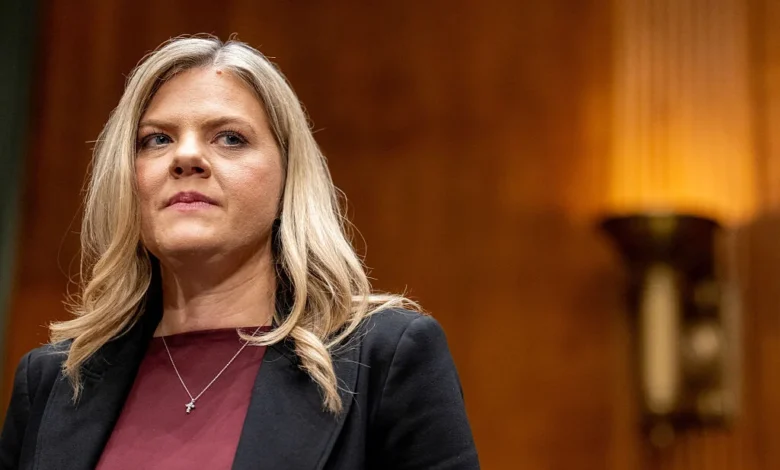
The confirmation hearing for the latest nominee to lead the Food and Drug Administration (FDA) has ignited a firestorm of scrutiny on Capitol Hill, highlighting a widening rift between the agency’s historical commitment to evidence-based regulation and the current administration’s push for executive-driven policy changes. Throughout a contentious series of exchanges, nominee Overton faced rigorous questioning from Democratic senators who pressed for clarity on the administration’s stance toward established medical consensus, the potential for donor influence in regulatory decision-making, and the scientific validity of claims made by the president regarding public health.
The proceedings underscored the high stakes of the FDA commissioner role, a position that has remained vacant since the resignation of Dr. Marty Makary in May. Makary’s departure, which followed his public resistance to administration pressure regarding the authorization of flavored vaping products, has served as a focal point for lawmakers concerned about the erosion of institutional independence.
Confronting Scientific Misinformation
A central theme of the questioning focused on the administration’s alignment with scientifically disputed health claims. Senator Maggie Hassan (D-N.H.) initiated a pointed inquiry regarding President Trump’s past assertions linking the use of Tylenol (acetaminophen) during pregnancy to autism in children. Despite repeated prompts from Hassan for a straightforward assessment of whether those claims were factually accurate, Overton maintained a policy of evasion.
“There is no current evidence of a causal link between Tylenol and autism,” Overton stated, refusing to explicitly acknowledge that the president’s previous statements on the matter were incorrect.
Hassan expressed visible frustration, noting the difficulty of obtaining a clear commitment to scientific accuracy from a nominee expected to oversee the nation’s health safety standards. “I wish it wasn’t so difficult for members of the administration to just plainly say that the president’s wrong,” Hassan said. “And it’s really concerning to me that you are equivocating on it here.”
The implications of this exchange go beyond mere rhetoric. When high-ranking health officials avoid correcting presidential inaccuracies, public health experts argue that it undermines the FDA’s credibility, particularly at a time when public trust in vaccine safety and prenatal care guidelines is fragile.
The Debate Over Vaccine Protocols
The scrutiny intensified as Senator Lisa Blunt-Rochester (D-Del.) pivoted to the administration’s rhetoric surrounding vaccination strategies. The discussion centered on August reports suggesting that Overton herself had advised the president on the possibility of deconstructing combination vaccines, such as the Measles, Mumps, and Rubella (MMR) vaccine, into individual doses.
Blunt-Rochester highlighted the immense logistical and economic hurdles such a shift would entail, noting that the development, testing, and approval of individual vaccines would require years of rigorous clinical trials and billions in investment. When asked if providing the president with the option to pursue such a strategy—despite the lack of clinical backing for it—constituted “good” advice, Overton maintained that her function was merely to provide the president with a range of policy options.
“You wouldn’t have provided bad options, right?” Blunt-Rochester asked, attempting to pin down the nominee’s professional judgment. Overton’s persistent refusal to classify the options as either beneficial or detrimental led to a tense standoff, with Blunt-Rochester interjecting, “This is just a simple question. This, I thought, was the easy question.”
This line of questioning reflects a broader concern among lawmakers: the degree to which an FDA commissioner serves as a scientific check on executive power versus an instrument for fulfilling political directives.
The Flavored Vape Controversy and Corporate Influence
Perhaps the most damaging portion of the hearing involved a detailed timeline presented by Senator Chris Murphy (D-Conn.) concerning the FDA’s controversial decision to allow the sale of flavored vaping products. The policy shift, which occurred shortly after the departure of the previous commissioner, has drawn sharp criticism from public health advocates who argue the products are marketed to youth populations and lack long-term safety data.
Senator Murphy laid out a timeline that suggested a direct correlation between corporate financial contributions and regulatory outcomes:
- April 30: A major tobacco firm, Reynolds, makes an $8 million donation to the president’s campaign coffers.
- May 2: Two days later, representatives from the company secure a meeting with the president to advocate for a change in FDA rules regarding flavored vapes.
- May 5: The president contacts the FDA and the Department of Health and Human Services (HHS), prompting the issuance of new guidance that facilitates the market entry of flavored vaping products.
Murphy directly asked Overton whether she viewed this sequence of events as evidence of a “pay-to-play” regulatory environment and whether she believed this was an appropriate manner for the FDA to conduct its business. Overton summarily rejected the premise, stating, “I reject the framing of that question,” and reiterated that the administration’s actions were driven by a commitment to the “best possible outcomes for Americans.”
The exchange highlights a deep-seated fear among Democrats that the FDA’s independence is being compromised by special interest groups. The flavored vape policy has faced bipartisan opposition, with critics pointing to rising rates of nicotine addiction among adolescents as a direct consequence of the regulatory easing.
Broader Implications for the FDA
The absence of a confirmed commissioner for several months has already impacted the agency’s internal morale and external efficacy. Industry analysts note that without a permanent head, the FDA struggles to set long-term strategic priorities, leaving career civil servants in a state of limbo.
The confirmation process for Overton has become a microcosm of the larger struggle over the role of expertise in government. The FDA is mandated by law to base its decisions on “substantial evidence” derived from clinical investigations. When nominees are perceived as being unwilling to prioritize this mandate over the political whims of the executive branch, it creates a crisis of legitimacy for the agency.
Analysis of Regulatory Independence
Historical precedents for the FDA commissioner position generally favor candidates with significant backgrounds in medicine or public health who are willing to occasionally dissent from political leadership. When the agency fails to act as a buffer against political pressure, it risks repeating historical mistakes, such as the premature approval of drugs or the deregulation of hazardous substances.
The current atmosphere in Washington suggests that the confirmation battle will remain contentious. Senate Democrats are signaling that they intend to use these hearings to establish a record of the administration’s interference in scientific processes. Meanwhile, supporters of the nominee argue that a president is entitled to a team that is responsive to his policy agenda, even if that agenda challenges the existing scientific orthodoxy.
As the hearing concluded, the fundamental questions remained unanswered. Can the FDA maintain its reputation as the “gold standard” for public health regulation if its leadership refuses to address documented misinformation? And to what extent should financial donations from regulated industries influence the speed and direction of agency rule-making?
The Senate’s final vote on the nomination will likely serve as a referendum not just on the candidate’s qualifications, but on the future trajectory of the nation’s health regulatory environment. Whether the FDA remains a science-first institution or transitions into a more politicized arm of the executive branch remains the central, unresolved question of this confirmation cycle. With health experts and industry stakeholders watching closely, the next few weeks will prove decisive for the future of the agency and the integrity of American public health policy.