Kimi Antonelli is struggling to manage the psychological burden of his maiden Formula 1 championship campaign according to expert analysis.

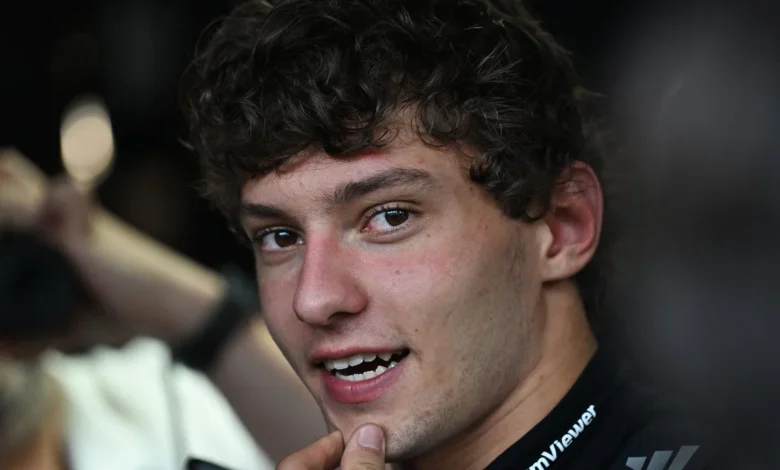
The Mercedes protégé, who entered the Azerbaijan Grand Prix weekend as the clear title favorite, experienced a significant dip in form that saw his commanding 81-point lead slashed to 66 points. While the gap remains statistically comfortable, the shift in momentum—fueled by a dominant performance from teammate George Russell—has raised questions about the young Italian’s mental resilience as the season approaches its critical final stages.
The Baku Setback: A Turning Point in the Campaign
The Azerbaijan Grand Prix was intended to be a coronation of sorts for Antonelli, a circuit where he could further solidify his grip on the drivers’ championship. Instead, the weekend proved to be a difficult test of character. A disappointing qualifying session saw him starting from 16th on the grid, a position that immediately compromised his race strategy. While he managed to salvage a fifth-place finish through tactical maneuvering, the contrast with George Russell—who secured pole position and converted it into a commanding race victory—was stark.
The disparity in performance at the Baku City Circuit has invited intense scrutiny. Former W Series driver and Sky Sports F1 pundit Naomi Schiff, speaking on the Up To Speed podcast, highlighted that the issue appears to be more psychological than technical. According to Schiff, the pressure of maintaining a title lead has manifested in a visible "stiffness" behind the wheel, suggesting that Antonelli is over-analyzing his approach to race craft rather than driving with the natural fluidity that defined his early-season dominance.
Psychological Hurdles and the "Stiffness" Factor
"I felt like when I was looking at Kimi on track this weekend and not just the mistake that he made in qualifying, but just his general demeanour on track, it felt like a driver who is driving for that championship, but has almost spooked himself a little bit too much," Schiff remarked.
In elite motorsport, the psychological divide between a contender and a champion is often bridged by the ability to remain "uncluttered." When a driver begins to fear the potential for error, they often inadvertently create the very environment that leads to mistakes. Schiff noted that this is not a novel experience for the young driver, pointing out that similar symptoms of over-thinking appeared during the previous season.
"He just needs to get out of his head," Schiff continued. "We have seen it happen before. Last season he was in his head a lot as well. He managed to get that under control, and then he was driving more freely. He came into the beginning of the season a new man. I really hope that he is not going to spook himself out of this because it is so easy. It is such a psychological game that once you get in your head, you start worrying about things. You almost bring those things to yourself."
Chronology of the 2024 Championship Battle
To understand the weight of the current situation, one must examine the trajectory of the season. Antonelli began his campaign with a series of high-precision drives that allowed him to build a substantial points buffer early on. This consistency made him the undisputed leader, setting the expectation that the title would be a formality.
However, the middle phase of the season has seen a shift in the internal dynamic at Mercedes. George Russell, initially trailing significantly in the standings, has found a rhythm that has seen him become a consistent threat to his teammate. The progression of the 2024 season can be summarized as follows:

- Early Season (Rounds 1-5): Antonelli established an early, commanding lead, showcasing raw pace and maturity beyond his years.
- Mid-Season (Rounds 6-12): The competition tightened. While Antonelli maintained his lead, the gap began to fluctuate as teams optimized their car setups for diverse track layouts.
- The Baku Weekend: The turning point. A 15-point swing in favor of Russell has fundamentally changed the narrative of the championship, moving the conversation from "when" Antonelli will win the title to "if" he can hold his nerve.
Data Analysis: The Statistical Reality
Despite the turbulence in Azerbaijan, the mathematical reality remains in Antonelli’s favor. A 66-point cushion is significant in the modern scoring system, providing a safety net that few drivers in a maiden campaign are fortunate enough to possess. However, the optics of the situation are just as critical as the points table.
When a teammate—particularly one as established as Russell—begins to outperform a leader, the internal team dynamics often shift. Mercedes, known for its rigorous approach to driver development and performance management, will likely be working behind the scenes to recalibrate Antonelli’s focus. The challenge for the team is to ensure that the constructive pressure of competing for a title does not turn into a destructive force that hampers his development.
Implications for the Remainder of the Season
The coming races will be a litmus test for the young driver. The primary objective for Antonelli is to return to the "free" driving style that characterized his early season successes. If he continues to drive with the perceived tension observed in Baku, the psychological pressure will only mount as the final race approaches.
Experts suggest that the team’s involvement will be paramount. In Formula 1, the driver is only one part of the equation; the support structure—engineers, team principals, and sports psychologists—plays a vital role in keeping a candidate grounded. If Mercedes can successfully insulate Antonelli from the external noise and his own internal expectations, he remains the firm favorite to claim the championship.
However, should the trend observed in Baku persist, the championship could evolve into a high-stakes standoff. The risk of "spooking himself," as described by Schiff, is that it leads to a cycle of underperformance. A driver who is afraid to lose is rarely the driver who wins. Antonelli must find a way to reconcile his ambition with the reality of the race track, shifting his focus away from the points table and back to the mechanics of each individual corner.
The Path Forward
The situation serves as a stark reminder of the unique pressures inherent in top-tier motorsport. Unlike other sports where an athlete might have weeks to recover from a poor performance, a Formula 1 driver is back in the car within days, facing the same scrutiny and the same high-stakes environment.
Antonelli’s response to the Baku disappointment will be closely monitored by the entire paddock. The maturity he displays in the coming weeks will determine whether this was a minor blip in a successful campaign or the beginning of a larger struggle for composure.
As the calendar moves toward the next round, the emphasis for the Mercedes camp will be on mental reset. The technical data from the car will be analyzed, the telemetry will be reviewed, and the setup will be refined, but the most important work will likely happen in the briefing room, helping the young talent regain the confidence that once made him look untouchable. Whether he can "get out of his head" remains the most compelling narrative in the closing chapters of the current Formula 1 season.