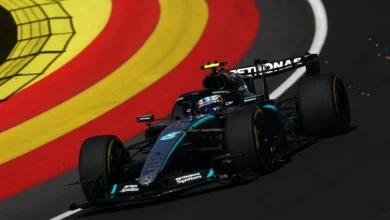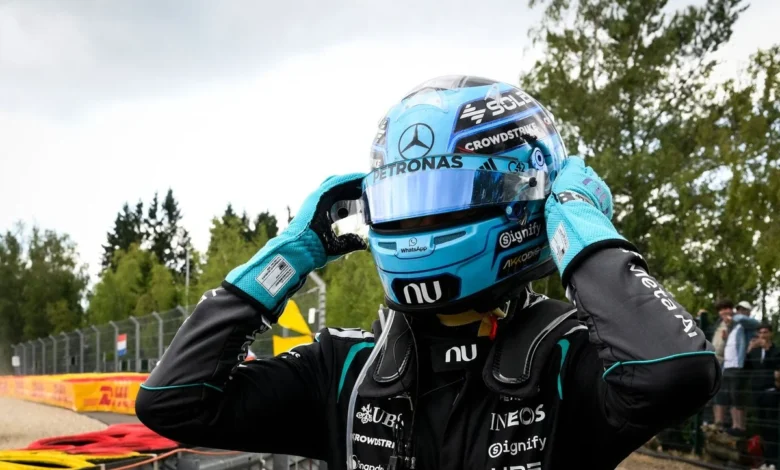
Mercedes is still attempting to unravel the complex reasons behind George Russell’s recurring energy deployment issues at Formula 1’s Belgian Grand Prix, a problem that persisted despite attempts to modify his driving style. The British driver has consistently lost valuable time on the straights, a phenomenon that has baffled the Brackley-based team and has been particularly pronounced on power-sensitive circuits like Silverstone and Spa-Francorchamps.
The Belgian Grand Prix: A Case Study in Frustration

The Belgian Grand Prix weekend underscored the severity of the problem. Throughout practice sessions at Spa, a discernible deficit in top speed on the straights was evident between Russell and his teammate, Andrea Kimi Antonelli. While Antonelli capitalized on the car’s potential to secure pole position, Russell qualified in fourth, a result that he felt was significantly hampered by the unexplained power deficiency.
"My whole focus for the last 36 hours has been on straightline speed," Russell candidly admitted to Motorsport.com following qualifying. "It hasn’t been focusing on the set-up, the tyres, or anything else, because we’re all trying to solve what is going on. Even on my last lap, for some reason, I lost another tenth and a half to myself, just on the straight. You’re watching on your steering wheel, just losing speed when you’re full gas on the straight. You feel powerless. We don’t know what’s going on. I don’t think it’s the power unit, to be honest. But there’s something slowing us down on the straights."
This sentiment of helplessness was amplified by the fact that Spa was intended to be a circuit where Russell could potentially overcome the issue through a refined driving approach. Following similar struggles at Silverstone, the Mercedes garage had dedicated considerable effort to analyzing the data and advising Russell on adapting his throttle application and energy management strategies. However, the improvements, if any, were not substantial enough to bridge the gap.

Unraveling the Mystery: A Two-Pronged Problem
Mercedes’ deputy technical director, Simone Resta, acknowledged the ongoing struggle to pinpoint the exact causes of Russell’s energy deployment deficit. "We’ve had some problems with the deployment on George’s car that we really need to understand and bottom out going to the next event," Resta stated. "All that started in Silverstone, where we started to see some deployment differences between our two cars. We’ve been doing a lot of analysis, and we came to the conclusion that one of the major contributors was related to a difference in driving style between the two cars. George studied that quite a lot and was able to change it and adapt going into Spa, but still, we can still see some difference in the deployment between these two cars."
Resta’s comments highlight a dual challenge for Mercedes. Firstly, there’s the persistent issue directly impacting Russell’s car, which seems to be more than just a minor setup difference. This problem has been present since Silverstone and has proven resistant to driver adaptation. Secondly, and compounding the situation, was a separate software glitch that affected both Mercedes cars at the start of the Belgian Grand Prix, leading to a significant loss of power.

The Belgian Grand Prix Start: A Software Glitch
The race start at Spa-Francorchamps proved to be particularly chaotic for Mercedes, with both Russell and Antonelli experiencing a sudden lack of electric energy on the Kemmel Straight. This deficiency proved costly, especially for Russell, who was immediately vulnerable to the charging Ferraris behind him. The loss of momentum ultimately contributed to a Lap 1 incident with his teammate, Lewis Hamilton, which ended Russell’s race prematurely.
Resta explained the nature of this separate issue: "Essentially, we’ve been having a software issue with both our cars, which basically meant that we hit the harvesting limit at Turn 1. Basically, we had a boost issue on both cars from Turn 1 to Turn 5. This has affected both George and Kimi, and we’ve seen both of them losing ground after a good start."
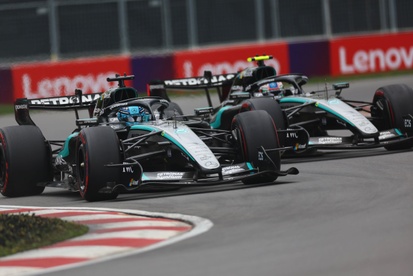
This software glitch meant that both cars reached their maximum energy harvesting capacity prematurely, specifically at Turn 1, leaving them depleted of deployable energy for the crucial acceleration phase down the Kemmel Straight. This unexpected power deficit allowed competitors to easily overtake them, turning what could have been a strong start into an immediate disadvantage.
The Broader Context: Navigating New Regulations
The ongoing struggles with energy deployment at Mercedes are occurring within the broader context of Formula 1’s relatively new technical regulations, introduced in 2022. These regulations have forced teams to adapt to significant aerodynamic and power unit changes. As Resta pointed out, "We are working with a brand-new set of regulations, we are just at the 10th race over these regulations, and we are still struggling to understand every single contributor. We are not the only ones in this condition because we can see that many teams are still learning and adapting to this new regulation, so we’ll do our best to really find out what’s the main reason for this difference and to be best prepared for Hungary."

This statement suggests that the complexities of the current regulations might be contributing to a learning curve for all teams, with Mercedes experiencing particularly acute challenges in certain areas. The fact that other teams are also facing adaptation issues provides some solace but doesn’t diminish the immediate need for Mercedes to resolve their specific problems. The upcoming Hungarian Grand Prix, known for its technical demands and twisty layout, will be a crucial test of their progress.
Implications for Mercedes’ Season
The persistent energy deployment issues, especially those affecting Russell, carry significant implications for Mercedes’ 2024 Formula 1 campaign. In a sport where fractions of a second can separate competitors, a consistent deficit in straight-line speed can be a major handicap. This problem not only affects race performance but also undermines qualifying efforts, making it harder to secure strong starting positions.

For Russell, these issues represent a frustrating setback in his bid to consistently challenge for podiums and race wins. His performance being hampered by technical gremlins, rather than a lack of pace from the car itself or his own driving, can be demoralizing. The contrast with his teammate’s performance, particularly at Spa where Antonelli secured pole, further emphasizes the targeted nature of the problem.
Mercedes, as a team, faces the daunting task of extracting the maximum performance from their machinery. The current era of Formula 1 is highly competitive, with teams like Red Bull, Ferrari, and McLaren consistently demonstrating strong packages. Any technical deficiency, especially one that impacts fundamental aspects like power delivery, can widen the performance gap.
The team’s ability to diagnose and rectify these deep-seated issues will be a critical determinant of their success in the remainder of the season. A breakthrough in understanding and solving the energy deployment problem could unlock significant performance gains, potentially allowing them to re-enter the championship fight. Conversely, if these issues persist, it could lead to a season of missed opportunities and a continued struggle to keep pace with their rivals. The focus now shifts to the upcoming races, where Mercedes will undoubtedly be working around the clock to find solutions and ensure their drivers can compete on a level playing field.