On October 25, 1671, the Italian-French astronomer Giovanni Domenico Cassini forever altered our understanding of the outer solar system by identifying a previously unknown celestial body orbiting Saturn: the moon Iapetus. This landmark discovery, occurring during the dawn of telescopic astronomy, provided the second-ever glimpse into the complex satellite system of the ringed planet. Coming six years after the Dutch polymath Christiaan Huygens confirmed the existence of Titan, the discovery of Iapetus served as a catalyst for a surge in planetary science, ultimately leading to the identification of the major moons Rhea, Tethys, and Dione.
A Legacy of 17th Century Observation
Giovanni Cassini, working under the patronage of King Louis XIV at the newly established Paris Observatory, was an observer of unparalleled precision. In the late 17th century, astronomical study was limited by the rudimentary optics of the era. Despite these technical constraints, Cassini’s methodology was rigorous. Upon sighting Iapetus as a faint point of light to the west of Saturn, he engaged in systematic tracking.
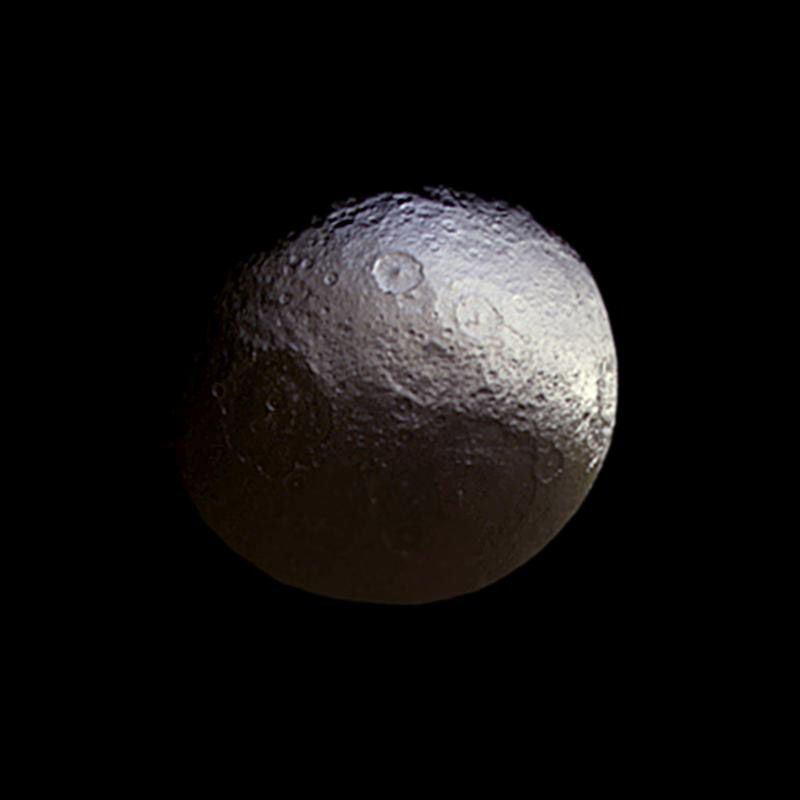
His subsequent frustration, however, became the foundation for a profound scientific realization. Cassini calculated the orbital period of the object and expected its reappearance on the eastern side of the planet after 39 days. When the object failed to materialize as predicted, Cassini was forced to reconsider the physical nature of the satellite. He hypothesized that the moon possessed a significantly darker hemisphere, rendering it invisible against the backdrop of space when its low-albedo side faced the Earth. This deduction, made over three centuries ago, was a masterclass in inferential reasoning, predating modern planetary imaging by generations.
Chronology of the Saturnian System
The timeline of early Saturnian exploration remains a cornerstone of space history. The discovery of Iapetus was part of a rapid expansion of the known solar system:
- 1655: Christiaan Huygens discovers Titan, the largest of Saturn’s moons, using an improved refracting telescope.
- 1671: Giovanni Cassini identifies Iapetus.
- 1672: Cassini identifies Rhea.
- 1684: Cassini identifies Tethys and Dione.
- 1980s: The Voyager missions provide the first high-resolution data regarding the surface composition of these bodies.
- 2004–2017: The NASA/ESA/ASI Cassini-Huygens mission executes a comprehensive survey of the Saturnian system, confirming the enigmatic surface features of Iapetus.
The Yin-Yang Phenomenon: Data and Composition
Centuries after Cassini’s original observation, the Cassini spacecraft mission provided definitive evidence of the moon’s unique, dual-toned surface. Often referred to as the "yin-yang moon," Iapetus exhibits one of the most striking visual contrasts in the solar system. The leading hemisphere is covered in a dark, reddish-brown material, while the trailing hemisphere is composed of bright, reflective ice.
Spectroscopic analysis by the Cassini probe suggested that the dark material is composed of complex organic compounds, potentially deposited by a process known as thermal segregation or via the accretion of dark dust from the outer moon Phoebe. This "thermal sweeping" hypothesis posits that once a small amount of dark material is deposited on the leading side, it absorbs more sunlight, causing the ice to sublimate. The vapor then migrates and re-freezes on the colder, bright trailing side, effectively creating a positive feedback loop that amplifies the contrast between the two hemispheres.
Implications for Lunar Formation Theories
The study of Iapetus, in conjunction with its sibling moons, has forced planetary scientists to revise models regarding the formation of the Saturnian system. For many years, it was assumed that the moons of Saturn were as ancient as the planet itself, dating back to the primordial disk that formed the solar system approximately 4.5 billion years ago.
However, modern computer simulations and data obtained from the Cassini mission have challenged this long-held consensus. Researchers now suggest that the inner rings and certain moons of Saturn may be significantly younger—potentially forming long after the solar system’s initial cooling period. The gravitational dynamics of the system, including orbital resonances, indicate that the current arrangement of moons is likely the result of a "rebooted" system. In this scenario, ancient moons were disrupted by orbital instability, leading to massive collisions. The resulting debris, over millions of years, coalesced into the current satellite system. While Titan and Iapetus occupy orbits that suggest a more stable, ancient history, their presence remains central to understanding the chaotic orbital evolution that defined Saturn’s neighborhood.
Perspectives from the Scientific Community
The historical significance of Cassini’s work is frequently cited by modern planetary scientists as an early example of "multi-messenger" astronomy, where observation is combined with theoretical modeling. Dr. Linda Spilker, a former project scientist for the Cassini mission, has often noted that the mission was designed to answer the very questions that baffled 17th-century astronomers.

"When Cassini first noticed the dark and light sides of Iapetus, he was looking at the results of processes that we are only now beginning to fully understand," researchers noted in a 2017 post-mission summary. "The ability to look at Iapetus with the eyes of the Cassini spacecraft—to see the cratering, the equatorial ridge, and the distinct color dichotomy—transformed our understanding from a mere point of light into a complex, evolving world."
Broader Scientific Impact
The implications of the study of Iapetus extend far beyond Saturn. By understanding how orbital resonances and thermal segregation influence the evolution of moons, scientists are better equipped to analyze exoplanetary systems. The "yin-yang" effect observed on Iapetus serves as a case study for planetary albedo and climate regulation, concepts that are essential for evaluating the habitability of moons orbiting gas giants elsewhere in the galaxy.
Furthermore, the longevity of interest in Iapetus highlights the importance of long-term observation. Cassini’s initial 39-day wait for the moon to reappear is a testament to the patience required in science. That a single observation made in 1671 could lead to the multi-billion dollar robotic exploration of the 21st century underscores the fundamental role that curiosity-driven research plays in human progress.
As we continue to analyze the terabytes of data returned by the Cassini spacecraft, the legacy of Giovanni Cassini remains a cornerstone of the field. The moon he discovered by accident, simply because he was persistent enough to wonder where it had gone, continues to provide insights into the formation of the solar system, the physics of icy bodies, and the persistent mystery of our cosmic origins. Whether it is through the lens of a 17th-century telescope or the high-resolution sensors of a modern spacecraft, Iapetus remains a sentinel in the outer solar system, a reminder that every speck of light in the night sky holds a story waiting to be decoded.
The integration of historical observation with contemporary data science has proven that our quest to understand the universe is a continuous, generational endeavor. The "yin-yang" moon, once a source of confusion for a pioneer in Paris, now stands as a testament to the enduring power of scientific inquiry and the vast, often surprising, architecture of the Saturnian system.