James Webb Space Telescope Data Suggests "Cosmic Dinosaurs" — Little Red Dots — May Have Evolved into Globular Clusters.

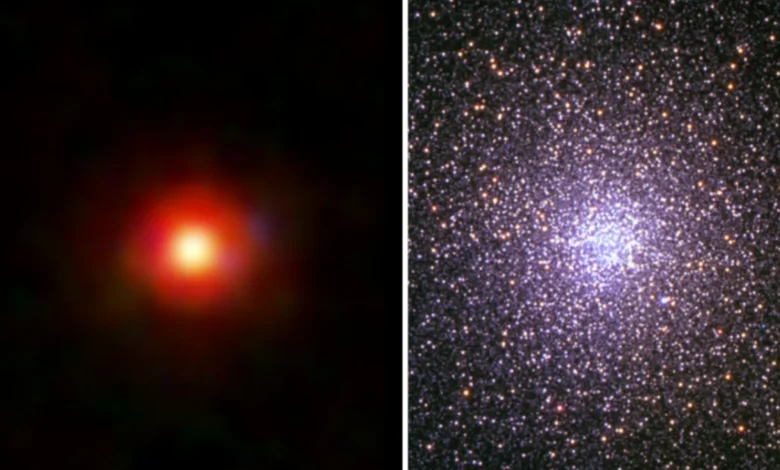
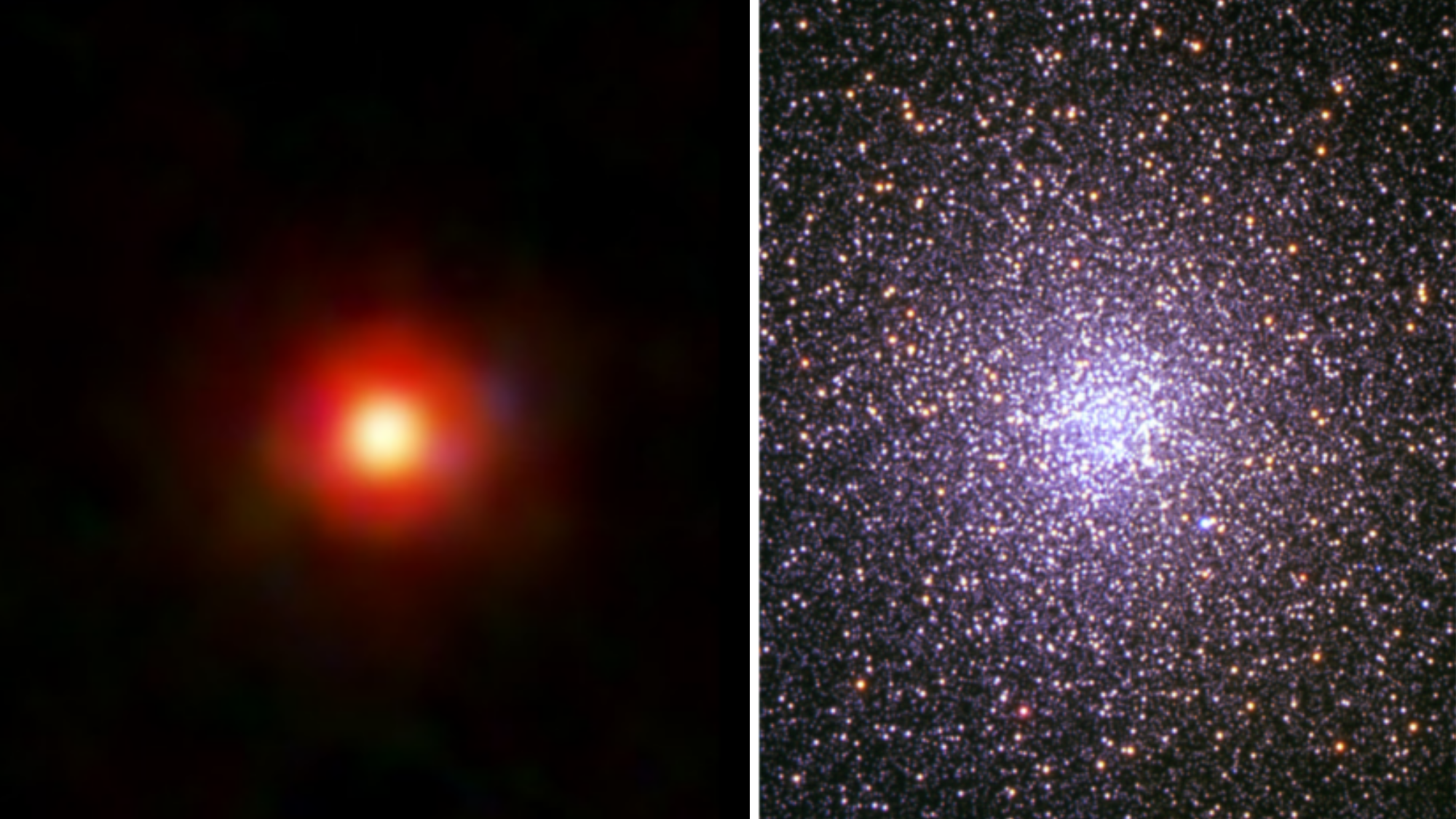
Just as paleontologists have uncovered the evolutionary link between ancient dinosaurs and modern birds, astronomers are now proposing a similar transformational journey for mysterious cosmic objects observed in the early universe. New research, utilizing the groundbreaking capabilities of the James Webb Space Telescope (JWST), suggests that the enigmatic "Little Red Dots" — a population of compact, intensely red objects that puzzled scientists since their discovery — did not simply vanish but rather evolved into the familiar, majestic structures known as globular clusters, dense congregations of millions of ancient stars that grace the halos of galaxies today. This compelling hypothesis offers a potential resolution to two long-standing astronomical puzzles: the transient nature of the Little Red Dots and the perplexing chemical composition of globular clusters.
The Enigma of the Little Red Dots
The advent of the JWST in 2022 ushered in a new era of cosmic exploration, peering further back in time than ever before, to within a few hundred million years of the Big Bang. Among its most surprising discoveries was the routine detection of numerous "Little Red Dots." These objects, characterized by their compact size and distinctive reddish hue, were observed in abundance approximately 600 million years after the universe’s birth. What made them particularly puzzling was their apparent disappearance from the cosmic landscape by the time the universe reached an age of roughly 2 billion years. Their sudden presence and subsequent absence posed a significant challenge to existing models of early galaxy formation and stellar evolution.
Astronomers have put forth several theories to explain the Little Red Dots. One prominent suggestion posited them as "black hole stars" – early black holes enshrouded by vast amounts of dense gas and dust, heating the surrounding material and emitting light predominantly in the red and infrared spectrum. Another idea considered them to be extremely compact, dust-obscured galaxies undergoing intense star formation. However, none of these explanations fully accounted for both their ubiquity in the very early universe and their subsequent vanishing act, leaving a crucial gap in our understanding of cosmic evolution.
Globular Clusters: Ancient Stellar Cities with a Chemical Secret
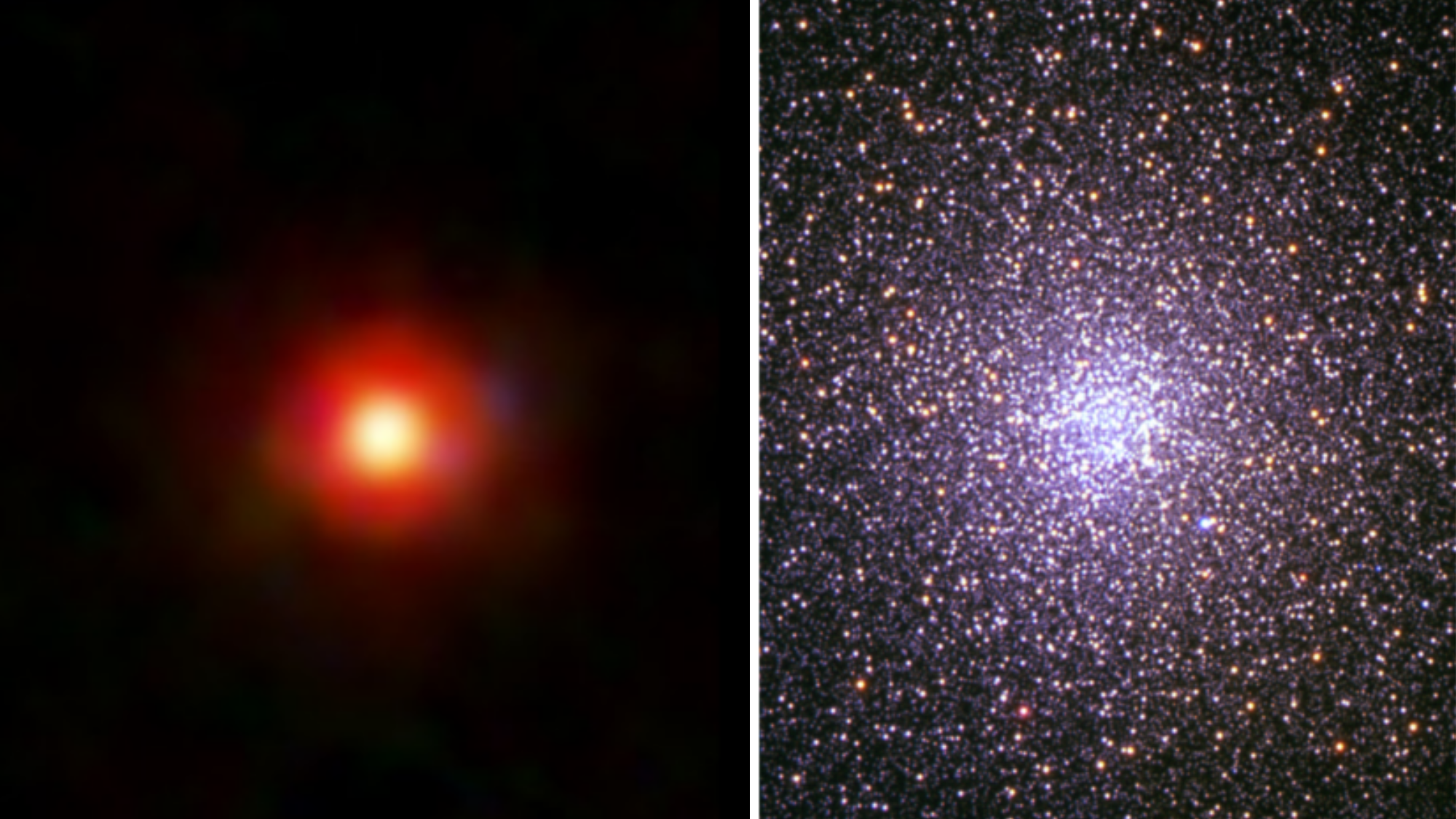
On the other side of this cosmic mystery are globular clusters. These spherical collections of hundreds of thousands to several millions of stars are among the oldest structures in the universe, typically found orbiting the halos of large galaxies like our own Milky Way, which hosts at least 150 such clusters. Despite their familiarity and importance as cosmic relics, their formation mechanism remains one of astronomy’s enduring puzzles. For decades, it was assumed that all stars within a given globular cluster formed simultaneously from a single, pristine cloud of gas and dust in the early universe. This initial gas would have been primarily composed of hydrogen and helium, with only trace amounts of heavier elements – what astronomers refer to as "metals."
However, detailed spectroscopic observations of stars within modern globular clusters have revealed a peculiar chemical anomaly. While some stars exhibit the expected low metallicity of the early universe, a significant fraction displays an unexpected abundance of certain "metals" like helium, nitrogen, sodium, and aluminum, simultaneously showing a deficiency in others such as carbon, oxygen, and magnesium. This multi-generational characteristic, where stars appear to have formed from chemically distinct gas, contradicts the simple "single generation" formation model. Explaining this specific chemical fingerprint – particularly the high levels of helium and processed heavier elements – has been a major challenge for astrophysicists. As Danielle Berg of the University of Texas Austin noted, "We usually see them [globular clusters] after billions of years of evolution, at a time when their massive stars are gone, their gas has been cleared out, and dynamical processes have changed their masses and structures. That makes it very hard to reconstruct the original conditions they formed in."
The Supermassive Star Hypothesis: A Bridge Between Two Mysteries
The new research, led by John Chisholm of the University of Texas Austin, proposes a revolutionary link between these two cosmic enigmas. The team theorizes that the Little Red Dots observed by JWST are, in fact, nascent globular clusters with a very specific, powerful engine at their core: a hypothetical "supermassive star." These are not to be confused with supermassive black holes; rather, supermassive stars are theoretical stellar bodies with immense masses, ranging from 1,000 to 10,000 times the mass of our Sun.
The conditions in the very early universe, particularly within the dense gas clouds destined to become globular clusters, would have been ripe for the formation of such extreme objects. In these environments, stellar collisions and mergers would have occurred frequently, potentially leading to the rapid accumulation of mass necessary to form a supermassive star. These colossal stars would be incredibly hot and luminous, burning through their fuel at an astounding rate.
Crucially, the extreme internal temperatures and pressures within a supermassive star would facilitate nuclear fusion at levels far beyond those in even the most massive conventional stars. As team member Mike Boylan-Kolchin, also of UT Austin, explained, "This specific pattern indicates nuclear fusion at very high temperatures, much higher than in the cores of even massive normal stars. A supermassive star is precisely the kind of environment that could produce this combination." This high-temperature fusion could produce the observed overabundances of helium, nitrogen, sodium, and aluminum, while depleting carbon, oxygen, and magnesium, thereby creating the unique chemical signature seen in modern globular cluster stars.
An Evolutionary Timeline: From Red Dot to Stellar City
The proposed timeline of this cosmic evolution is elegantly simple and provides a compelling narrative for the observed phenomena. When a supermassive star forms at the heart of an early globular cluster, its immense luminosity, coupled with the surrounding dense gas and dust, would make the object appear as a "Little Red Dot" to the JWST’s infrared eyes. These supermassive stars, however, would be incredibly short-lived, with lifespans estimated at only around 1 million years – a mere blink of an eye in cosmic terms, especially when compared to our Sun’s 4.6 billion-year journey.
Upon their dramatic demise in powerful supernova explosions, these supermassive stars would not only enrich the surrounding gas with the uniquely forged elements but also violently clear out much of the remaining gas and dust from the nascent cluster. This "second generation" gas, now chemically enriched, would then serve as the building blocks for the next wave of star formation within the cluster. These subsequently formed stars would carry the distinctive chemical fingerprints observed in modern globular clusters.
Once the central supermassive star has died and its intense luminosity has faded, the object would no longer appear as a "Little Red Dot." What remains is a compact, gravitationally bound cluster of stars, chemically imprinted by its extreme progenitor, which continues to evolve into the ancient globular clusters we observe today. As Chisholm summarized, "In our model, the supermassive star that helps make the object look like a Little Red Dot would live for only a short time. Once that star dies, the object may no longer look like a Little Red Dot, even if the cluster itself survives billions of years." This mechanism elegantly explains the disappearance of the Little Red Dots from the early universe – they simply transformed into something else.
Converging Evidence: Timing and Mass
Beyond the chemical matching, the hypothesis gains further strength from several other lines of evidence. The proposed timeline for the formation of these supermassive stars and the subsequent evolution into globular clusters aligns perfectly with existing cosmological models. Little Red Dots begin appearing around 600 million years after the Big Bang, which is precisely when theoretical models predict that the first massive globular clusters would have started to form.

Furthermore, the estimated masses of the Little Red Dots, derived from JWST observations, are consistent with the masses of globular clusters seen in the universe today. This mass consistency suggests a direct evolutionary pathway, where the initial mass of the "Little Red Dot" progenitor system naturally evolves into the observed mass of a mature globular cluster. The geographical distribution of Little Red Dots in the early universe also appears to match the distribution patterns expected for the progenitors of modern globular clusters.
Implications and Future Directions
This groundbreaking theory represents a significant step forward in our understanding of the early universe. By linking two seemingly disparate cosmic phenomena, it offers a unified explanation for the perplexing properties of both. If confirmed, it would redefine our understanding of how the first generations of stars and star clusters formed, and how the chemical enrichment of the universe progressed. It suggests a more dynamic and extreme early cosmos than previously imagined, with exotic stellar objects playing a crucial role in shaping the galactic structures we see today.
The research team acknowledges that while the evidence is compelling, "There’s no single smoking gun at this point that says Little Red Dots are globular clusters, but it would explain a lot of diverse and surprising observations," according to Boylan-Kolchin. The study, currently available as a pre-print on the arXiv paper repository, lays the groundwork for future investigations.
Verifying this hypothesis will require further detailed observations with the James Webb Space Telescope, perhaps focusing on the spectral signatures of Little Red Dots to search for direct evidence of supermassive stars or their immediate aftermath. Advanced computational simulations will also be crucial to model the complex processes of supermassive star formation, their short-lived evolution, and their impact on the chemical composition of subsequent stellar generations within a forming cluster. The potential for the Little Red Dots to be the embryonic forms of globular clusters adds another fascinating layer to the cosmic tapestry, hinting at a universe where even the most ancient and familiar structures began their lives in unexpected and extreme ways. The ongoing quest to unravel these cosmic mysteries continues to push the boundaries of our knowledge, revealing an ever more intricate and awe-inspiring universe.