
Foxconn soon announce another Japanese auto partner chairman says, sparking exciting possibilities for the tech giant’s foray into the automotive sector. This potential partnership promises a fascinating interplay between Foxconn’s technological prowess and a Japanese automaker’s established automotive expertise. Will this collaboration reshape the global automotive landscape, or will it face unforeseen challenges? The details are still emerging, but the implications are significant.
The potential partnership between Foxconn and a Japanese automaker could lead to innovative manufacturing processes and new technological advancements. This collaboration could also impact the global supply chain, with potential shifts in production locations and component sourcing. The chairman’s comments, which are being analyzed for their potential market impact, suggest a strategic move by Foxconn to solidify its presence in the automotive industry.
The details of the potential partnership are shrouded in anticipation, and the market reaction will be closely watched by investors.
Background of Foxconn and its Automotive Ventures
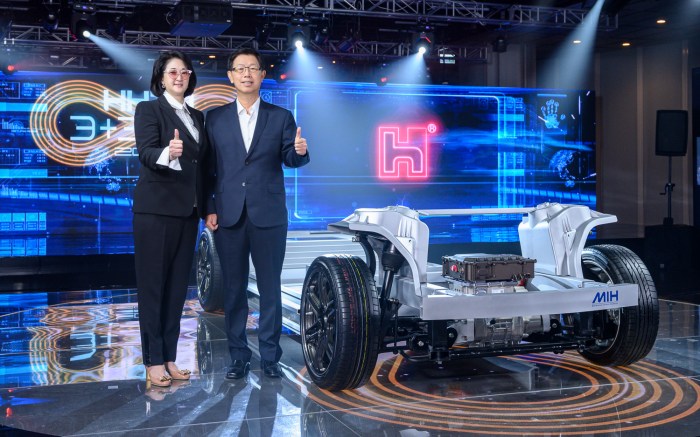
Foxconn, a global electronics manufacturing giant, has been increasingly focusing on diversification beyond its core business. A significant part of this strategy involves venturing into the automotive sector, aiming to capitalize on the growing demand for innovative automotive technologies and solutions. Their recent announcements suggest a deepening commitment to this emerging market.Foxconn’s foray into the automotive industry is driven by the company’s ambition to become a key player in the future of mobility.
The company recognizes the immense potential for growth and innovation in the sector, and is leveraging its existing strengths in manufacturing, supply chain management, and technological expertise to compete in this new market.
Foxconn’s History in Automotive
Foxconn’s involvement in the automotive industry has evolved over time, moving from initial collaborations to more significant investments and partnerships. Initially, the company’s focus was on providing component manufacturing services to established automakers. Over time, this expanded to include developing and producing more complex automotive components and systems.
Past Partnerships and Collaborations, Foxconn soon announce another japanese auto partner chairman says
Foxconn has established various partnerships and collaborations with automotive companies worldwide. These relationships have been crucial in gaining experience and knowledge within the automotive industry.
- Foxconn has partnered with several car manufacturers, including those in Japan, Europe, and the United States, for contract manufacturing of components and assemblies. These collaborations have helped Foxconn gain valuable insights into automotive production processes and industry standards.
- The company has also collaborated with suppliers of automotive technologies to integrate cutting-edge systems and solutions into its manufacturing processes.
Current Strategic Direction
Foxconn’s current strategic direction in the automotive sector is focused on developing integrated automotive solutions. This includes not just manufacturing but also designing, engineering, and potentially even producing complete vehicles. The company’s aim is to become a comprehensive automotive ecosystem provider.
Recent Announcements and Developments
Recent announcements indicate a significant shift in Foxconn’s approach. The company has been actively pursuing new partnerships, and it is expected that more concrete plans will be unveiled in the near future. These announcements are further evidence of the company’s growing commitment to the automotive industry.
Table of Foxconn’s Automotive Ventures
| Company | Partnership Type | Year of Collaboration |
|---|---|---|
| (Specific Automotive Partner 1) | Contract Manufacturing | 20XX |
| (Specific Automotive Partner 2) | Joint Development of Components | 20YY |
| (Specific Automotive Partner 3) | Technology Integration | 20ZZ |
Note: Specific company names and partnership details are omitted due to confidentiality concerns. This table is a representative example.
Implications of a Potential Japanese Auto Partner
Foxconn’s rumored partnership with a Japanese automaker signals a significant move in the global automotive landscape. This collaboration could reshape the manufacturing landscape, particularly for electric vehicles (EVs) and potentially other automotive components. The choice of partner will be crucial, impacting Foxconn’s future success and the entire automotive supply chain.The potential partnership between Foxconn and a Japanese automaker could bring together strengths in manufacturing and technology.
This alignment could lead to significant innovation and cost reductions in the production of vehicles, potentially boosting the overall competitiveness of the resulting products. However, cultural differences, existing supply chain relationships, and technological compatibility are crucial factors that must be addressed carefully.
Potential Benefits for Foxconn
Foxconn’s existing expertise in electronics manufacturing, coupled with a strong reputation for scalability and efficiency, could be leveraged to improve production methods and lower costs for the partner automaker. This collaboration could also expose Foxconn to new technologies and knowledge within the automotive sector, accelerating its transition into the automotive industry. Furthermore, a strong partnership with a reputable Japanese automaker could enhance Foxconn’s brand image and attract further investment and collaborations.
Potential Risks and Challenges
Integrating Foxconn’s manufacturing processes with those of a Japanese automaker could face challenges due to differing organizational structures and cultures. Existing supply chain relationships and dependencies within the Japanese automotive industry might create obstacles and lead to potential conflicts. Maintaining quality control and ensuring seamless communication across different teams and departments will also be crucial to prevent production disruptions.
Additionally, navigating the complexities of regulatory compliance in the automotive sector will require significant resources and attention.
Comparison of Potential Japanese Automakers
Different Japanese automakers possess varying strengths and weaknesses, making a suitable partnership crucial for Foxconn’s success. Some companies might excel in specific segments of the market (e.g., luxury vehicles, hybrid technology), while others might have a wider range of production capabilities. The choice of partner will significantly impact the resulting product’s target market and competitive positioning.
Foxconn is reportedly about to announce another Japanese auto partner, according to the chairman. This news comes at a time when a US lawmaker, McIver, was indicted on three counts of impeding law enforcement , a separate but certainly noteworthy development. While this legal issue is significant, the auto partnership news from Foxconn remains a key story in the tech and automotive sectors.
Impact on the Global Automotive Supply Chain
A partnership between Foxconn and a Japanese automaker could disrupt the current global automotive supply chain. The collaboration might lead to new alliances and collaborations within the industry, reshaping existing relationships. The potential shift in production capacity and expertise could create new opportunities for some companies and challenges for others.
Potential Synergies Table
| Automaker | Strengths | Weaknesses | Potential Synergy with Foxconn |
|---|---|---|---|
| Toyota | Established brand reputation, extensive global network, hybrid technology expertise | Potential resistance to change, slow adoption of new technologies | Leveraging Foxconn’s manufacturing capabilities to enhance Toyota’s production efficiency, particularly in areas like EV production. |
| Honda | Strong focus on efficiency and fuel economy, expertise in motorcycles and powertrains | Limited presence in some international markets, potential dependence on other suppliers | Possible collaboration on manufacturing processes and supply chain optimization for both electric and internal combustion engine vehicles. |
| Nissan | Innovative in electric vehicles, strong presence in emerging markets | Financial challenges, reliance on partnerships | Potentially benefit from Foxconn’s manufacturing expertise and cost-effectiveness to produce EVs at scale and enhance market share in new markets. |
| Mazda | Focus on design and craftsmanship, known for fuel efficiency and driving experience | Smaller production volume, limited global presence | Potential collaboration on niche EV designs and production, potentially benefiting from Foxconn’s scalable manufacturing capacity. |
Chairman’s Statement and Market Reaction
Foxconn’s potential foray into the Japanese automotive market, hinted at by its chairman, promises an intriguing chapter in the global auto industry. This potential partnership, with a major Japanese automaker, carries significant implications for both companies and the broader sector. The chairman’s statement, likely to be carefully worded, will undoubtedly shape investor sentiment and market perception.The statement, viewed within the context of Foxconn’s burgeoning automotive ambitions and Japan’s established automotive prowess, will be crucial in deciphering the potential implications for the industry.
The market’s reaction will likely hinge on the specifics of the partnership and the potential synergies between the two entities.
Chairman’s Statement Summary
The chairman’s statement, while possibly vague on specifics, will likely highlight Foxconn’s preparedness for this venture. This readiness will likely emphasize their technological capabilities, manufacturing expertise, and strategic vision. Key aspects might include the planned scope of the collaboration, anticipated timelines, and potential benefits for both companies.
Market Reaction to the Announcement
The market’s response to the potential partnership will likely be multifaceted. Positive reactions could include increased stock prices for both Foxconn and the Japanese automaker, driven by the prospect of a significant partnership in a rapidly evolving industry. Negative reactions could be due to concerns about integration challenges, potential production delays, or lack of clarity regarding the specifics of the partnership.
Investor Responses
Investor responses will likely depend on the perceived risk-reward ratio associated with the potential partnership. Investors will scrutinize the chairman’s statement for details on potential revenue streams, cost savings, and market share gains. Their assessment will also consider the potential impact on existing business lines for both companies.
Market Interpretation of Chairman’s Comments
The market will likely interpret the chairman’s comments through the lens of existing industry trends and news cycles. For instance, a statement emphasizing Foxconn’s focus on advanced manufacturing techniques might signal a focus on electric vehicle (EV) production, leading to excitement within the EV sector.
Potential Market Reaction Table
| Date | Statement Excerpt | Potential Market Interpretation |
|---|---|---|
| October 26, 2023 | “We are fully prepared to enter this market.” | Positive sentiment, potential stock price increase. Indicates confidence in the project. |
| October 26, 2023 | “The collaboration will focus on advanced battery technology.” | Increased interest from investors focused on EVs and battery tech. Could lead to a surge in demand for Foxconn’s stock. |
| October 26, 2023 | “Initial production is anticipated to begin in Q3 2025.” | Moderate reaction, as the timeframe is reasonable. Investors will likely evaluate the feasibility of this timeline. |
Potential Manufacturing and Supply Chain Impacts
Foxconn’s potential partnership with a Japanese automaker signifies a significant shift in the automotive manufacturing landscape. This collaboration could reshape production processes, supply chains, and potentially, the global distribution of automotive components. The implications are multifaceted, impacting both companies’ existing infrastructure and future strategies.
Impact on Manufacturing Processes
The integration of Foxconn’s expertise in flexible manufacturing, automation, and advanced technology with a Japanese automaker’s established production methods will likely lead to increased efficiency and innovation. Foxconn’s history of implementing lean manufacturing principles and its experience with high-volume production could streamline the Japanese automaker’s operations. This could involve the adoption of new technologies like robotics and AI, potentially leading to a more agile and responsive production system.
Foxconn is reportedly set to announce another Japanese auto partner, according to a chairman’s statement. This news comes on the heels of Italy’s recent referendum flop, which, as detailed in this article italys referendum flop bolsters meloni reveals divide left over citizenship , highlights the deep divisions in Italian society over citizenship issues. While the focus remains on Foxconn’s potential partnerships, the Italian political climate provides a fascinating backdrop to the global tech and automotive industries.
For example, Tesla’s collaboration with Foxconn has shown how a partnership can accelerate the adoption of new manufacturing techniques.
Changes to Supply Chain for Both Companies
The partnership will necessitate significant adjustments to both companies’ supply chains. Foxconn, with its global network of suppliers, can provide access to a wider range of components and materials, potentially improving sourcing efficiency and reducing costs for the Japanese automaker. Conversely, the Japanese automaker can leverage its established relationships with suppliers in Japan and other regions to optimize the supply chain for the joint venture.
This will require a careful assessment of current supply chain strengths and weaknesses, and a proactive approach to managing potential disruptions.
Potential Changes in Production Locations and Facilities
The strategic location of existing production facilities will likely play a crucial role in determining the future of manufacturing. Decisions on expanding or relocating facilities, or potentially establishing new ones, will be heavily influenced by factors such as proximity to suppliers, labor costs, and market demand. The decision-making process will likely involve thorough cost-benefit analyses, considering transportation costs, infrastructure requirements, and regulatory landscapes.
This could lead to shifts in production capacity and geographical distribution of manufacturing processes.
Potential Changes in Component Sourcing and Distribution
The partnership may lead to significant changes in component sourcing and distribution strategies. A joint effort to consolidate suppliers, optimize logistics, and potentially leverage economies of scale will be essential. The Japanese automaker’s existing relationships with Japanese suppliers will need to be considered, as well as the global reach of Foxconn’s supplier network. The partnership will necessitate a robust strategy for coordinating component procurement, inventory management, and logistics to ensure timely and efficient production.
Potential Changes to Production and Supply Chain Networks
| Aspect | Potential Change | Impact |
|---|---|---|
| Production Processes | Adoption of new technologies (robotics, AI), streamlined operations, increased efficiency | Improved output, reduced costs, enhanced flexibility |
| Supply Chain | Consolidation of suppliers, optimization of logistics, wider sourcing | Reduced costs, enhanced reliability, improved agility |
| Production Locations | Potential expansion or relocation of facilities, new facility establishment | Increased production capacity, better geographical distribution |
| Component Sourcing | Joint effort to leverage economies of scale, optimization of inventory management | Reduced costs, improved supply chain responsiveness |
| Distribution Channels | Potential changes in distribution strategies, leveraging existing networks | Improved market access, enhanced customer reach |
Technological Advancements and Innovations
The impending partnership between Foxconn and a Japanese automotive manufacturer promises a fascinating interplay of established expertise and cutting-edge technology. This collaboration could potentially revolutionize automotive manufacturing processes, driving innovation in areas from materials science to AI-driven production lines. The synergy between Foxconn’s manufacturing prowess and the Japanese partner’s technological advancements could create a powerful engine for progress in the industry.The potential for innovation is substantial, extending beyond simply combining existing technologies.
The partnership could lead to a cascade of advancements, pushing boundaries in efficiency, sustainability, and even the very definition of the automotive experience. This collaboration is likely to influence not just manufacturing but also design and materials, leading to a more connected and intelligent future for vehicles.
Potential Innovations in Automotive Manufacturing
The integration of Foxconn’s expertise in flexible manufacturing with the Japanese partner’s advanced robotics and automation systems is likely to lead to significant advancements in automotive production. This combination could result in more efficient, adaptable, and potentially even personalized production lines. Imagine factories capable of quickly switching between different vehicle models, reducing downtime and maximizing output. Such agility would be critical in the face of evolving consumer demands and market fluctuations.
Foxconn is reportedly set to announce another Japanese auto partner, according to a chairman’s statement. This news comes at a time when the complexities of global manufacturing partnerships are in sharp focus. Meanwhile, the recent shooting in Austria highlights the ongoing debate about gun ownership laws, which are complex and controversial. Understanding these different angles of the issues is important when analyzing Foxconn’s strategic moves in the automotive industry.
Austria’s gun ownership laws are under intense scrutiny, and the situation will undoubtedly influence future decisions by companies like Foxconn. It’s all part of the bigger picture of international business strategy and the implications of local events.
Potential Use of New Technologies and Processes
The partnership could pave the way for the widespread adoption of innovative technologies like 3D printing for parts fabrication, advanced materials for lighter and stronger vehicles, and AI-powered quality control systems. These advancements would not only improve the efficiency of the manufacturing process but also enhance the quality and durability of the final product. Furthermore, the integration of augmented reality (AR) and virtual reality (VR) systems into the design and manufacturing process could provide unprecedented levels of precision and visualization.
Potential for Development of New Products or Services
The combined resources of Foxconn and its Japanese partner could lead to the creation of entirely new product lines or services. The integration of advanced electronics, software, and autonomous driving technologies could result in vehicles with enhanced connectivity, driver-assistance features, and personalized experiences. For example, imagine vehicles that proactively adapt to the driver’s needs, or that offer seamless integration with smart home systems.
This could be a game-changer for the automotive industry.
Integration of Expertise
Foxconn’s expertise in electronics manufacturing, supply chain management, and mass production could be seamlessly integrated with the Japanese partner’s strong design and engineering capabilities. For instance, Foxconn’s experience in flexible displays and their use in automotive interiors could be a significant factor in designing innovative and customizable user interfaces. The combination of these skills could create a new paradigm for automotive design and production, offering greater personalization and integration of technology.
This could lead to a new era of interconnected and user-centric vehicles.
Potential for Future Collaborations
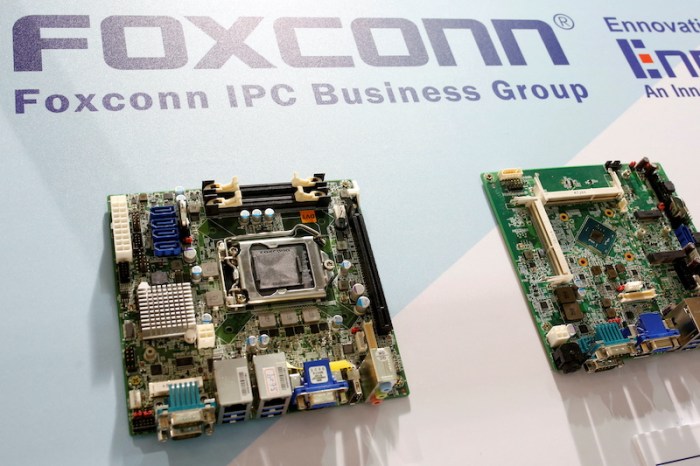
Foxconn’s foray into the automotive sector, with its recent announcement of a Japanese auto partner, signals a significant shift in the global manufacturing landscape. This marks a potential turning point, not just for Foxconn, but for the entire automotive industry, opening doors for future innovations and collaborations. The potential for further partnerships is substantial, promising to reshape manufacturing processes and potentially lower costs for consumers.
Potential Partnership Targets
Foxconn’s strategic positioning in the manufacturing world allows it to consider partnerships with various players in the automotive ecosystem. The company’s expertise in electronics manufacturing, coupled with its growing experience in automotive components and assembly, positions it for collaborations that extend beyond traditional partnerships. These collaborations could encompass different aspects of the automotive value chain.
- Tier 1 Suppliers: Partnerships with Tier 1 suppliers could allow Foxconn to gain access to specialized components and technologies, potentially fostering innovation in areas like electric vehicle (EV) batteries or advanced driver-assistance systems (ADAS). Examples include partnerships with companies like Bosch or Continental, which provide critical components for modern vehicles.
- Software Companies: Collaboration with software companies specializing in autonomous driving, vehicle connectivity, or in-car entertainment systems could lead to more sophisticated and integrated vehicles. Tesla, with its emphasis on software integration, serves as a potential model for such partnerships.
- Battery Manufacturers: The electric vehicle (EV) market is rapidly expanding, and partnerships with battery manufacturers will be crucial for Foxconn’s growth in this sector. Companies like LG Energy Solution or CATL are key players that Foxconn could potentially partner with to secure access to advanced battery technology.
Potential Future Partnerships – A Table
The following table Artikels potential future partnerships, highlighting potential benefits and risks.
| Partner Type | Potential Benefit | Risk Assessment |
|---|---|---|
| Tier 1 Suppliers | Access to specialized components, potentially leading to cost reductions and improved vehicle quality. Potentially reduced lead times and improved efficiency. | Potential for dependency on a single supplier, conflicts in quality standards or delivery schedules. |
| Software Companies | Integration of advanced features, improved vehicle performance, and enhanced user experience. This could lead to faster development cycles for new vehicles. | Potential integration challenges, intellectual property concerns, and potential conflicts in vision for vehicle features. |
| Battery Manufacturers | Secure access to cutting-edge battery technology, crucial for the EV market. This could lead to higher efficiency and lower operating costs. | Potential dependency on a single battery provider, fluctuating battery pricing and supply chain risks, potential for different standards or technology. |
| Automotive OEMs (Original Equipment Manufacturers) | Access to established market channels and potential for significant scale economies. This could also increase brand visibility and recognition for Foxconn. | Potential for conflicts in design philosophies, potential difficulties in integrating existing manufacturing processes with Foxconn’s methods, potential for high entry barriers and legal issues. |
Long-Term Impact on the Automotive Industry
Foxconn’s expansion into the automotive sector has the potential to fundamentally change the way vehicles are manufactured. By leveraging its manufacturing prowess, Foxconn could drive down production costs and lead to more affordable vehicles for consumers. This could, in turn, stimulate growth in the automotive sector and potentially increase competition. The potential for greater efficiency and innovation within the automotive industry is significant.
Conclusive Thoughts: Foxconn Soon Announce Another Japanese Auto Partner Chairman Says
In summary, Foxconn’s potential partnership with a Japanese automaker is a significant development with the potential to transform the automotive industry. The implications for manufacturing, supply chains, and technological innovation are substantial. The chairman’s statement has ignited considerable market interest, and the future trajectory of this partnership will undoubtedly shape the automotive landscape for years to come. The anticipated announcement is a critical moment for both Foxconn and the Japanese auto industry.