The rapid expansion of the alternative credentialing market has created a "Wild West" environment in American higher education and workforce training, leaving thousands of students vulnerable to predatory practices and hollow promises. A recent investigation into the shuttered cybersecurity firm IronCircle reveals a troubling pattern where for-profit entities, often cloaked in the legitimacy of prestigious university partnerships, create proprietary certifications that hold little to no weight in the actual labor market. While these companies promise a fast track to high-paying tech careers, the reality for many students is a cycle of mounting debt and worthless credentials.
The Rise of the Alternative Credentialing Economy
For years, the promise of the “boot camp” model has been simple: skip the four-year degree, pay a significant tuition fee, and emerge within months with the technical skills and industry-recognized certifications needed to land a job in the booming cybersecurity sector. This narrative has attracted career changers, veterans, and students looking for a competitive edge.
However, the proliferation of these programs has outpaced regulatory oversight. According to a 2025 report by Credential Engine, the United States is now home to more than 1.85 million unique credentials. This massive influx of certificates, micro-credentials, and badges has blurred the lines between high-value industry certifications—such as those issued by established entities like CompTIA—and self-serving internal "certificates" created by boot camp providers to substitute for legitimate professional benchmarks.
Chronology of the IronCircle Collapse
The collapse of IronCircle provides a stark case study in the failure of institutional vetting.
- The Enrollment Phase: Students, including David Young, signed up for cybersecurity boot camps branded with the logos of major public institutions, such as the University of Central Florida (UCF). These programs marketed the inclusion of a $400 voucher for the industry-standard CompTIA Security+ exam as a core component of the curriculum.
- Summer 2025: Behind the scenes, internal policies began to shift. Former employees have reported that, during this period, IronCircle quietly ceased the distribution of these vouchers to the general student population, effectively cutting costs at the expense of student outcomes.
- January 2026: Students began noticing the discrepancy. When questioning advisers about their missing vouchers, they were frequently directed toward a new, internal "IronCircle Certification." This proprietary credential was touted as an equivalent to the CompTIA standard, a claim that industry experts later rejected.
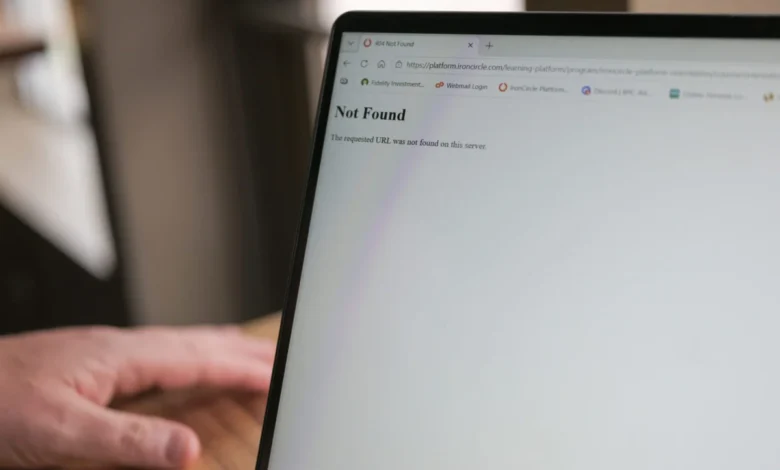
- June 2026: The company abruptly shuttered its operations. With no warning to the student body, the digital platforms used for training went dark, leaving many students without completion certificates, promised job placement support, or tuition refunds.
The Credibility Gap: Proprietary vs. Industry Standards
The core of the deception lay in the substitution of recognized professional standards with proprietary ones. When David Young reached out to his adviser regarding the missing voucher, he was told that the curriculum had been updated to align with an in-house certification.
However, industry experts maintain that these internal badges rarely hold value in a professional hiring environment. Steven Ostrowski, senior director of corporate communications for CompTIA, noted that while some course material might overlap with basic concepts, a proprietary boot camp certificate does not equate to the rigorous, third-party validation provided by the CompTIA Security+ exam.
"Credentials are only as valuable as they are to the industry," explains Ali Crawford, a senior researcher at the Center for Security and Emerging Technology at Georgetown University. "If it’s not valuable to the industry, it’s not valuable to the student. We are seeing a disconnect where training providers are creating supply-side credentials that have no demand-side utility."
Institutional Accountability and the "University-Branded" Shield
A significant portion of the controversy rests on the role of universities that partnered with IronCircle. By allowing a private company to use their name, these institutions lent an air of academic integrity and institutional backing to programs that were, in practice, poorly managed for-profit ventures.
When faced with inquiries regarding the missing vouchers and the subsequent closure of the program, the University of Central Florida and other partner institutions adopted a defensive stance. A spokesperson for UCF emphasized that the students signed legal agreements upon enrollment, which clarified that the completion of the boot camp did not constitute a guarantee of employment. This legalistic approach, however, sidesteps the ethical question of whether the university performed adequate due diligence on the vendor to whom they effectively outsourced their reputation.

The pattern of "university-branded" boot camps has been a subject of ongoing scrutiny. Often, these universities receive a cut of the tuition revenue, creating a conflict of interest where the institution is financially incentivized to maintain the partnership regardless of the quality of instruction or the actual success rates of the students.
The Human Cost: Debt Without a Return on Investment
For the students involved, the impact extends beyond the loss of a voucher. Many participants took on high-interest loans to cover tuition costs, often exceeding $10,000 to $15,000 for a program that lasted only a few months. With the company now defunct and no mechanism in place for tuition recovery, students are left with significant debt and a resume item that, according to recruiters, lacks the required "industry stamp" to clear initial screening filters.
The psychological toll is equally significant. Many students interviewed for this report described a sense of betrayal, having trusted the university brand as a proxy for quality assurance. The realization that they had been sold a product that was not only ineffective but also misrepresented has left a permanent mark on their career trajectories.
Broader Implications for Workforce Training
The IronCircle collapse serves as a warning for policymakers and prospective students alike. As the labor market shifts toward "skills-based hiring," the demand for short-term, intensive training will only grow. Without a standardized framework for auditing these programs, the market remains ripe for exploitation.
"It’s the Wild West," says Will Markow, CEO of FourOne Insights. His research underscores that while there is genuine demand for skilled cybersecurity professionals, the vast majority of new credentials being minted by private training firms do not align with the specific needs of employers. This mismatch suggests that the current model of private, for-profit boot camps—particularly those masquerading as university extensions—may be fundamentally broken.
A Call for Regulation and Transparency
The lack of transparency regarding job placement rates, certification pass rates, and the actual utility of proprietary credentials must be addressed. Experts suggest several paths forward:
- Mandatory Disclosure: Requiring providers to publish verified, third-party audited placement and wage data.
- Institutional Oversight: Holding universities accountable for the programs they brand, ensuring that they maintain the same quality control standards for boot camps as they do for traditional degree programs.
- Credential Standardization: Establishing a clearer distinction between "verified" industry certifications and "proprietary" training certificates to help employers and students distinguish between the two.
As the dust settles on the IronCircle closure, the primary lesson remains that education, when treated purely as a commodity for profit, often fails to deliver on its primary promise: the empowerment of the student. Until the industry is forced to prove that its credentials actually "pay off," the burden of risk will continue to fall disproportionately on the shoulders of the students who can least afford it.
Moving Forward
For those impacted by the closure, the path to recourse remains narrow. With the company no longer in existence and no clear regulatory body overseeing these specific types of private-public partnerships, students are often left to navigate the complex world of consumer protection laws and loan discharge processes on their own.
Investigations into these firms continue as more students come forward. The story of IronCircle is not merely a tale of one failed company; it is a symptom of a larger, systemic failure in the intersection of higher education and the modern digital workforce. As long as the credentialing market remains largely unregulated, the cycle of inflated promises and empty results is likely to continue, leaving more workers in the lurch.
Related posts: