Charles Leclerc defends the standard of the Formula 1 grid following Fernando Alonso’s controversial critique of backmarker driving quality

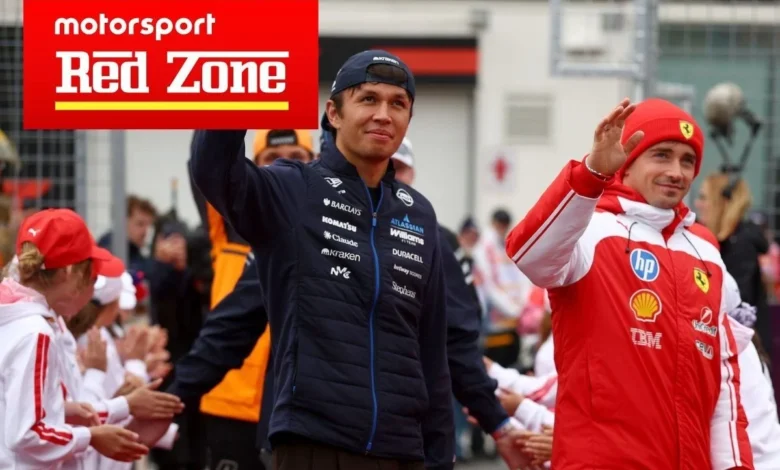
The modern era of Formula 1 has seen an unprecedented convergence of performance across the starting grid, yet the competitive tension between veterans and younger competitors remains a flashpoint for debate. Following a high-profile collision during the United States Grand Prix at the Circuit of the Americas in Austin, Texas, two-time world champion Fernando Alonso ignited a firestorm of controversy by publicly questioning the professional standards of drivers occupying the lower third of the standings. This assertion has since been firmly rejected by Ferrari’s Charles Leclerc and the targeted party, Williams driver Alex Albon, both of whom argue that the current field represents the most talented collection of racers in the history of the sport.
The Spark of Controversy at the Circuit of the Americas
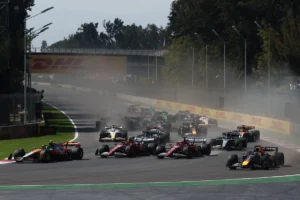
The disagreement stems from an incident on the opening lap of the United States Grand Prix. As the pack navigated the complex technical sections of the Austin circuit, contact occurred between Alonso’s Alpine and the Williams of Alex Albon. While such incidents are not uncommon in the volatile environment of a standing start, the two-time world champion took the unusual step of using his post-race media availability to criticize the caliber of his rivals.
Alonso, currently racing in his second season since returning from a hiatus, did not mince words. He characterized the driving standards in the lower half of the field as "very low," suggesting that the technical disparity between the front-runners and the back-markers is compounded by a lack of race craft among those further down the order. The Spaniard’s comments were not a momentary outburst but a stance he reiterated days later in Mexico City, insisting that his assessment was based on the observable behavior of his peers during wheel-to-wheel combat.
Charles Leclerc: A Defense of Shared Pedigrees
Charles Leclerc, who has battled at the front of the grid since joining Ferrari in 2019, provided a comprehensive rebuttal during the FIA press conference ahead of the Mexico City Grand Prix. Leclerc’s defense is grounded in a shared history; the current F1 grid is largely composed of drivers who grew up competing against one another in the junior karting categories.
"I think it is very, very high," Leclerc stated when asked to address Alonso’s claims. "Most of the grid, we grew up together in karting. Alex was up there, and he was actually a driver I was looking up to. He was always one or two categories above me, but he was exceptional."
Leclerc’s argument posits that the perception of low quality is an illusion created by the vast performance gaps between different chassis specifications. He emphasized that the physical machinery—the cars—create the separation, not the lack of talent behind the wheel. According to the Monegasque driver, if the entire field were equipped with identical equipment, the margins between the first and last positions would be negligible, highlighting the extreme level of competition inherent in the modern sport.
Alex Albon’s Perspective on the Professional Evolution
Alex Albon, the Williams driver at the center of the dispute, provided perhaps the most poignant rebuttal. Having spent time as both a lead driver at Red Bull Racing and a stabilizing force at Williams, Albon has experienced the full spectrum of the grid’s hierarchy.
"I have huge respect for Fernando; I looked up to him a lot growing up as a kid, and obviously it’s not nice to hear those comments in many ways," Albon remarked. "You’re racing someone that you look up to, but at the same time, I don’t agree. It’s as simple as that."

Albon further contextualized his response by pointing to the shifting economic model of Formula 1. He noted that the era of the "pay driver"—individuals who secured seats primarily through financial backing rather than merit—has largely faded. "I think the level is strong up and down the grid. I think 10, 15 years ago, the back half of the grid wasn’t the way it is now. We don’t have pay drivers anymore." This shift in recruitment, driven by the FIA’s stringent Super License requirements, has ensured that every driver on the current 20-car grid has achieved significant success in junior categories such as Formula 2 or Formula 3.
Historical Context and the Changing Landscape of F1
To understand the weight of these claims, one must look at the evolution of the F1 entry requirements. Historically, Formula 1 teams frequently accepted drivers who brought significant sponsorship money to the team, often at the expense of pure pace. However, the introduction of the FIA Super License points system—which requires drivers to accumulate a set number of points through consistent high-level finishes in lower series—has effectively professionalized the pipeline.
Data from the last decade shows that the density of the grid has increased significantly. In the early 2010s, it was common for the time gap between the pole-sitter and the last-place qualifier to exceed four or five seconds. In the current 2024 era, that gap is frequently reduced to under two seconds, even on circuits exceeding three miles in length. This compression suggests that the cars are more evenly matched, but also that drivers are pushing closer to the absolute limit of their equipment to make up the final few tenths of a second.
The Role of Machinery in Driver Perception
The debate touches upon a fundamental reality of motorsport: the car is an extension of the driver. When a driver like Alonso, who has historically been one of the most aggressive and precise racers in history, complains about the "lower third," he is often referencing the defensive maneuvers of drivers who lack the aerodynamic efficiency to compete on straights, forcing them to drive in a more erratic or "blocking" fashion to maintain their position.
However, analysts argue that this is a symptom of the sport’s technical regulations rather than driver incompetence. As cars have become larger and heavier, the difficulty of overtaking has increased, forcing drivers in the midfield and back of the pack to adopt more desperate defensive strategies. This creates a cycle where veteran drivers perceive the "aggression" of the younger, slower drivers as a lack of skill, while the younger drivers view it as the only viable way to defend against superior machinery.
Broader Implications for the Sport
The exchange between Alonso, Leclerc, and Albon highlights a generational divide in how the sport is viewed. Alonso represents an era where the grid was more stratified, both in terms of vehicle performance and driver background. Leclerc and Albon represent the modern cohort, products of a rigorous, meritocratic system that leaves little room for error.
The implications of this discourse are significant for the FIA and team principals. If senior drivers continue to voice concerns about the standards of the field, it may lead to further calls for stricter officiating or changes to how the FIA monitors race craft. However, the overwhelming consensus among team principals and the drivers themselves remains that the current grid is one of the most competitive in history.
Conclusion: A Meritocratic Era
The public disagreement serves as a reminder of the immense pressure that defines the pinnacle of motorsport. While Fernando Alonso’s frustrations regarding his incident in Austin are understandable given the competitive nature of a world champion, the defense mounted by Charles Leclerc and Alex Albon provides a compelling counter-narrative.
The current Formula 1 grid is defined by a high barrier to entry and an intense level of preparation that was not present in previous decades. As the sport continues to grow in popularity and technical complexity, the debate regarding the quality of its participants will likely persist. Yet, the evidence suggests that today’s drivers, from the front to the back of the grid, are not only highly skilled but are perhaps more prepared for the rigors of the sport than any generation before them. The "lower third" of the grid is no longer a collection of stragglers; it is a battle-hardened group of elite athletes, each fighting for the fractions of a second that define their careers.